
Many people have heard the saying “horses can’t go down stairs. ” It sounds simple, even funny, and shows up often in jokes, movies, and TV shows. But is it true? And if so, why? Horses are strong and smart animals.
They can run fast, jump high fences, and work on farms or in sports. But when it comes to stairs, even the bravest horse might refuse to take a single step down. This topic might seem odd, but it’s actually a key part of understanding how horses move, how their bodies work, and how humans must design safe environments for them.
If you own horses, work around them, or just find these animals fascinating, understanding the truth about horses and stairs is more than trivia. It’s about safety, animal welfare, and respecting the natural limits of these beautiful creatures. Let’s look deeper into why horses can’t go down stairs, explore the reasons from anatomy to psychology, and clear up some common myths that confuse even experienced horse lovers.
The Anatomy Of A Horse: Why Stairs Are A Challenge
To understand why horses struggle with stairs, it helps to know how their bodies are built. Unlike humans, horses are designed for fast movement across open land, not for stepping down narrow steps.
Leg Structure And Balance
Horses have long, powerful legs made for running and jumping forward. Their legs are straight and end in a single, hard hoof. Unlike dogs or goats, horses can’t bend their legs very much at the knee or hock. This means they can’t easily lower their bodies step by step.
A horse’s center of gravity is high and towards the front. When a horse goes down something steep, a lot of its weight shifts forward. On stairs, this makes it easy for them to lose balance and fall.
Limited Vision
Another important issue is a horse’s vision. Horses have eyes on the sides of their heads, which gives them a wide view of the area around them. However, they have a large blind spot directly in front of their noses and under their feet. When a horse looks down a staircase, it can’t clearly see each step. This makes it hard to judge where to put their feet and can make them nervous.
Hoof Design
A horse’s hoof is made for flat ground. It’s hard, smooth, and doesn’t grip well on small, narrow surfaces like the edge of a stair. When walking down stairs, there is a high risk of slipping, especially if the stairs are wet, made of wood, or have a steep angle.
Here’s a simple comparison of how different animals manage stairs:
| Animal | Stair Ability | Main Reason |
|---|---|---|
| Dog | Easy | Flexible joints, good grip |
| Goat | Easy | Agile, excellent balance |
| Horse | Very hard | Stiff legs, poor vision below, hoof shape |
| Cow | Hard | Similar anatomy to horse |
The Psychology Of Horses: Fear And Instinct
Physical limits are just part of the story. Horses also have instincts and natural fears that make stairs even scarier.
Prey Animal Instinct
Horses are prey animals. In the wild, their main defense is to run away fast. Anything that slows them down, such as a tricky path or a steep drop, feels dangerous. Going down stairs feels unnatural and risky to a horse.
Lack Of Experience
Most horses never see stairs. Stairs are a human invention, not something found in nature. Without practice, even a calm horse will see stairs as a strange and scary obstacle.
Negative Past Experiences
If a horse has ever slipped or stumbled going down a slope or step, it may remember that fear and refuse to try stairs again. Horses have good memories, especially for frightening things.
Real-life Evidence: Can Horses Ever Go Down Stairs?
Despite the common saying, there are rare times when horses do go down stairs. However, these are exceptions, not the rule.
Special Training
Some horses can be trained to walk down wide, shallow stairs, especially if the steps are not steep. For example, police horses in cities sometimes learn to handle a few steps, but these stairs are designed with horses in mind and are much wider than normal.
Emergency Situations
There are stories of horses going down stairs during emergencies—like fires or floods—when they have no choice. Even then, many horses freeze or panic.
Movie Stunts
Sometimes movies or shows feature horses going down stairs. Usually, this is done with trained stunt horses on special sets. The stairs are wider, shallower, and covered with soft material for safety. Even then, it’s risky.
Famous Example: The Banister Ride
One famous story is about a horse called “Comanche” in the U. S. military who was led down a staircase during a parade. The stairs were very wide, and helpers guided the horse carefully. This is very rare and not something most horses could do safely.
The Dangers Of Forcing A Horse Down Stairs
Trying to make a horse go down stairs is very dangerous for both the animal and the handler. Here’s why:
- Risk of Falling: If a horse slips, its heavy body can cause serious injury.
- Hoof Damage: Hard steps can chip or crack a horse’s hooves.
- Muscle Strain: Awkward steps can strain muscles or joints.
- Panic and Injury: A frightened horse can injure itself, the rider, or anyone nearby.
Many animal welfare groups warn never to force a horse down stairs except in absolute emergencies.
How Horses Move Safely On Slopes
Horses can go down hills and gentle slopes, but they use a special way of moving. They go slowly, lower their heads for balance, and spread their legs for stability. On stairs, they can’t do this because the steps are too short and uneven.
Here’s a look at how slopes and stairs compare for a horse:
| Surface | Horse Reaction | Risk Level |
|---|---|---|
| Flat ground | Normal walking | Low |
| Gentle hill | Slow, careful | Medium |
| Steep hill | Very slow, cautious | High |
| Stairs | Stops, refuses, or panics | Very high |
Design Tips: Making Buildings Safe For Horses
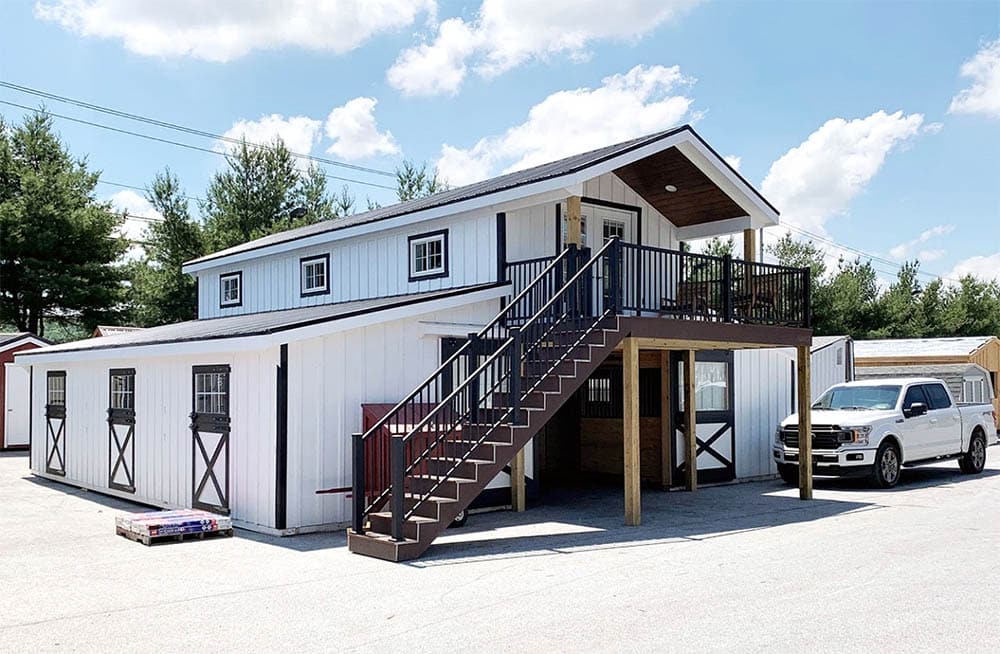
If you work with horses or design stables, it’s important to avoid stairs in any area where horses might walk. Instead, use:
- Wide, gentle ramps with non-slip surfaces
- Ground-level entrances and exits
- Soft footing (like rubber mats) for better grip
In places where horses must go up or down (like loading into a trailer), always use a ramp. Ramps should be as wide and gentle as possible.
Credit: www.horizonstructures.com
Common Myths About Horses And Stairs
There are many myths about this topic. Let’s clear them up:
- Myth: Horses are just stubborn about stairs.
- Truth: It’s not stubbornness. It’s about safety, vision, and body design.
- Myth: Any horse can go down stairs if trained.
- Truth: Only some horses, with special stairs and lots of training, can manage. Most cannot.
- Myth: Horses only refuse stairs because they are scared.
- Truth: Fear is part of it, but physical limits matter more.
Two Insights Beginners Often Miss
- Horses can go up stairs more easily than down. Going up is less scary and less likely to cause a fall, but getting down is still almost impossible for most horses.
- Stair design matters. Wide, shallow steps with plenty of grip make a big difference, but even then, stairs are still dangerous for horses.

Credit: rattiincantati.com
Comparing Horses To Other Large Animals
You may wonder if other big animals have the same problem. Cows, for example, also struggle with stairs, while goats and sheep are much better at it. This is because goats and sheep live in rocky places and have evolved for climbing, while horses and cows are flat-ground grazers.
| Animal | Can Go Down Stairs? | Why or Why Not? |
|---|---|---|
| Horse | Rarely | Poor joint flexibility, hoof shape |
| Cow | Very rarely | Similar issues to horses |
| Goat | Yes | Agile, evolved for climbing |
| Elephant | No | Too heavy, joint stress |
What To Do If A Horse Must Go Down Steps
Sometimes, it’s unavoidable—a horse must go down a few steps. In these rare cases:
- Make sure the steps are wide and shallow
- Go very slowly and let the horse see each step
- Use a lead rope and stay at the side, not in front or behind
- Have extra helpers for safety
- Never rush or force the horse
Remember, this is still risky and should only be done when absolutely necessary.
Credit: www.horizonstructures.com
Frequently Asked Questions
Why Can’t Horses Go Down Stairs Like Dogs Or Goats?
Horses have stiff legs, poor vision below their feet, and hooves that can’t grip stairs well. Dogs and goats are more flexible and have better balance on narrow surfaces.
Can Horses Go Up Stairs More Easily Than Down?
Yes, going up stairs is less dangerous for a horse because they can use their strong back legs to push themselves up. But getting down is much harder and riskier.
Has Any Horse Ever Gone Down Stairs Safely?
There are rare cases, often with specially trained horses or with stairs built for horses. But it’s never fully safe and always carries risks.
What Should You Do If Your Horse Faces Stairs?
Avoid stairs if possible. If you must use stairs, make sure they are very wide and shallow, move slowly, and have helpers ready. Ramps are always safer.
Where Can I Learn More About Animal Movement And Safety?
For detailed scientific information about animal movement and safety, visit the Equine Biomechanics page on Wikipedia.
Horses are amazing animals, but they have clear limits set by their bodies and instincts. Understanding why horses can’t go down stairs helps keep them safe and shows respect for what makes them unique. If you ever find yourself in charge of a horse near stairs, remember—take the long way around and keep your horse happy and healthy.