
You must stop all movement immediately if you suspect your animal has a broken limb, as knowing how to handle a horse with a broken leg is critical to preventing further damage.
What to do when your horse breaks a leg
-
Keep the horse in a small, confined area to prevent them from walking or moving the injured limb. Minimizing movement is the single most important factor in preventing a simple hairline fracture from becoming a catastrophic, comminuted break.
-
Don’t attempt to move or transport the horse yourself unless your veterinarian has specifically instructed you to do so. Improper loading can cause the bone to pierce through the skin, introducing bacteria and complicating the recovery process significantly.
-
Keep other horses away from the immediate area to reduce the injured horse’s anxiety and prevent sudden movements. A herd animal will instinctively attempt to follow its companions, which often leads to dangerous weight-bearing on the compromised leg.
-
Place a call to your local equine veterinarian and provide a clear description of the horse’s behavior and the limb’s position.
-
Watch the horse from a safe distance while waiting for help to arrive, ensuring they don’t collapse or panic.
Recognizing the signs of a fracture
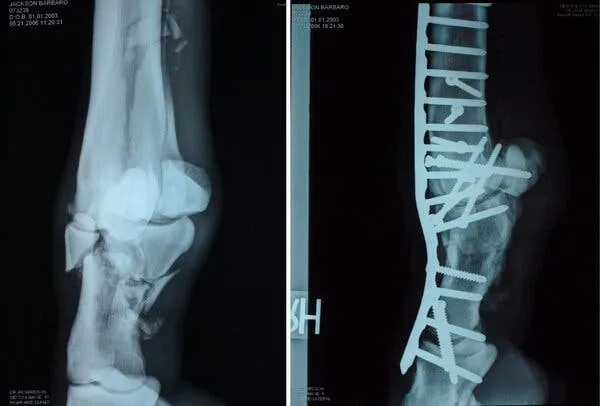
A fracture happens when the structural integrity of the bone is compromised, often due to high-impact trauma or repetitive stress that weakens the skeletal tissue.
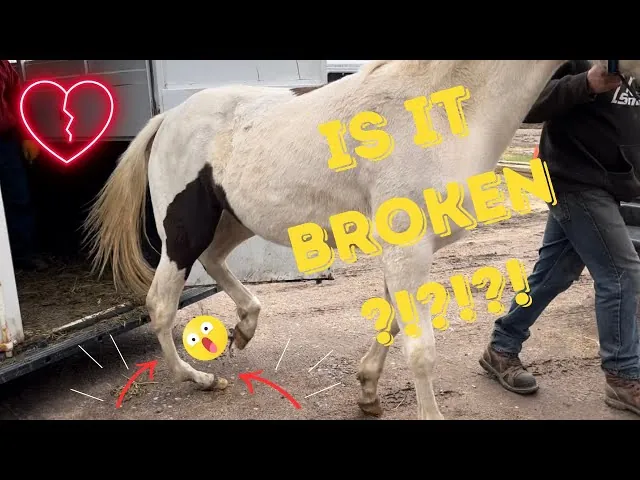
When a horse suffers a major fracture, the bone may shift out of place, causing the limb to hang at an unnatural angle or appear unstable when the horse tries to bear weight. In some cases, the injury is a hairline crack, which is much harder to see but will still cause significant pain and lameness.
According to the American Association of Equine Practitioners, a sudden, severe lameness where the animal refuses to put any weight on the limb is a primary indicator of a major orthopedic injury. The mechanism of injury often involves a failure of the bone to withstand the force placed upon it during movement.
If the skin is broken, the injury is classified as an open fracture, which carries a very high risk of infection. Because horses have heavy bodies and thin limbs, even a small fracture can lead to secondary complications in the other legs due to the added weight they must carry during recovery. Always look for heat, swelling, or a “clicking” sound when the horse attempts to shift its weight.
Assessing the injury safely
You should prioritize your own safety by staying away from the horse’s legs and avoiding the area behind them.
Check for open wounds
Look for blood or exposed bone around the injury site. If you see an open wound, don’t touch it or try to clean it, as this can introduce bacteria deeper into the tissue.
Observe weight bearing
Note whether the horse is holding the limb up entirely or just “tipping” their toe on the ground. A horse that can’t put any weight on the leg at all is suffering from severe pain and requires an urgent veterinary assessment.
Evaluate limb alignment
Look at the leg from a distance to see if it appears crooked or rotated. A limb that hangs at an abnormal angle indicates a complete break, which is a medical emergency that requires immediate professional intervention to manage the horse’s distress.
Watch for signs of shock
Observe if the horse is trembling, sweating heavily, or breathing rapidly. These are signs that the horse is in significant pain and may be going into shock, which makes the situation much more urgent.
Monitor nearby hazards
Ensure the environment is free of sharp objects or slippery surfaces that could cause the horse to fall. A horse that falls while trying to navigate a fracture is at risk of sustaining additional, life-threatening injuries to their neck or spine.
Professional stabilization and treatment
The veterinarian will first assess the horse’s pain levels and the stability of the fracture site before deciding on a treatment plan. They may use specialized splints or casts to immobilize the area, but this depends entirely on the location of the break and the temperament of the horse.
In many cases, the vet will provide strong pain medication and sedatives to keep the horse quiet during the examination. If the fracture is in the lower limb, there’s a better chance of stabilization compared to injuries higher up the leg, where the sheer weight of the animal makes effective repair difficult.
The vet will also check for nerve damage and blood flow to the hoof, which are vital for long-term recovery. If the injury is severe and the bone is shattered, the veterinarian may discuss the prognosis for healing, which varies based on the specific bone involved and the horse’s age. If the problem returns or worsens within a few days of initial stabilization, it usually means the fracture is unstable or infection has set in.
When to contact an emergency equine surgeon
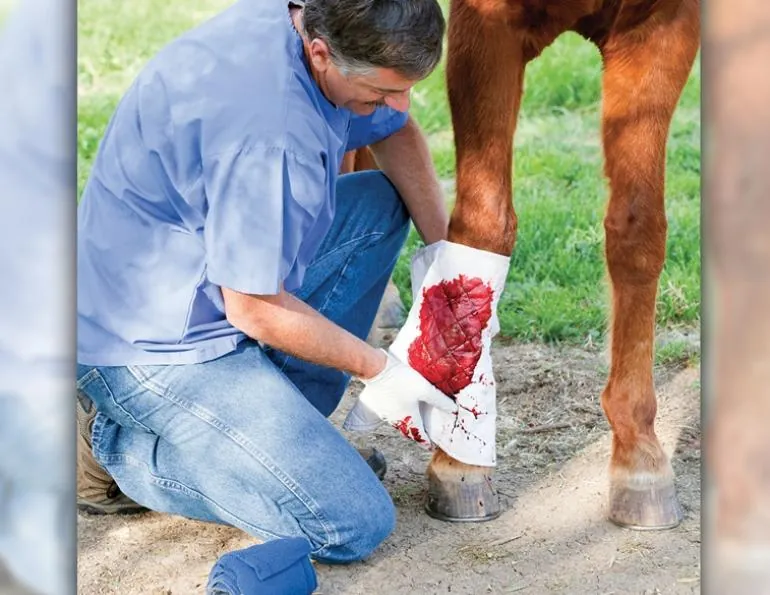
A fracture is almost never a situation you can manage on your own without professional equipment and training. If you see an open wound or the limb is clearly deformed, you must call a specialized equine surgical facility immediately.
These experts have the diagnostic tools, such as digital radiography, to determine if the bone can be repaired with internal fixation plates or if the injury is too severe for the horse to recover comfortably.
Attempting to bandage or splint a leg yourself without specific veterinary training can cut off circulation or cause the bone to shift further, leading to permanent damage.
The surgeon will likely ask you to describe the onset of the lameness and whether the horse has been given any medication before they arrive.
If the horse is thrashing or unable to rise, prioritize your personal safety above all else. A panicked horse with a broken limb can be unpredictable and dangerous. Wait for the surgical team to provide sedation or chemical restraint before you attempt any further contact with the animal.
Frequently asked questions
Can a horse survive a broken leg?
Yes, some horses survive a broken leg, but it depends heavily on the location of the break and the severity of the damage. Injuries to the lower limb are more manageable than those occurring higher up, where the bone can’t be easily supported by a cast or splint.
Is it safe to transport a horse with a broken leg?
No, it’s generally unsafe to transport a horse with a suspected fracture without veterinary supervision and proper stabilization. Moving a horse with an unstable break can cause the bone to pierce the skin or damage critical blood vessels, turning a manageable injury into a catastrophic one.
Why do horses often have to be euthanized for broken legs?
The primary reason is that horses are large animals that can’t easily stay off a limb while it heals. If they can’t bear weight on one leg, they often overload the others, leading to a painful condition called laminitis that can be just as debilitating as the original fracture.
How long does it take for a horse to recover from a minor fracture?
Recovery time varies, but it typically takes several months of strict stall rest and limited movement. You must follow the exact rehabilitation schedule provided by your veterinarian, as returning to activity too soon can cause the healing bone to snap again.
What should I do if the horse is in extreme pain?
Keep the horse as still as possible and contact your veterinarian immediately for emergency pain management. Don’t attempt to give the horse any human pain medications, as many are toxic to horses and can cause severe internal damage or death.
How can I tell if the fracture is open or closed?
An open fracture is visible because the bone has pierced through the skin, while a closed fracture means the skin remains intact. Both types are emergencies, but an open fracture carries an immediate risk of severe infection that requires urgent antibiotic treatment and surgical cleaning.
Conclusion
While this situation is incredibly difficult, staying calm helps your horse remain steady until professional help arrives. Once the vet has assessed the injury, you’ll need to focus on your animal’s comfort and long-term recovery. It’s a tough road ahead, but you’re doing your best to keep them safe.