
Horses lay down to sleep deeply, rest their bodies, and recover from physical strain, although they spend most of their time standing up because their anatomy evolved to keep them alert to predators.
Key Takeaways

- Laying down lets horses enter REM sleep, which they can’t achieve while standing.
- Most healthy adult horses rest lying down for a few hours spread across each day.
- Foals and senior horses usually spend more time on the ground than adults in their prime.
- A horse that struggles to rise, rolls repeatedly, or stays down for hours may need veterinary attention.
- Provide dry, level bedding and enough space so your horse can lie down and stand up safely.
- Contact an equine veterinarian if lying-down behavior changes suddenly or is paired with signs of pain.
Normal Resting Behavior
As prey animals, horses prefer staying on their feet. A system of tendons and ligaments called the stay apparatus lets them lock their legs and doze while standing without collapsing. However, standing rest is light sleep only. To reach rapid eye movement (REM) sleep, a horse must lay down with its muscles fully relaxed.
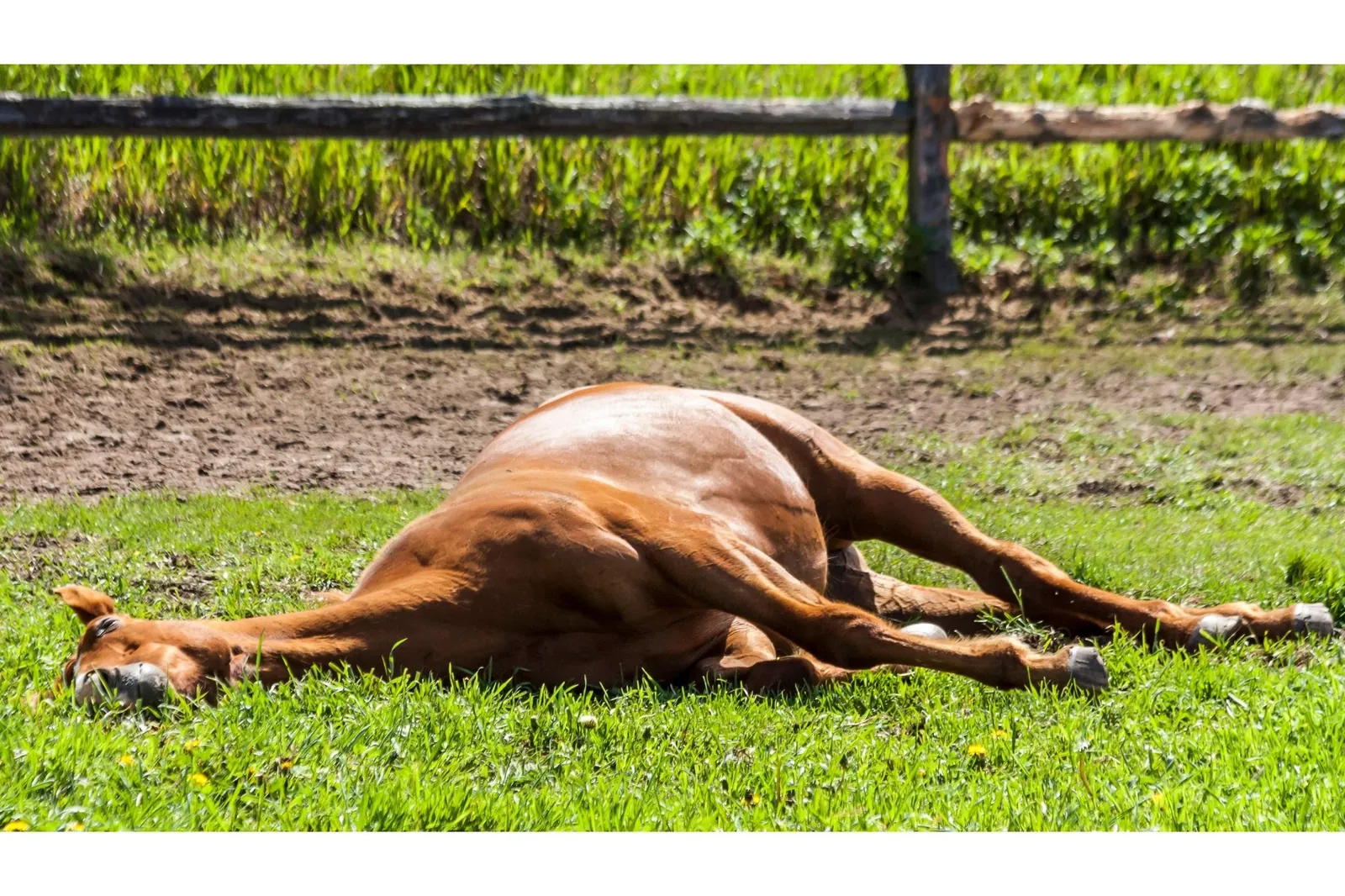
Adult horses lie down for short periods totaling a few hours each day. They may stretch out flat on their side or rest with their legs folded beneath them.
Common reasons horses lay down:
- REM sleep and deep rest
- Recovery after exercise or travel
- Relief from sore muscles or joints
- Comfort during illness or recovery
- Foals napping between nursing sessions
Why Horses Lay Down to Sleep
Sleep in horses happens in stages. Light sleep and slow-wave sleep can occur while standing, but REM sleep requires the brain to relax muscle tone completely, which makes standing unsafe. When a horse lays down for REM sleep, it usually lies on its side with its legs extended or tucked.
What affects how much a horse lays down:
- Herd dynamics and feeling of safety
- Bedding depth and dryness
- Weather and ground temperature
- Age and overall health
- Recent workload or injury
When Laying Down Is a Concern
Laying down is normal, but context matters.
Older horses with arthritis may lay down more often because standing is painful, but they may also struggle to get back up. Quick intervention can prevent lasting harm.
Warning: If your horse is rolling repeatedly, kicking at its belly, or can’t rise after laying down, treat it as an emergency and call an equine veterinarian immediately.
Age and Life Stage Differences
Foals lay down frequently. In their first weeks of life, they may spend much of the day sleeping on the ground, rising only to nurse or move short distances.
Senior horses often change their resting habits too. Arthritis, stiffness, or general wear on joints can make lying down more appealing, but rising can become harder.
Typical patterns by age:
- Foals: frequent, longer lying-down periods throughout the day
- Yearlings and young adults: regular rest bouts, often after play or training
- Mature adults: fewer but consistent lying-down sessions
- Seniors: variable; may rest more or avoid lying down due to stiffness
Environment and Bedding
A horse’s decision to lay down often depends on where it is. Hard, wet, or muddy ground discourages resting because it’s uncomfortable and can chill the body. Deep, dry bedding such as straw, wood shavings, or peat encourages a horse to lay down and stay there long enough to reach deep sleep.
Stall size also matters.
Pro Tip: Check bedding depth daily in stalls and run-in sheds; add fresh material wherever it has become thin or damp so your horse has a clean place to rest.
Health Conditions That Affect Rest
Several medical issues can change how or when a horse lays down. Laminitis causes severe hoof pain, making both standing and rising difficult; affected horses may shift weight constantly or lie down to relieve pressure. Colic causes abdominal pain, leading to rolling, pawing, or repeated attempts to lie down and get up. Neurological conditions can affect balance, making a horse hesitant to lay down or unable to rise safely.
Conditions that can alter lying-down behavior:
- Colic and abdominal pain
- Laminitis or hoof abscesses
- Arthritis and joint stiffness
- Neurological disorders
- Respiratory infection or fever
- General weakness from age or illness
Safety When a Horse Is Down
Approaching a resting horse requires care. Even a sleepy horse can kick or strike if startled, so speak softly and move into its line of sight before touching it. If a horse is cast against a wall, don’t pull on its legs or tail; instead, call for help and work together to roll it away from the wall so it can rise.
After a horse has been down for a while, it may be stiff or unsteady when it first stands. Give it space and time to find its balance before leading or riding it.
How Much Rest Is Typical
There’s no single number that fits every horse, but most adult horses spend only a small portion of each day lying down. Foals and seniors are the exceptions, often resting more frequently. Rather than counting minutes, observe whether your horse rises easily, moves normally afterward, and shows interest in food and companions.
A sudden increase or decrease in lying-down time is usually more meaningful than the total hours. If your horse stops laying down entirely, it may not be getting REM sleep, which can affect health and performance over weeks or months.
Signs to Watch For
Healthy resting behavior includes easy rising, normal appetite, alertness when awake, and smooth movement after getting up. Concerning signs include lying down for many hours without rising, rolling in a way that looks distressed, sweating at rest, rapid breathing, or reluctance to put weight on a limb when standing.
Healthy signs vs. warning signs:
| Healthy Signs | Warning Signs |
|---|---|
| Rises easily and shakes off | Remains down for hours |
| Normal appetite and drinking | Refuses feed or water |
| Alert and responsive to surroundings | Appears dull or unresponsive |
| Smooth gait after standing | Stiff, limping, or reluctant to move |
| Clean, dry coat after resting | Soaked or matted coat from wet bedding |
Seasonal and Weather Factors
Weather changes how horses rest. In cold weather, horses may lay down less if the ground is frozen or wet, because lying on cold surfaces draws body heat away. Providing shelter and dry bedding encourages winter rest.
Troubleshooting Rest Problems

If your horse isn’t laying down enough, start by checking its environment. Deepen the bedding, reduce noise near resting areas, and make sure the horse feels safe with its herd mates.
If your horse is laying down too much or struggling to rise, schedule a veterinary exam. The veterinarian can check for pain, neurological issues, or metabolic problems.
Pro Tip: Record when your horse lays down and rises for a few days; sharing that pattern with your veterinarian can help distinguish normal rest from a health issue.
Frequently Asked Questions
Is it normal for a horse to lay down every day?
Yes. Most healthy adult horses lay down for short periods each day to get REM sleep, though the total time varies by age, environment, and individual preference.
How long can a horse safely lay down?
There’s no exact safe time limit, but a horse that remains down for hours and can’t or won’t rise should be evaluated by a veterinarian as soon as possible.
Do horses dream when they lay down?
Horses experience REM sleep while lying down, which is associated with dreaming in mammals, though we can’t know exactly what a horse dreams about.
Should I wake a horse that’s laying down?
No. Let a resting horse sleep unless it’s in an unsafe location or showing signs of distress; startling it can cause injury to the horse or to you.
When should I call a vet about a horse laying down?
Call if your horse can’t rise, rolls repeatedly, seems to be in pain, or shows a sudden change in how much time it spends on the ground.
Can a horse sleep standing up?
Yes, horses can doze and get light sleep while standing thanks to their stay apparatus, but they must lay down to achieve REM sleep.
Conclusion
Horses lay down because rest on the ground is the only way they can get the deep sleep their bodies need, while standing rest handles the rest. Start by watching your horse’s normal routine so you can recognize when lying-down behavior shifts from healthy to concerning, and contact an equine veterinarian whenever you’re unsure.