
The horse stance, called Ma Bu in Chinese martial arts, is more than just a position. It is a powerful tool for building strength, balance, and focus. Many martial arts styles, including Kung Fu, Karate, and Taekwondo, use the horse stance as a foundation. But standing with your legs apart and knees bent is not as simple as it looks. Doing it right challenges your muscles, tests your patience, and pushes your mind. If you want to master the horse stance, you need more than just willpower. You need the right methods, the right mindset, and a clear plan.
If you are reading this, you probably know how tough holding the horse stance can feel. Your thighs burn, your back gets tired, and your focus drifts. But with correct practice and smart tips, you can turn this challenge into a real strength.
In this guide, you will learn how to improve your horse stance step by step, avoid common mistakes, and make your practice more effective. Whether you are a martial artist, an athlete, or just looking for a new way to build lower body strength, these tips will help you unlock your potential.
Understanding The Horse Stance
The horse stance is a wide-legged, low squat position. Imagine sitting on an invisible horse: feet wider than shoulder-width, toes pointing forward or slightly out, knees bent, back straight, and hips tucked under. Your weight should be balanced and your body relaxed but strong.
Why is this stance so important? It trains your legs, hips, and core, builds stamina, and teaches you to root yourself to the ground. In martial arts, the horse stance is the base for strong punches, blocks, and kicks. It also teaches discipline, patience, and focus.
Key Benefits
- Leg Strength: Builds your quadriceps, hamstrings, and glutes.
- Hip Mobility: Opens and strengthens hip joints.
- Core Stability: Engages your abs and lower back.
- Mental Endurance: Holding the stance improves concentration.
- Martial Arts Skill: Improves balance and rooting for techniques.
A correct horse stance can help you in sports, daily life, and even your posture. But to get these benefits, you must practice with good form and avoid shortcuts.
Setting Up The Perfect Horse Stance
Before you can improve, you need to know what good form looks like. Here’s how to set up your horse stance step by step:
- Stand upright with feet shoulder-width apart.
- Step out sideways so your feet are about two or three shoulder widths apart.
- Turn your toes forward or slightly out (no more than 45 degrees).
- Bend your knees so your thighs move toward being parallel with the floor. Knees should track in line with your toes.
- Lower your hips as if sitting on a horse, but keep your tailbone tucked under (avoid sticking your butt out).
- Keep your back straight. Do not lean forward or arch your back.
- Hold your fists or palms in front of your body, or on your hips, depending on your style.
- Relax your shoulders and keep your chest up.
- Distribute your weight evenly on both feet.
Your thighs should be burning after a few seconds if you are low enough. If not, check your depth and adjust.

Credit: gmb.io
Common Mistakes And How To Fix Them
Even experienced practitioners make errors in horse stance. Here are mistakes to watch for and how to correct them:
Knees Collapsing Inward
Letting your knees fall toward each other can stress your joints and reduce power. Always drive your knees out, in line with your toes.
Hips Too High
If your hips are not low enough, you miss the strength-building benefits. Lower until your thighs are almost parallel to the ground.
Leaning Forward
Leaning over puts stress on your lower back. Keep your chest up and back straight.
Feet Too Wide Or Too Narrow
Too wide can strain your hips, while too narrow makes the stance unstable. Aim for two to three shoulder widths apart.
Not Tucking The Tailbone
A common error is sticking the butt out, which arches the lower back. Tuck the tailbone under for a neutral spine.
Tension In The Upper Body
Your shoulders and arms should be relaxed, not tense. Focus energy in your legs and core.
Holding Breath
Remember to breathe! Slow, deep breaths help you relax and last longer.
Step-by-step Progression For Beginners
If you are new to horse stance, do not try to hold it for five minutes on your first day. Progress slowly to avoid injury and build strength.
1. Start With Short Holds
Begin with 10 to 20 seconds per set. Rest, then repeat. Do three to five sets.
2. Add Time Gradually
Each week, add 5–10 seconds to each set. Your goal should be to reach at least one minute per set.
3. Focus On Perfect Form
Never sacrifice form for longer hold times. Quality matters more than quantity.
4. Increase Depth Over Time
As your flexibility improves, lower your hips more. But always keep good alignment.
5. Add Variations
Try moving your arms, twisting your torso, or holding light weights as you progress.
Advanced Drills To Improve Horse Stance
When you can hold a basic horse stance for one minute with good form, it’s time to challenge yourself with advanced drills.
Isometric Holds With Movement
- Hold the horse stance.
- Slowly shift your weight from side to side, keeping your hips low.
- Try small pulses up and down to build endurance.
Dynamic Transitions
- Move from standing to horse stance and back up, repeating for reps.
- Add small jumps to transition between horse stance and other stances.
Weighted Horse Stance
- Hold light dumbbells or a kettlebell at your chest.
- Focus on keeping your posture correct even with the added weight.
Wall Sit Horse Stance
- Stand with your back against a wall.
- Slide down into horse stance position.
- Hold as long as you can, focusing on pushing your knees out.
Horse Stance With Resistance Bands
- Place a resistance band just above your knees.
- As you hold the stance, push your knees outward against the band.
One-leg Horse Stance
- Shift more weight onto one leg, then the other.
- This builds extra strength and balance.
Building Strength For A Better Horse Stance
Your horse stance will only get better if your leg muscles and core are strong. Here are some exercises to add to your routine:
- Squats: Bodyweight, goblet, or barbell squats build thigh and glute strength.
- Lunges: Forward, reverse, and side lunges open your hips and train balance.
- Deadlifts: Strengthen your entire lower body and core.
- Planks: Build core stability for better posture.
- Hip Bridges: Activate glutes and stretch hip flexors.
Try this simple weekly plan:
| Exercise | Sets | Reps | Frequency |
|---|---|---|---|
| Bodyweight Squats | 3 | 15 | 2x/week |
| Side Lunges | 3 | 10 (per leg) | 2x/week |
| Planks | 3 | 30s | 3x/week |
| Hip Bridges | 3 | 12 | 2x/week |
Improving Flexibility And Mobility
Tight hips and ankles make it hard to hold a low, strong horse stance. Flexibility training is just as important as strength.
Hip Flexor Stretch
Kneel on one knee, with the other foot in front. Push your hips forward gently to stretch the back leg’s hip flexor.
Groin Stretch
Sit with your feet together and knees out (butterfly position). Gently press your knees toward the floor.
Deep Squat Hold
Sit in a deep squat with heels on the floor. Hold for 30–60 seconds to open your hips and ankles.
Ankle Circles
Rotate your ankles slowly in both directions to improve mobility.
Dynamic Warm-ups
Do leg swings, walking lunges, and high knees before your horse stance practice.
Flexibility takes time. Spend at least 10 minutes on stretching after your main workout, focusing on your hips, groin, and ankles.
Breathing And Mental Focus
Horse stance is not just physical. Your mind and breath help you last longer and stay relaxed.
- Deep Breathing: Inhale through your nose, fill your belly, and exhale slowly through your mouth.
- Focus on a Point: Keep your eyes on a spot in front of you. This helps with balance and concentration.
- Mental Counting: Count your breaths or seconds. This distracts your mind from the discomfort.
- Positive Self-talk: Remind yourself you are getting stronger with each second.
Many people overlook the mental side of horse stance. But your mind can give up before your body does. Training your focus will help you break through plateaus.
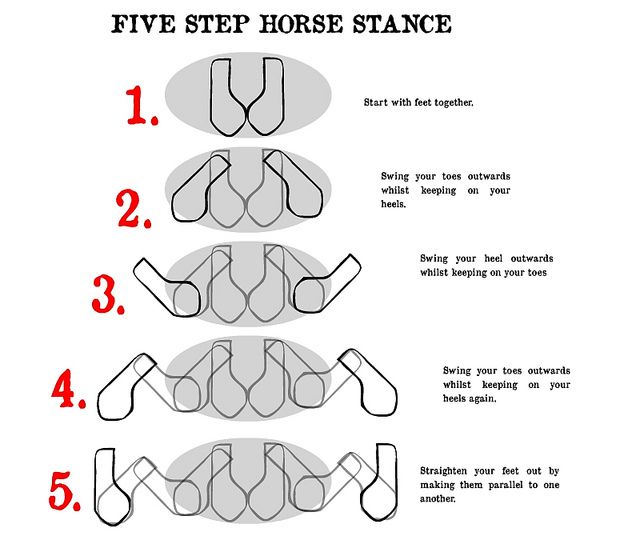
Credit: www.yhginverness.com
Tracking Your Progress
To see real improvement, track your horse stance over time. This motivates you and shows what works.
Use A Training Log
Write down how long you hold the stance, how many sets, and any notes about form or difficulty.
Take Progress Photos
A monthly photo from the side can show changes in depth, posture, and alignment.
Test Yourself
Each month, try a “max hold” test to see your longest time with perfect form.
Adjust Goals
As you improve, set new goals for time, depth, or variations. Always challenge yourself a little more.
How To Incorporate Horse Stance Into Your Routine
You do not need to practice horse stance for hours every day. Consistency is more important than duration.
Daily Short Sessions
Do 1–2 minutes each day, even on busy days. This keeps your muscles and mind sharp.
Warm-up Or Cool-down
Add horse stance to your warm-up for martial arts, sports, or strength training. Or use it as a cool-down to build endurance.
Combine With Techniques
Practice punches, blocks, or breathing exercises while in horse stance to make your training functional.
Use Rest Intervals
Between strength sets, hold a short horse stance instead of just resting. This builds stamina.
Train With A Partner
Challenge each other to see who can hold the stance longer or with better form.
Comparing Horse Stance Across Martial Arts
Different martial arts have unique ways of teaching and using horse stance. Here’s a simple comparison:
| Martial Art | Stance Width | Toes Direction | Common Purpose |
|---|---|---|---|
| Kung Fu | Very wide | Forward | Rooting, power training |
| Karate | Shoulder to double shoulder width | Slightly out | Stability, basic techniques |
| Taekwondo | Moderate | Forward | Transitional, kicking base |
| Shaolin | Very wide, low | Parallel | Endurance, foundational |
No matter your style, the basics of good alignment, strength, and focus are the same. You can adjust the width and toe direction to match your art, but the key principles do not change.
Two Non-obvious Tips Most Beginners Miss
1. Use The Floor To Build Power
Many think horse stance is just about holding still. But if you press your feet into the ground and imagine “spreading the floor” apart, your whole lower body activates. This makes your stance much stronger and more stable. Try this next time: push your feet outward (without actually moving them) and feel your inner thighs and glutes turn on. This hidden tension creates real martial power.
2. Relax Everything Except Your Legs
It’s easy to tense your shoulders, jaw, or even hands while struggling in horse stance. This wastes energy. Focus on relaxing every part of your body except your legs and core. This not only helps you last longer, but also teaches you to move from a calm, powerful state—a key skill in all martial arts.
Safety And Injury Prevention
Horse stance is safe for most people, but pushing too hard or using bad form can cause problems.
- Warm up first: Never drop into a deep stance with cold muscles. Do light cardio and dynamic stretches.
- Listen to your body: Sharp pain, pinching, or numbness are warning signs. Stop and check your form.
- Start slow: Overdoing it early can lead to knee or hip pain.
- Check your knees: They should never go far past your toes or buckle inward.
- Strengthen supporting muscles: Weak glutes, hips, or core can lead to bad posture and stress.
If you have knee, hip, or back issues, talk to a health professional before deep stance training.
Nutrition And Recovery
Building strength in horse stance takes energy and time. What you eat and how you rest matter.
- Protein: Helps build and repair muscles. Try to eat some protein after training.
- Hydration: Muscles work better when you are hydrated.
- Sleep: Your body recovers and grows stronger while you sleep.
- Stretching: Gentle stretching after practice speeds recovery and prevents tightness.
If you feel sore, use ice, gentle massage, or light activity to help your body heal. Remember, progress comes with patience.
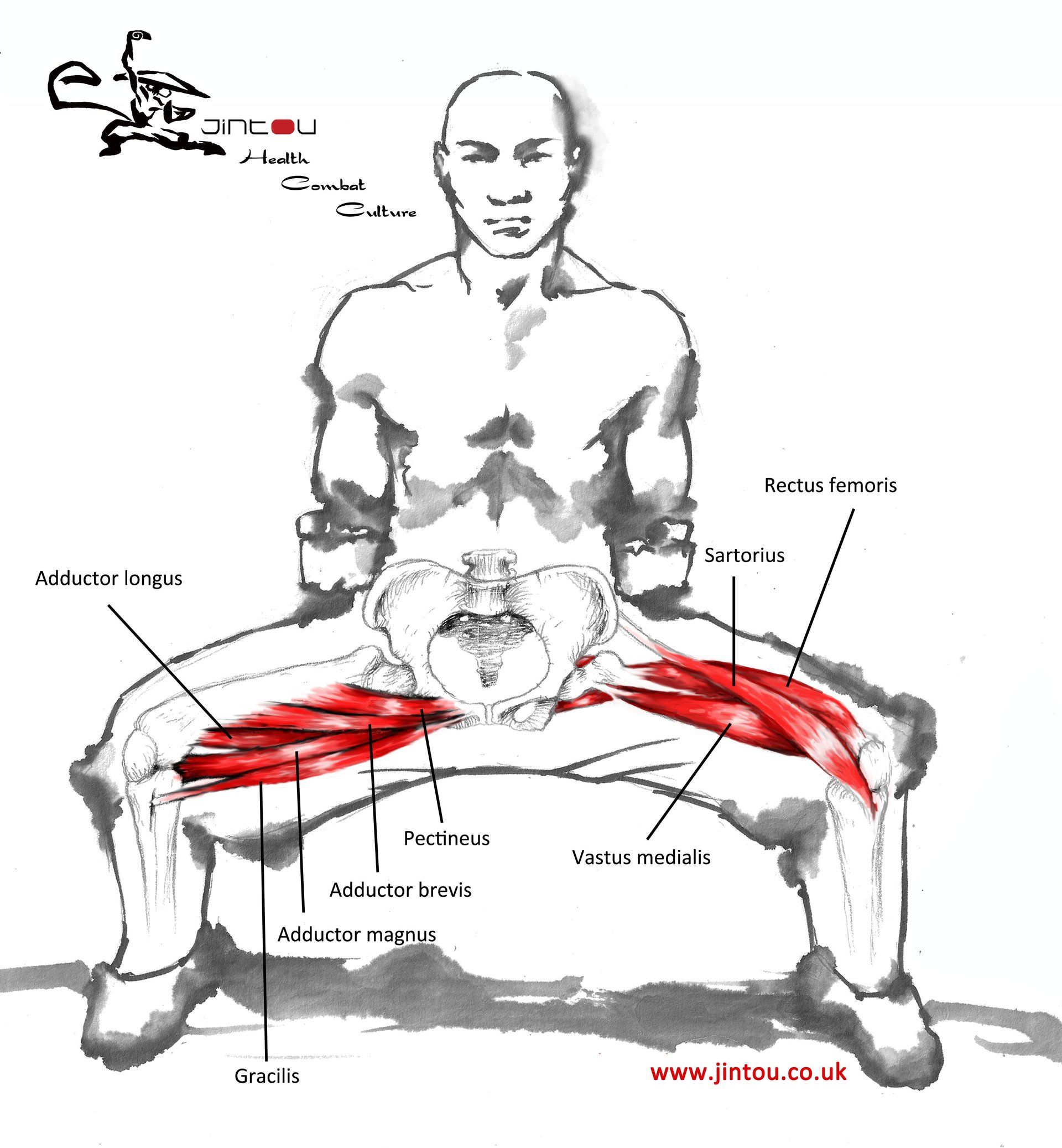
Credit: www.jintou.co.uk
Real-world Examples And Inspiration
Many famous martial artists, like Bruce Lee and Jet Li, trained horse stance daily for years. In some traditional Shaolin schools, students hold the stance for up to an hour each day! Most people do not need to go this far, but these examples show what is possible with dedication.
For beginners, holding a horse stance for 30 seconds with good form is a great start. With regular practice, reaching 2–3 minutes is achievable for almost anyone.
A study published by the Journal of Strength and Conditioning Research found that isometric training (like holding horse stance) increased leg strength and muscular endurance by up to 20% in just eight weeks.
Useful Tools And Resources
If you want extra help, there are many apps and timers designed for isometric holds. You can also find video tutorials from top martial arts instructors on YouTube. For those who want to dive deeper, the Wikipedia page on Horse Stance has detailed history and variations.
Frequently Asked Questions
What Muscles Does The Horse Stance Work?
The horse stance mainly targets the quadriceps, hamstrings, glutes, hips, and core muscles. If held with good form, it also works your calves and lower back. Over time, it builds both strength and endurance in your lower body.
How Long Should I Hold The Horse Stance?
For beginners, start with 10–30 seconds per set. As you get stronger, aim for 1–3 minutes per set. Advanced practitioners may hold for 5 minutes or longer. Focus on quality before increasing time.
Why Does My Back Hurt In Horse Stance?
Back pain usually means you are leaning forward, arching your back, or not tucking your tailbone. Make sure your chest is up, back is straight, and hips are tucked under. Strengthening your core will also help support your spine.
Can Horse Stance Help With Knee Pain?
When done correctly, horse stance can strengthen the muscles around your knees and improve joint stability. But if you have existing knee issues, check with a doctor before training. Always keep your knees in line with your toes and avoid letting them collapse inward.
How Often Should I Practice Horse Stance?
For best results, practice 3–5 times per week. Short daily sessions (1–2 minutes) can be very effective. Consistency is more important than long, occasional workouts.
Improving your horse stance is a journey. With the right approach, you will see real progress in strength, balance, and focus. Remember to celebrate your small wins, listen to your body, and enjoy the process. The horse stance is not just a position—it is a path to greater power and self-mastery.