
Pick your horse’s hooves about every 1 to 2 weeks when he’s in light work and living out. If he’s stabled, fed grain, or worked hard, check them daily or every few days. Leave a hoof packed with dirt and manure for weeks and the sole, frog, and white line start to suffer.
How often to pick hooves by how you use your horse
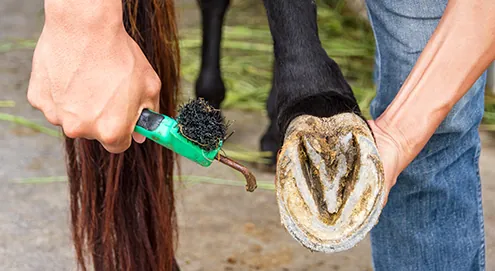
The interval follows use, not the calendar. A horse that stands in a dry field needs less than one that’s ridden daily on wet ground or kept in a stall.
| How you use it | How often | What tells you it’s due |
|---|---|---|
| Pasture pet, light riding | Every 1-2 weeks | Packed dirt rings the sole |
| Light work, some stabling | Every 1-2 weeks | Dirt or bedding packed in |
| Daily riding, mixed ground | Every 1-2 weeks | Stones or mud in the sole |
| Stabled, grain-fed | Daily | Wet, soft sole and packed manure |
| Hard work, wet or muddy | Daily | Mud packed deep around the frog |
| Show or competition season | Daily | Anything trapped before you ride |
What happens when you leave hooves too long
Thrush is the first thing to arrive. It’s a bacterial infection of the frog and the grooves beside it, and it grows in the dark, wet, oxygen-poor space that packed dirt and manure create. The frog turns black and soft, and it starts to smell. You’ll usually notice the smell before your horse shows any lameness.
After a few weeks of packed material, the sole stops shedding the way it should. The hoof wall keeps growing, the sole stays put, and pressure builds under it. A horse that was sound on hard ground starts to feel every stone. This is the stage where a farrier finds bruising he didn’t expect.
Leave it for months and the white line — the soft, pale band where the wall meets the sole — starts to stretch and separate. That gap is the doorway for grit and bacteria. Once gravel works its way up the white line, you’re dealing with an abscess, and an abscess means a lame horse, a vet or farrier call, and time off. The exact cost of that depends on your vet and your area, so ask yours rather than guessing.
None of this happens overnight. A healthy hoof on dry ground can tolerate a missed week. A soft hoof in deep mud cannot. The condition of the ground your horse stands on decides how fast the clock runs.
Signs your horse’s hooves are overdue
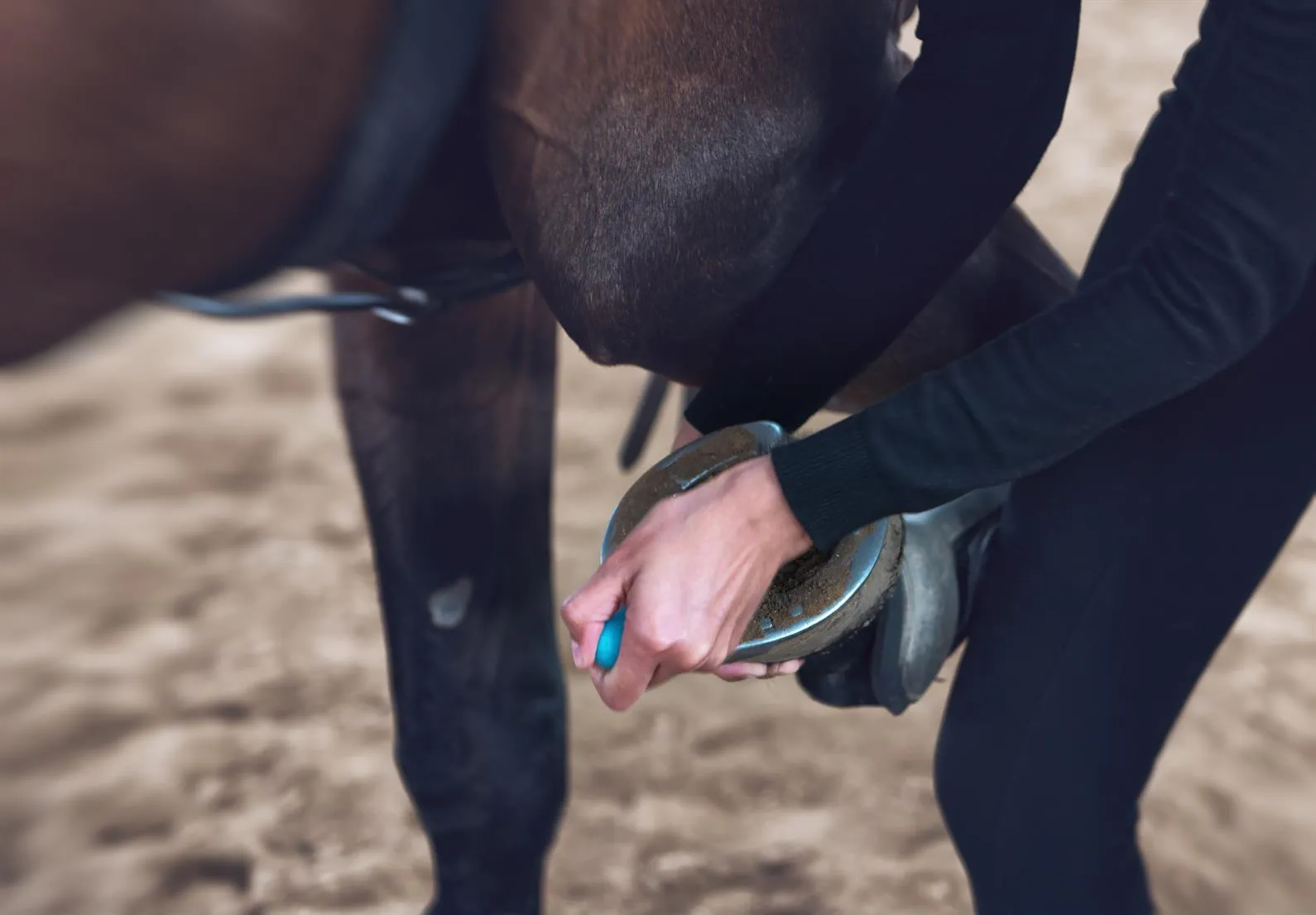
You can spot most of these in a minute, standing next to your horse. Pick up each foot and look before you decide anything.
- Black, soft, smelly frog — thrush has taken hold in the grooves beside the frog.
- Packed dirt or manure in the sole — material has been sitting there long enough to hold moisture against the sole.
- Stones wedged in the white line — grit is already working into the soft band between wall and sole.
- A hoof that looks longer than the others — uneven wear, often from one hoof not being picked as often.
- Cracks running up from the bottom of the wall — the wall is dry and stressed, or the ground is too hard.
- Heat or a pounding pulse in the foot — this is a sign of trouble now, not a chore for later.
- Your horse flinches when you clean the sole — the sole is thin or bruised, and you’re pressing on a sore spot.
What each hoof-picking session takes
Budget about 2 to 3 minutes for all four feet once you’re quick at it. A nervous or young horse takes longer — closer to 5 or 10 minutes while he learns to stand still. The job itself needs one tool: a hoof pick. A stiff brush helps for dry dirt.
The real cost isn’t time, it’s consistency. You’re asking your horse to pick up each foot, hold it, and let you work underneath — and a horse that’s sore or unbalanced will lean on you. Done well, it’s a two-way check: you clean the foot and you feel for heat, swelling, or a loose shoe at the same time.
This isn’t for you if your horse is actively lame, has a hoof that’s hot to the touch, or has a shoe hanging off. Those aren’t cleaning jobs. Call your farrier or vet and let them look. Picking at a sore foot yourself can make an injury worse.
Habits that stretch the time between pickings
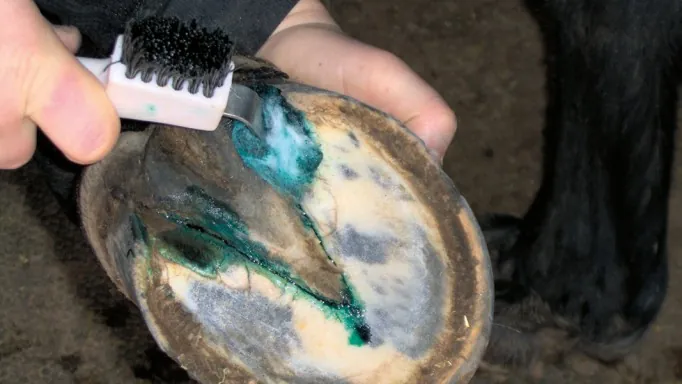
Dry ground is your best tool. Every habit below works by keeping the sole dry and letting air reach the frog, so the same bacteria that cause thrush can’t get a grip.
- Pick before and after every ride. A stone or a ball of mud trapped under the shoe does its damage in the first hour, not the tenth.
- Keep stalls clean and dry. A horse standing in wet bedding all night has a soft sole by morning, no matter how often you pick.
- Turn out on dry ground when you can. Mud is the single biggest driver of thrush and packed soles.
- Feed a balanced diet with enough biotin and zinc. The hoof wall grows from the inside, and a poor diet shows up as weak, crumbly horn. Your vet or an equine nutritionist can tell you what your horse’s ration is actually short of.
- Keep up with farrier visits. A balanced trim keeps the sole at the right depth, so there’s less space for junk to pack into. The American Association of Equine Practitioners covers hoof care and when to call a vet.
Related guides
- How Do Horses in the Wild Trim Hooves Naturally?
- How Often Should You Pick Horses Hooves: Essential Care Tips
- How Often Should You Trim Horses Hooves: Expert Tips & Guide
Frequently asked questions
Can you pick hooves too often?
No. Picking more often doesn’t hurt a healthy hoof. The only risk is pressing too hard on a thin or bruised sole, or working on a foot that’s already sore. If your horse flinches, stop and let a farrier or vet look.
Why does my horse’s hoof smell bad?
A bad smell usually means thrush — a bacterial infection of the frog. It grows in wet, dirty, airless conditions. Clean the foot, keep it dry, and if the frog is black, deep, or the horse is lame, call your vet or farrier.
How long does it take to pick all four hooves?
About 2 to 3 minutes for a calm, trained horse. A young or nervous horse takes 5 to 10 minutes while he learns to stand. The time drops as the horse gets used to it, so don’t rush the early sessions.
Is it safe to pick a horse’s hooves if he’s lame?
No, not if the lameness is in that foot. A lame horse may be sore, and cleaning can make it worse. Call your vet or farrier instead. Picking a sound horse’s other three feet is still fine.
What happens if I never pick my horse’s hooves?
Thrush and packed soles come first, usually within a few weeks in wet conditions. Months of neglect lead to white line separation, abscesses, and lameness. The exact timeline depends on your ground, bedding, and how much your horse moves.
Does it matter if my horse is barefoot or shod?
It matters for what you’re checking, not how often. A shod horse can trap stones between shoe and sole, so check after every ride. A barefoot horse wears the sole down naturally, but still packs mud and dirt into the same grooves.
How often should a farrier see my horse?
Most horses need a farrier every 4 to 6 weeks, because the hoof wall grows about a quarter to three-eighths of an inch a month. Hard work, fast growth, or a shoe that’s loose means sooner. Your farrier will set the right schedule for your horse.
What to do next
Pick up all four feet today and look at each sole. If the frogs are black or the grooves are packed, clean them and keep the ground dry for the next week. Expect the smell and softness to fade within a few days. If a foot is hot, the horse is lame, or a shoe is loose, stop and call your farrier or vet.