
Assateague Island is home to around 300 wild horses, split between two separate herds. Maryland’s Assateague State Park side holds about 75 to 80 horses, while the Chincoteague National Wildlife Refuge side in Virginia holds roughly 150 to 200. The exact number changes every year, because foals are born each spring and some horses die or are removed. For an official count, check the National Park Service or the Chincoteague Volunteer Fire Company, which manages the Virginia herd.
The herds on both sides are kept small on purpose. Left alone, horses multiply fast, and too many horses strip the marsh grass, trample dunes, and wreck the habitat that other wildlife needs. That’s why each side manages its herd with contraception or yearly removal.
The mistake people make before they visit is assuming the horses are tame. They’re wild animals, and feeding them or getting close is dangerous for you and bad for them. Food from people makes horses aggressive and sick, and on Assateague it’s against park rules. Keep at least 40 feet away, and never leave food where a horse can reach it.
How to see the many Assateague horses safely
- Pick your side first. Maryland and Virginia are two different parks with two different herds. Decide which one you’re visiting, then check that park’s website for current herd size and rules.
- Drive or walk the main roads at dawn or dusk. Horses graze in the open during cooler hours. Midday heat pushes them into the shade, so you’ll see far fewer between about 11 a.m. and 4 p.m.
- Stay at least 40 feet back. That’s the park’s rule, and it applies even when a horse walks toward you. Back away slowly and give it a clear path.
- Keep all food sealed and out of sight. Coolers, snacks and drinks stay in the car with the windows up. A horse that smells food will push into your space, and a bite or kick can send you to the hospital.
- Never feed, touch or pet a horse. Hand-feeding teaches horses to beg, and begging horses get aggressive and are sometimes removed from the herd. Your photo isn’t worth that.
- Watch for horses on the road at night. They stand on the asphalt for warmth and are almost invisible in the dark. Drive well under the speed limit after sunset.
Tip: If a horse pins its ears, lowers its head and steps toward you, you’re too close. Move away, don’t stand still for a photo.
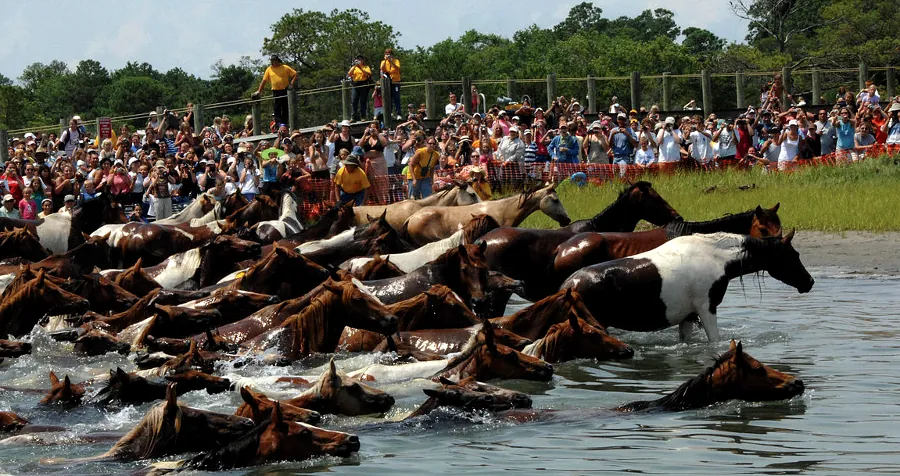
Tip: In Virginia, the Chincoteague herd is rounded up each July for the Pony Penning swim. If you want to see that event, plan months ahead — it draws big crowds.
How long a visit to see the horses takes
A half-day is enough to see horses on either side, if you go at the right time. The table below shows what changes that.
| Situation | How long | What changes it | What to watch for |
|---|---|---|---|
| Quick drive-through, Maryland | 1-2 hours | Time of day, herd location | Horses cluster near the road in the morning |
| Full loop, Chincoteague Refuge | 3-4 hours | Bike vs. car, trail choice | Bikes reach the service road faster |
| Beach walk with horses nearby | 2-3 hours | Tide and season | High tide narrows the beach badly |
| Pony Penning week, Virginia | Full day | Crowd size, parking | Arrive before 7 a.m. or park far away |
| Camping overnight, Maryland | 1-2 nights | Weather, campsite booking | Horses roam right through campsites |
If you’ve driven the whole loop and seen nothing, stop at a ranger station and ask where the herd was last spotted. Rangers track them daily, and that one question saves hours.
Signs the horses are close and settled
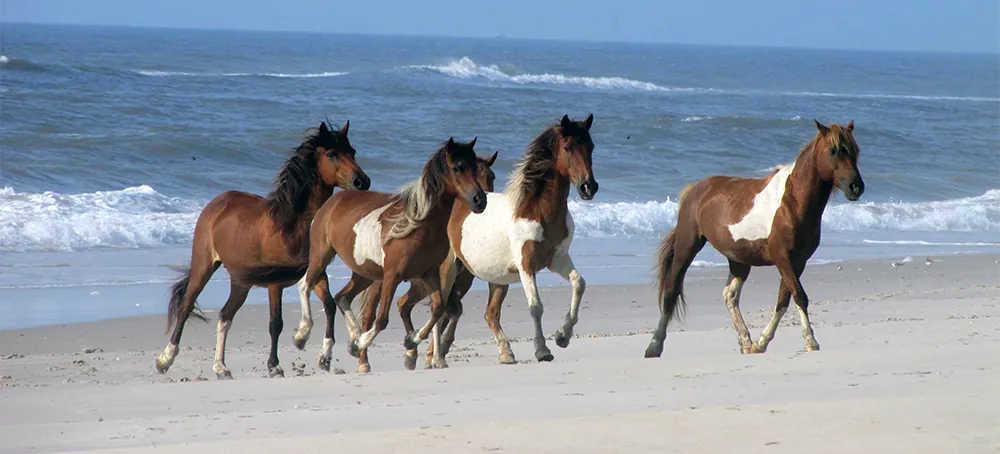
You’ll usually hear horses before you see them. Grazing sounds like steady ripping and crunching as they pull marsh grass, and a relaxed herd keeps its heads down and tails moving. When a horse lifts its head and stares straight at you with ears forward, it’s watching you — stop moving and give it room.
The clear sign you’re too close is a horse turning its body toward you, pinning its ears back, or stomping a front hoof. That’s a warning, not a greeting. Back away slowly and don’t run, because running can trigger a chase.
When signs disagree — one horse looks calm, another looks tense — trust the tense one. The National Park Service publishes the rules for the Maryland herd, including the 40-foot distance, and those rules settle any doubt about how near you can safely stand.
Mistakes that spoil an Assateague horse visit
- Feeding a horse from your hand. It teaches the herd to approach people for food, and food that isn’t grass makes horses sick. Fed horses become pushy and sometimes get removed from the island. Keep every snack sealed in your car instead.
- Walking between a mare and her foal. A mother will charge to protect her baby, and she’s fast over short distances. Give any foal a wide path, and never step into the gap between them.
- Leaving your car door open with food inside. Horses stick their heads straight in and can damage the door, the seats and themselves. Close up, roll up the windows, and lock it.
- Assuming the horses are tame because they’re small. They’re wild, they bite and kick, and they weigh several hundred pounds. Treat every one like a wild animal, because that’s what it is.
- Ignoring the tide on a beach walk. A rising tide can cut off the path back, and horses don’t care about your schedule. Check the tide chart before you set out.
Frequently asked questions
How many horses are on Assateague Island right now?
Around 300 total, split between roughly 75 to 80 in Maryland and 150 to 200 in Virginia. The number shifts every year with births and deaths, so check the Assateague Island National Seashore or Chincoteague National Wildlife Refuge website for the current figure before you go.
How long do the Assateague horses live?
Wild Assateague horses typically live into their late teens to early twenties, though some reach their late twenties. Life span depends on food supply, weather, parasites and whether the herd is managed with contraception. The parks don’t publish a single official life span, so treat any exact figure with care.
Is it safe to get close to the wild horses?
No. Stay at least 40 feet away at all times. The horses bite, kick and charge, and they can injure an adult easily. Keep that distance even when a horse walks toward you — back away slowly, and never turn your back and run.
Why are the horses on Assateague and not on the mainland?
They’ve lived on the barrier island for centuries, and the two herds are kept separate by a fence along the Maryland-Virginia state line. Keeping them on the island protects them from traffic and lets the parks control herd size. The National Park Service manages the Maryland side.
Can I bring my dog to see the horses?
Yes, in Maryland, but only in certain areas, on a 6-foot leash, and never on the beach or in the wildlife areas. In Virginia, dogs are allowed only in certain areas and never on the refuge trails. Check the specific park’s pet rules before you go, because they differ by side.
What happens if a horse bites or kicks someone?
Get medical help right away — call 911 for a serious injury. Then report it to a park ranger, who needs to know which horse was involved. Don’t try to treat a deep bite or kick wound yourself, because horse injuries can break bones and cause infection.
How often do foals get born on Assateague?
Most foals arrive between April and June, once a year per mare. Around 10 to 20 foals are born across both herds in a typical spring, though the exact count varies. The parks announce new foals on their websites, and Virginia’s herd is rounded up each July.
Conclusion
Seeing the Assateague horses is easy once you know the two herds are separate and the distance rule is firm. Go early, keep your food sealed, stay 40 feet back, and let the horses be wild — that’s what makes the place worth the trip.