
When you notice a horse is lame, the first step is to confine the animal to a stall or a small, flat paddock to prevent further injury. You should examine the hoof for foreign objects, heat, or swelling to determine if you need a veterinarian. Immediate rest is the safest response until you identify the specific source of the pain.
Why your horse is lame
| Cause | How common | How to confirm it | Fix it yourself? |
|---|---|---|---|
| Hoof abscess | Very common | Heat in hoof, strong pulse | Yes, with care |
| Stone bruise | Common | Sensitive to hoof testers | Yes |
| Navicular syndrome | Common | Heel pain, short stride | No |
| Soft tissue strain | Frequent | Visible swelling or heat | No |
| Joint inflammation | Frequent | Stiffness after rest | No |
| Bone fracture | Rare | Severe non-weight bearing | No |
Dealing with a Hoof Abscess
A hoof abscess is a pocket of infection inside the hoof capsule that causes sudden, intense pain. The pressure builds up because the hoof wall is rigid, leaving nowhere for the pus to go. This makes the horse appear sound one day and nearly unable to walk the next, often holding the foot up entirely.
To confirm an abscess, feel the coronet band or the back of the pastern for a strong, bounding digital pulse. You can also use hoof testers to find a specific point of sensitivity on the sole or frog. If the horse reacts sharply to pressure in one area, it’s likely the site of the infection.
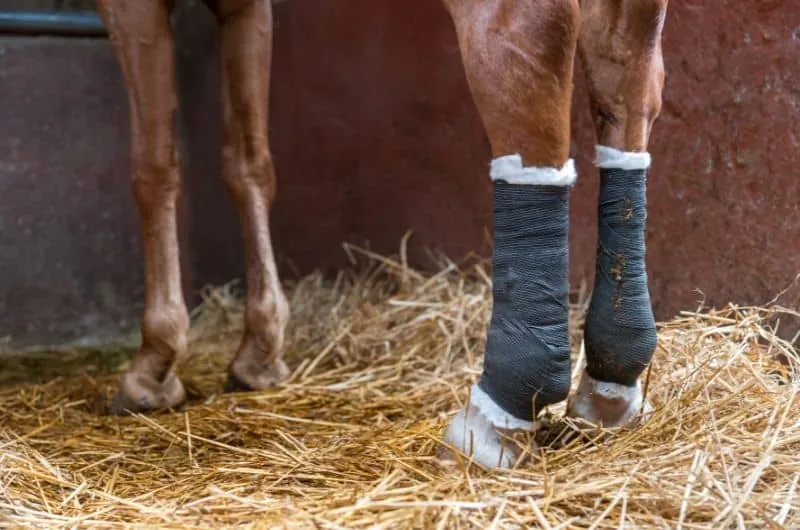
The standard treatment involves soaking the foot in a warm solution of Epsom salts and water for 15 to 20 minutes twice daily to help clean the area and reduce inflammation. Once it drains, keep the area clean with a sterile bandage to prevent dirt from entering the hole.
If the horse doesn’t show improvement after 48 hours of soaking, you must call a vet. Never dig into the sole with a knife unless you have received specific training from a farrier, as you risk causing permanent damage to the sensitive internal structures.
Identifying Stone Bruises
A stone bruise happens when a horse steps on a hard object, causing trauma to the soft tissue beneath the sole. Unlike an abscess, which is an infection, a bruise is simply internal tissue damage similar to a human black-and-blue mark. You’ll notice the horse is sensitive on hard ground but moves more comfortably on soft grass or sand.
You can tell this apart from an abscess because a bruise usually shows no heat in the hoof wall and the digital pulse remains normal. If you use hoof testers, the horse will show sensitivity across a broader area of the sole rather than a single, pinpoint spot.
The fix is simple: provide the horse with soft, level footing for several days. If the horse is shod, a farrier can add a leather or plastic pad to protect the sole while it heals. If you’re working the horse, stop all riding on gravel or rocky terrain until the gait returns to normal.
If the lameness persists for more than a week, it may be something more serious like a fracture or deep tissue injury. Always consult your farrier if you’re unsure about the depth of the bruise or if the horse’s comfort doesn’t improve with rest.
Managing Soft Tissue Strains
A soft tissue strain involves damage to tendons or ligaments caused by overexertion or a slip in the field. These injuries often present as visible swelling or warmth along the back of the cannon bone or around the fetlock joint. You’ll notice the horse is stiffer when first coming out of the stall after a night of rest.
This condition is different from hoof-related pain because the issue is located in the leg itself, not the foot. You’ll see swelling that doesn’t go away when the horse walks, and the horse will be sensitive to touch along the affected tendon.
Cold therapy is the most effective way to manage the inflammation in the first 24 to 48 hours. Apply cold water or ice packs to the area for 20 minutes at a time, three times a day, to reduce heat.
The American Association of Equine Practitioners notes that a professional exam is essential to determine the severity of tendon damage, as these injuries require long-term rehabilitation. Keep the horse confined to a stall to limit movement, as any exercise can worsen the tear. Don’t attempt to “walk off” the injury, as this often causes further damage to the healing fibers.
Rare Causes of Equine Lameness
- Fractures: These cause sudden, severe pain and require immediate veterinary X-rays and immobilization.
- Lyme disease: This bacterial infection causes shifting lameness that moves from one leg to another over time.
- Neurological issues: Problems like EPM cause a lack of coordination rather than true pain-based limping.
- Severe arthritis: This is a degenerative condition that usually develops slowly over many months or years.
If the horse shows signs of a fracture, keep them perfectly still and call a vet immediately; moving an injured horse can turn a treatable break into a life-threatening one.
What a Fix Usually Involves

Fixing a lame horse often demands a mix of time, basic medical supplies, and professional oversight. Simple issues like bruises require only a change in environment, which costs nothing but your time in rearranging the turnout area. Abscesses require supplies like Epsom salts, bandages, and antiseptic, which are inexpensive and available at most farm supply stores.
More complex issues like tendon strains or joint disease require professional diagnostics. A vet visit for a lameness exam involves a physical assessment, flexion tests, and potentially nerve blocks or diagnostic imaging. The cost depends on the specific tests required and the equipment used, such as digital X-rays or ultrasound.
Check the official price list of your local veterinary clinic before scheduling an appointment to understand their current call-out fees. Always prioritize professional advice over home remedies when the horse is in severe pain or fails to improve within a few days.
Frequently asked questions
Can I ride a horse that’s slightly lame?
No, you should never ride a horse that’s displaying signs of lameness. Riding places extra weight on the injured limb, which can turn a minor strain into a permanent injury. Rest is the most important part of the healing process for any horse experiencing discomfort.
How long does a hoof abscess take to heal?
An abscess typically heals in 7 to 10 days if it’s allowed to drain properly and kept clean. The horse usually feels significant relief within 24 hours of the abscess bursting. If the horse is still limping after 10 days, you need to consult your farrier or veterinarian.
Is it safe to give my horse pain medication?
It isn’t safe to give pain medication without a prescription from your veterinarian. Drugs like phenylbutazone can mask the source of the pain, which makes it harder for the vet to diagnose the issue during an exam. Always wait for a diagnosis before starting any medication.
What happens if I ignore mild lameness?
Ignoring mild lameness often leads to chronic injury or permanent damage to the horse’s joints and tendons. A horse that compensates for one sore leg will eventually put too much stress on the other three, leading to secondary issues. Early treatment is always cheaper and more effective than late-stage repair.
How do I know if the lameness is in the foot or leg?
You can tell by observing where the horse shows sensitivity and heat. If the heat and swelling are in the hoof, the issue is likely in the foot. If the heat or pain is higher up, such as the fetlock or cannon bone, the injury is likely in the leg.
Does it matter if the ground is hard or soft?
Yes, the ground quality significantly changes how the horse moves and heals. Hard ground increases the impact on the hooves and joints, which is bad for bruises or arthritis. Soft, level ground is best for initial recovery, but deep, uneven mud can strain tendons and ligaments further.
Conclusion
Keep a close eye on your horse’s progress over the next few days, as even minor issues shouldn’t be ignored. If the limping doesn’t improve with rest, you’ll want to schedule a professional evaluation. It’s always better to be safe than sorry when it comes to your horse’s long-term comfort and health.