
When a horse breaks a leg, the bone usually can’t be repaired well enough to bear the animal’s weight again, and the injury is often fatal — not because the fracture is instantly deadly, but because horses can’t survive the long immobilization that healing a weight-bearing limb requires. The reality is more complicated than the old saying suggests, because a small number of fractures in the lower leg can be treated, and the outcome depends on which bone broke, how it broke, and how quickly a veterinarian gets involved.
Key Takeaways
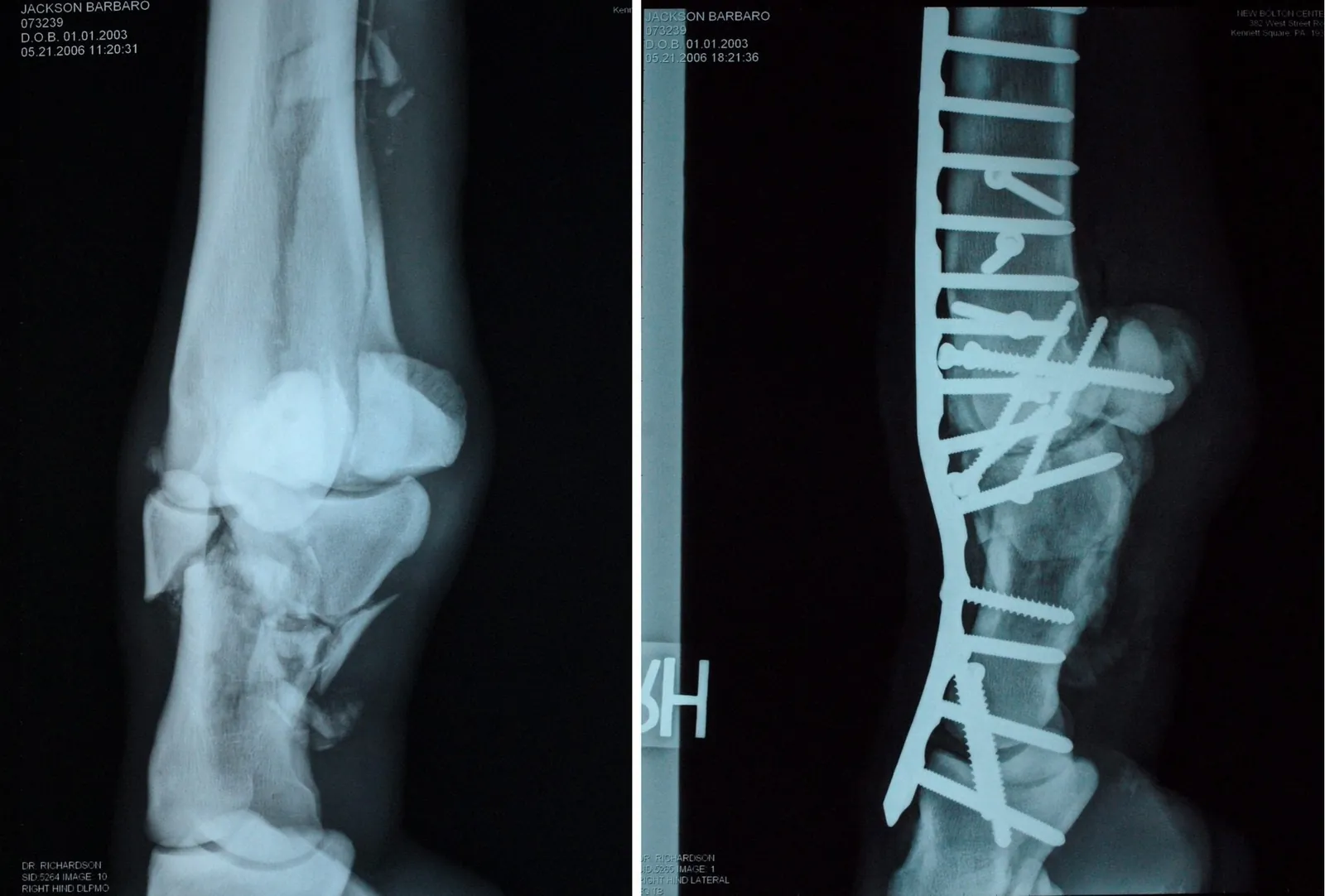
- Most leg fractures in adult horses are fatal, but the reason is biology, not a lack of veterinary skill.
- Horses can’t lie down for weeks the way a dog or human can — their circulation, lungs, and muscles break down under prolonged recumbency.
- Lower-leg fractures below the knee or hock have the best chance of repair; fractures in the femur, humerus, or pelvis are usually catastrophic.
- A veterinarian’s first job is assessment, not automatically euthanasia — some cases are treatable and some are not.
- Cost of surgical repair typically runs from about $5,000 to $20,000 or more, and success is never guaranteed.
- Immediate first aid means keeping the horse still and calling a vet; moving a horse with a broken leg can worsen the injury.
Why a Broken Leg Is So Serious for a Horse
Horses are built to stand. Their bodies evolved around near-constant weight-bearing on four legs, and that design creates a brutal Catch-22 when one leg fails.
A horse’s circulatory system depends partly on movement. When a horse stands and shifts weight, the flexing of its legs helps pump blood back up toward the heart. Lying down for extended periods causes pooled blood, pressure sores, and muscle damage. The lungs also struggle: a large animal lying flat can’t inflate its lungs as effectively, which leads to pneumonia within days.
There’s also the problem of the other three legs. If a horse must shift all its weight onto the remaining good legs, those legs can develop laminitis — a painful, often irreversible breakdown of the tissue connecting the hoof wall to the bone. Laminitis in the supporting limb is frequently what forces the decision to euthanize, even when the original fracture could theoretically be fixed.
The Bones Involved Matter Enormously
Not all broken legs are equal. The location of the fracture is the single biggest factor in whether treatment is even possible.
| Bone / Region | Typical Outcome | Why |
|---|---|---|
| Pastern, long pastern (P1) | Sometimes repairable | Small bone, can be stabilized with screws or casts |
| Cannon bone (third metacarpal) | Often repairable in young horses | Can be plated; prognosis fair in foals |
| Sesamoid bones | Guarded to poor | Critical to the fetlock’s support structure |
| Radius or tibia | Guarded | Large weight-bearing bones; surgery is complex |
| Femur, humerus, pelvis | Usually fatal | Deep, hard to access; can’t be stabilized externally |
The lower the fracture and the smaller the bone, the better the odds. That’s why a broken pastern in a foal is a very different situation from a shattered pelvis in a 1,200-pound adult.
What Actually Happens at the Scene
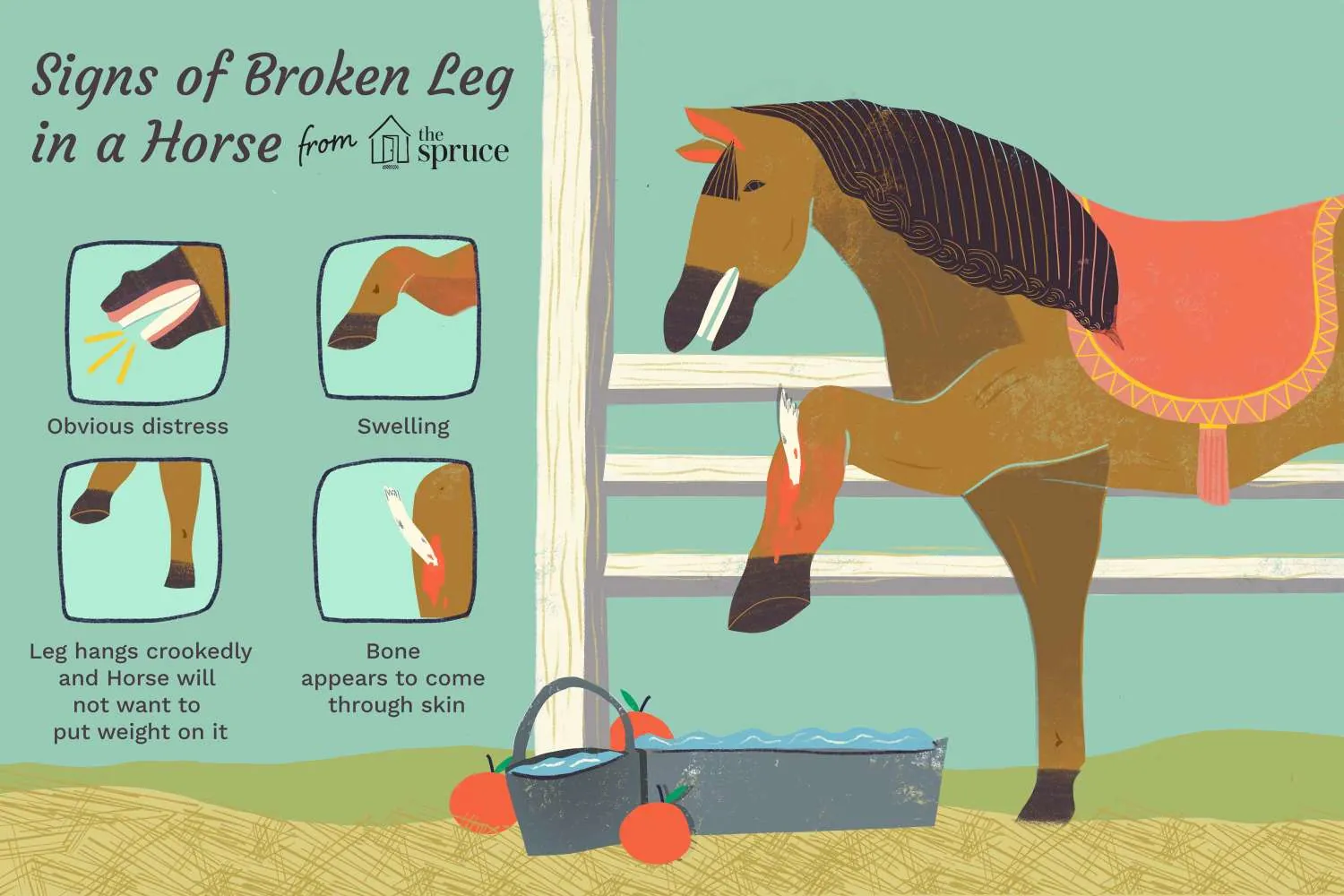
If you’re present when a horse breaks a leg, the first minutes matter — but not in the way people expect. You aren’t going to “save” the leg by acting fast. You’re going to prevent the horse from making it worse.
- Keep the horse as still as possible. A panicked horse thrashing on a broken leg can turn a simple fracture into a compound one, where bone breaks through the skin and infection becomes almost certain.
- Don’t try to splint it yourself unless a veterinarian instructs you to. A poorly applied splint can cut off circulation or shift the bone.
- Call your veterinarian immediately. Describe the injury, the horse’s demeanor, and whether the bone is exposed.
- Keep other horses calm and away if they’re agitating the injured animal.
- Prepare for a difficult conversation. Many vets will arrive already knowing that euthanasia is the likely outcome.
Warning: Never attempt to walk or trailer a horse with a suspected leg fracture before a vet has assessed it. Movement can displace the bone and make an already grave situation unrecoverable.
Can a Broken Leg Ever Be Fixed?
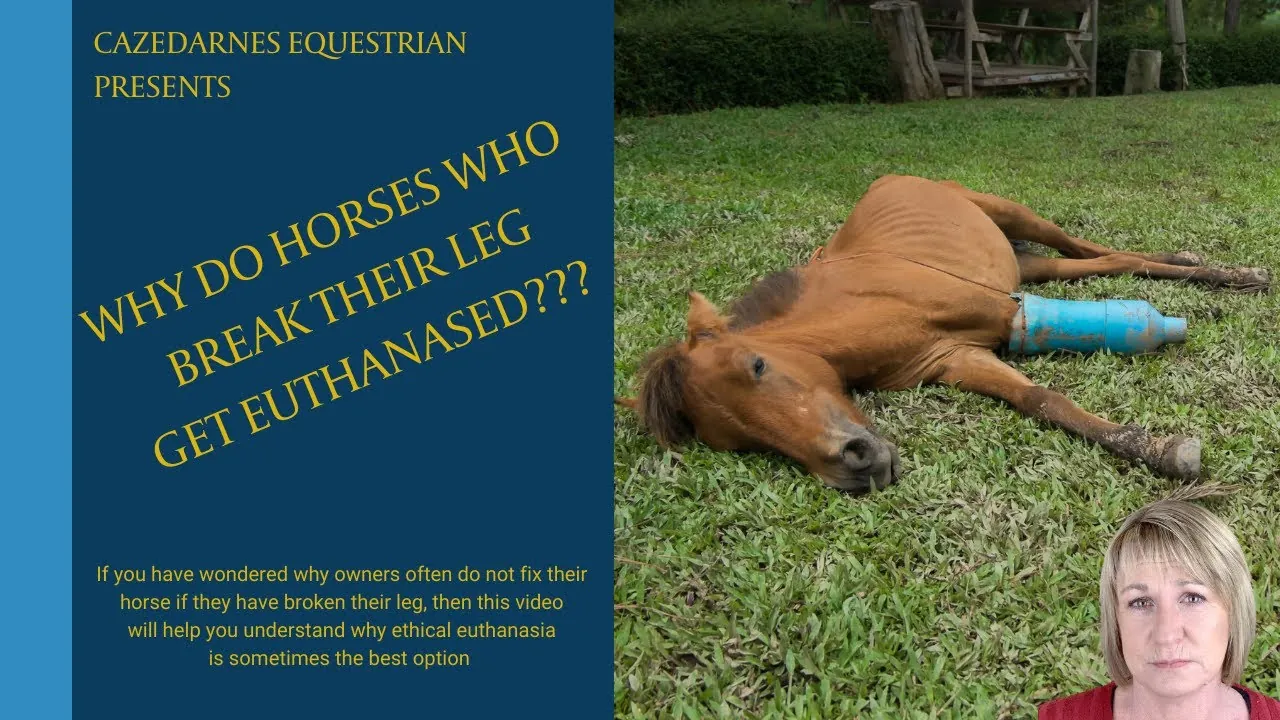
Yes — sometimes. The cases that get repaired tend to share specific features: a young horse, a fracture in the lower leg, a clean break rather than a shatter, and an owner able to commit to months of intensive care and significant expense.
Treatment options include:
- Surgical fixation with plates, screws, or pins to hold the bone together while it heals.
- External fixation using a cast or frame that stabilizes the limb from outside.
- Stall rest and support for minor, stable fractures that don’t require surgery.
- Slings to take weight off the limb — used carefully, since slings themselves cause problems if used too long.
Even in the best cases, the recovery period runs six months to a year, and the horse may never return to its previous level of activity. Many become pasture-sound at best.
Why Euthanasia Is Often the Kindest Choice
The decision to euthanize isn’t about giving up. It’s about recognizing that the horse’s welfare — not the owner’s hope — has to lead.
A horse that can’t stand comfortably, that’s developing laminitis in its supporting legs, or that faces a fracture that can’t be stabilized is facing a prolonged, painful decline. Euthanasia ends that suffering immediately. Veterinarians generally frame it as a welfare decision, not a failure of medicine.
This is also why the old line about “they shoot horses, don’t they” exists. It reflects a real, hard truth about the limits of what can be done for a 1,000-pound animal that must stand to live.
What About Foals and Young Horses?
Foals have a real advantage: they’re lighter, their bones heal faster, and they can sometimes be kept off a limb more effectively. A foal with a broken leg has a genuinely better prognosis than an adult with the same injury.
That said, foals present their own challenges. They grow quickly, which can undo surgical repairs, and they need specialized care at a referral hospital. The American Association of Equine Practitioners publishes resources on equine health and welfare that owners often consult when weighing these decisions.
The Cost Reality
Owners frequently ask what treatment costs. The honest answer is that it varies enormously, but here are typical ranges:
| Treatment Path | Typical Cost Range |
|---|---|
| Field euthanasia | $100 – $400 |
| Diagnostic imaging (X-rays, exam) | $200 – $800 |
| Surgical repair at referral hospital | $5,000 – $20,000+ |
| Post-operative care and rehab | $3,000 – $15,000+ |
These are estimates, not quotes. A university teaching hospital will charge differently than a private clinic, and complications add cost fast.
Pro Tip: If you’re facing this decision, ask your veterinarian directly about prognosis, not just price. A $15,000 surgery with a poor outcome isn’t a kindness to the horse or your finances.
How to Prepare Before It Happens
No owner wants to think about this, but preparation makes a terrible moment slightly more bearable.
- Know your veterinarian’s emergency number and keep it somewhere you can find it in the dark.
- Understand your horse’s insurance coverage — many policies exclude elective or catastrophic fracture repair.
- Decide in advance what you would and wouldn’t do. Discuss it with your vet while everyone is calm.
- Have a euthanasia plan that doesn’t depend on a vet arriving in time.
- Consider a welfare-focused mindset. The goal is the horse’s comfort, not the owner’s guilt.
Frequently Asked Questions
Do horses always die when they break a leg?
No, but most do. A small percentage of lower-leg fractures in young or small horses can be surgically repaired. The determining factors are the bone involved, the type of fracture, the horse’s age and size, and whether the owner can commit to months of care and significant cost.
Why can’t a horse just lie down while its leg heals?
Because a horse’s body isn’t built for it. Prolonged lying down causes pneumonia, pressure sores, muscle damage, and dangerous blood pooling. The circulatory and respiratory systems depend on the horse standing and moving, so “just resting” isn’t a safe option for weeks on end.
Can a horse survive on three legs?
Rarely for long. The three remaining legs must bear extra weight, which commonly triggers laminitis — a painful and often irreversible condition. Supporting-limb laminitis is one of the main reasons a broken leg becomes fatal even when the fracture itself might have healed.
How much does it cost to fix a horse’s broken leg?
Surgical repair typically runs from about $5,000 to $20,000 or more at a referral hospital, with post-operative care adding thousands more. Field euthanasia, by contrast, usually costs $100 to $400. These are typical ranges, not fixed prices, and they vary by region and clinic.
Is it cruel to euthanize a horse with a broken leg?
Veterinarians generally consider it a welfare decision, not cruelty. When a fracture can’t be stabilized or the horse is suffering, ending its life quickly prevents a prolonged, painful decline. It’s often described as the kindest available option rather than a failure of care.
What should I do right now if my horse just broke its leg?
Keep the horse as still and calm as possible, don’t attempt to splint or move it, and call your veterinarian immediately. Prevent thrashing, keep other horses away, and be prepared for the possibility that euthanasia is the recommended outcome.
Conclusion
If you’re facing this situation right now, call your veterinarian before doing anything else — and if you’re simply preparing for the future, save your vet’s emergency number and have an honest conversation about your horse’s prognosis and your own limits while there’s no crisis forcing the decision.