
The image of the Four Horsemen of the Apocalypse charging across the horizon has haunted the human imagination for centuries. Their names, Conquest, War, Famine, and Death, evoke fear, awe, and fascination. Rooted in religious texts, art, and popular culture, the Horses of the Apocalypse have become symbolic representations of cataclysmic change and human vulnerability. Whether seen as harbingers of doom or metaphors for real-world crises, their enduring legacy continues to shape how societies interpret threats and transformation.
As we explore the origins, interpretations, and modern significance of these mythic riders, we uncover not just the stories themselves, but also the ways they mirror the anxieties and hopes of every era. From ancient biblical manuscripts to blockbusters and video games, the Horses of the Apocalypse have trotted through history, carrying with them a deep resonance that bridges religion, art, psychology, and politics.
This article provides a comprehensive analysis of their journey from scripture to screen, and from fearsome prophecy to cultural icon.
Key Takeaways
- The Four Horsemen of the Apocalypse originate from the Book of Revelation, symbolizing Conquest, War, Famine, and Death.
- Their imagery has evolved through centuries, influencing art, literature, psychology, and popular culture.
- Different religions and cultures interpret the Horsemen in unique ways, reflecting diverse worldviews and fears.
- Modern events and crises are frequently compared to the Horsemen, underlining their ongoing relevance.
- Understanding the symbolism of the Apocalypse Horses offers insight into human responses to crisis and transformation.
Historical And Scriptural Origins
The concept of the Horses of the Apocalypse is deeply entrenched in religious tradition, particularly within Christian eschatology. Their earliest and most influential depiction comes from the Book of Revelation in the New Testament.
The Book Of Revelation: A Prophetic Vision
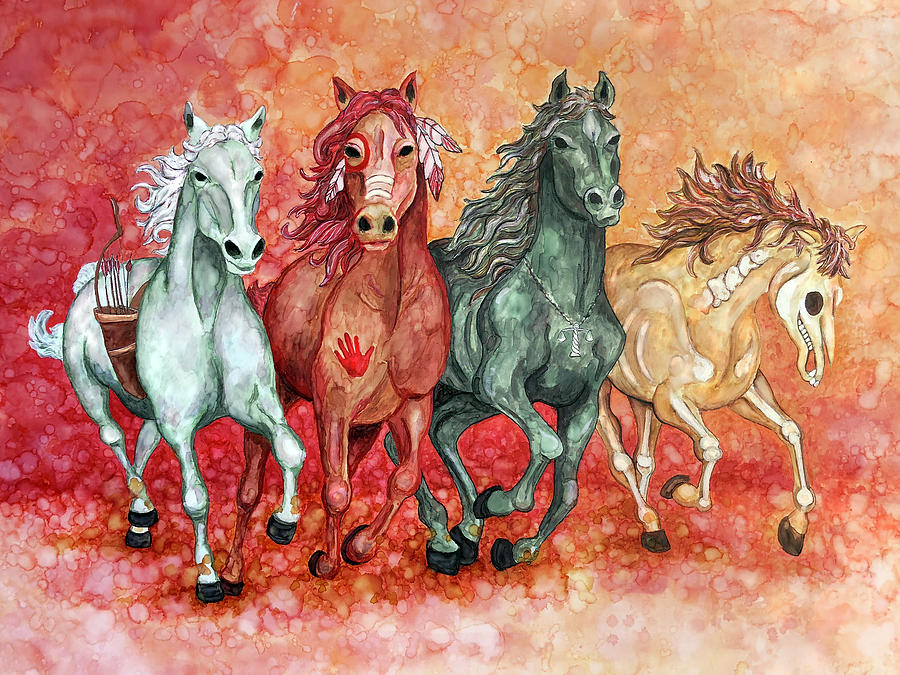
The Book of Revelation, attributed to John of Patmos, was written in the late first century CE during a period of turmoil for early Christians. The text describes a series of visions, including the opening of seven seals, each unleashing a new catastrophe upon the world. The first four seals release the legendary Horsemen:
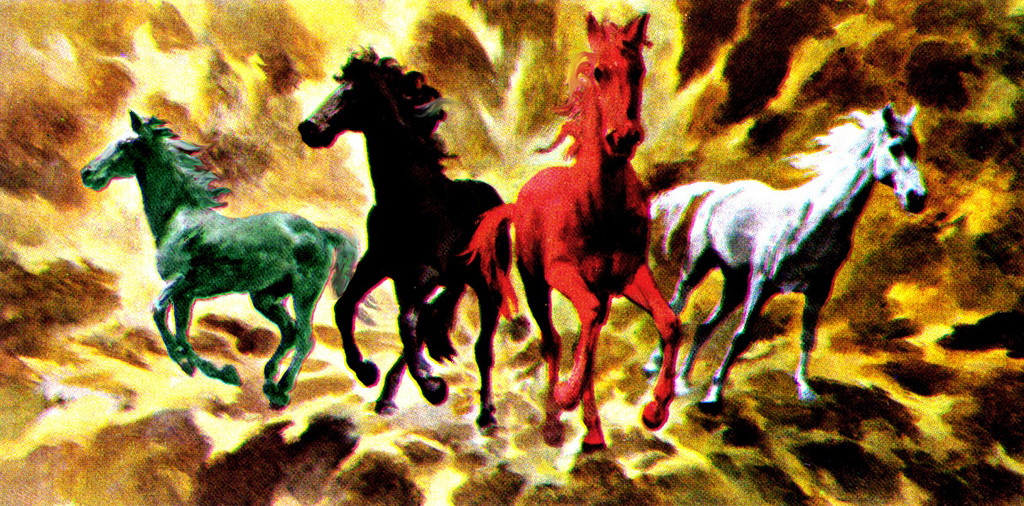
- White Horse (Conquest or Pestilence)
- Red Horse (War)
- Black Horse (Famine)
- Pale Horse (Death)
Each rider is accompanied by distinct imagery and a role in the unfolding apocalypse. The Book of Revelation 6:1-8 lays out these visions, with each Horseman representing forces that bring suffering and judgment.
Symbolism In Early Christian Thought
Early Church Fathers interpreted the Horsemen both literally and allegorically. For some, the Horsemen were signs of imminent divine wrath; for others, they were symbolic warnings against moral decay and spiritual complacency. The white horse was especially ambiguous, sometimes seen as Christ or the spread of the Gospel, but more often as a force of conquest or even pestilence.
Broader Religious Contexts
While the Four Horsemen are most closely associated with Christianity, apocalyptic horsemen or riders also appear in other religious traditions:
- Islamic eschatology describes tribulations before Judgment Day, including destructive figures, though not explicitly four horsemen.
- Jewish apocalyptic literature (such as the Book of Zechariah) features colored horses delivering divine messages, likely influencing Revelation’s imagery.
- Hinduism speaks of Kalki, the future avatar of Vishnu, who appears on a white horse to end the current age of darkness.
This cross-cultural presence underscores the universal power of the horse and rider motif as symbols of transformation and judgment.
Key Biblical Passages
A comparison of the most relevant biblical references illustrates both the specificity and ambiguity of the Horsemen’s identities.
| Horse | Biblical Description (Revelation 6:1-8) | Common Interpretation |
|---|---|---|
| White | Rider with a bow, given a crown, set out to conquer | Conquest or Pestilence |
| Red | Rider given a great sword, takes peace from the earth | War |
| Black | Rider with scales, speaks of famine and scarcity | Famine |
| Pale | Rider named Death, followed by Hades, kills by sword, famine, plague, and beasts | Death |
Example: Early Medieval Interpretations
In the 6th-century writings of Gregory the Great, the Horsemen were interpreted as both literal threats and spiritual lessons. Gregory warned that the Horsemen symbolized the ever-present dangers of war, hunger, and death, but also the need for moral vigilance.
Credit: fineartamerica.com
Evolution In Art, Literature, And Culture
Over the centuries, the Horses of the Apocalypse have inspired a vast legacy of art, literature, and cultural references. Their imagery has been reinterpreted to reflect contemporary fears and hopes.
Medieval And Renaissance Art
Artists from the Middle Ages to the Renaissance were fascinated by apocalyptic themes. The Horsemen appeared in illuminated manuscripts, church frescoes, and woodcuts.
- Albrecht Dürer’s “The Four Horsemen of the Apocalypse” (1498) remains one of the most iconic depictions, capturing the terror and dynamism of the riders.
- Illuminated bibles and medieval tapestries brought the Horsemen into daily religious life, reinforcing their message through visual storytelling.
Literature: From Dante To Modern Novels
The motif of the Four Horsemen permeates both classic and modern literature.
- Dante Alighieri referenced apocalyptic riders in “The Divine Comedy,” linking them with the consequences of sin.
- In the 20th century, authors like Terry Pratchett and Neil Gaiman reimagined the Horsemen in “Good Omens” as quirky, almost sympathetic characters, blending humor with catastrophe.
- Cormac McCarthy’s “The Road” invokes the Horsemen metaphorically, depicting a world devastated by unnamed disaster.
Music, Film, And Pop Culture
The Horsemen have galloped into the realms of music and film, often as symbols of chaos or the end of an era.
- The band Metallica references them in their song “The Four Horsemen,” using the motif as a metaphor for unavoidable fate.
- Films like “X-Men: Apocalypse” and video games such as “Darksiders” reinterpret the Horsemen as powerful antagonists or antiheroes.
Example: “the Seventh Seal” By Ingmar Bergman
Ingmar Bergman’s 1957 film “The Seventh Seal” uses the imagery of the Horsemen to explore existential dread and the search for meaning in a world shadowed by plague and war. The film’s famous chess game with Death draws directly from apocalyptic tradition.
Cultural Adaptations And Parodies
The Horsemen’s ominous presence is sometimes softened through parody and satire. Cartoons, comic books, and sitcoms occasionally reference “the Four Horsemen of the ____” to humorously describe everything from office politics to dietary fads.
Data Table: Popular Cultural References To The Horsemen
| Medium | Title/Series | Year | Nature of Reference |
|---|---|---|---|
| Art | Dürer’s “The Four Horsemen” | 1498 | Literal depiction |
| Literature | “Good Omens” (Pratchett & Gaiman) | 1990 | Comic reinterpretation |
| Music | Metallica’s “The Four Horsemen” | 1983 | Metaphorical |
| Film | “X-Men: Apocalypse” | 2016 | Superhero adaptation |
| Video Game | “Darksiders” | 2010 | Playable characters |

Credit: www.puzzlewarehouse.com
The Four Horsemen: Symbolism And Psychological Impact
The symbolism of the Four Horsemen reaches beyond religious or artistic expression, resonating with deep psychological and societal themes.
Archetypes Of Crisis And Change
Each Horseman embodies a different type of crisis:
- Conquest: The fear of being overwhelmed by external forces or ideologies.
- War: The trauma and chaos of conflict.
- Famine: Anxiety over scarcity and survival.
- Death: The ultimate existential threat.
These archetypes reflect universal human experiences, helping societies make sense of disruptive events.
The Horsemen As Metaphors For Modern Problems
Modern thinkers have adapted the Horsemen motif to describe contemporary issues:
- Biologists sometimes refer to the Horsemen when discussing mass extinction events or pandemics.
- Psychologists use the imagery to describe the cumulative stress of multiple simultaneous crises.
For example, in his research, Dr. John Gottman refers to the “Four Horsemen” as metaphorical predictors of relationship breakdown: criticism, contempt, defensiveness, and stonewalling, a clever adaptation of the apocalyptic theme.
Pro Tip:
The use of the Horsemen as metaphors can help clarify complex threats, but it’s important to avoid fatalistic thinking. Recognizing the symbolic power of the Horsemen can motivate constructive responses to crisis.
Case Study: The Horsemen And Global Health Crises
During the COVID-19 pandemic, media and scholars frequently invoked the Horsemen to frame the crisis, highlighting how disease (sometimes conflated with Conquest or Pestilence), economic collapse (Famine), civil unrest (War), and mortality (Death) seemed to converge. This illustrates the enduring relevance of the Horsemen as a way to understand and communicate the scale of catastrophe.
Collective Psychology And Apocalyptic Anxiety
The repeated invocation of the Horsemen during times of upheaval reflects a psychological pattern:
- Sense-making: The Horsemen provide a narrative structure for chaotic events.
- Collective anxiety: Apocalyptic imagery can amplify fear but also foster solidarity.
- Coping mechanism: By naming and visualizing threats, societies can begin to address them.
Table: The Horsemen And Modern Psychological Constructs
| Horseman | Modern Psychological Parallel | Example Application |
|---|---|---|
| Conquest | Fear of invasion or ideological dominance | Spread of disinformation |
| War | Interpersonal or societal conflict | Political polarization |
| Famine | Anxiety about resource scarcity | Food insecurity |
| Death | Morbidity and existential dread | Pandemic mortality rates |
Credit: www.esotericmeanings.com
Interpreting The Horsemen In Different Cultures
Although the Four Horsemen originate in a Christian context, their motifs have been adapted and reinterpreted across cultures and historical periods.
Western Interpretations
In Western societies, the Horsemen are often seen as literal agents of the apocalypse, but their meanings have shifted over time:
- In the Middle Ages, they were viewed as divine punishments.
- During the Enlightenment, they became symbols of natural disasters or social upheaval.
- In the modern era, they are often seen as metaphors for systemic risks, war, economic crisis, environmental collapse.
Eastern Parallels And Adaptations
Eastern cultures have their own apocalyptic imagery, sometimes incorporating horsemen-like figures:
- In Chinese mythology, the notion of “Heavenly Punishment” or the Four Perils (though not horsemen) echoes similar themes.
- Hindu tradition’s Kalki rides a white horse to usher in renewal after destruction, paralleling the cyclical nature of time.
Indigenous And Folk Traditions
Indigenous cultures often have their own end-times narratives, sometimes featuring riders or animals as messengers of change, though not always directly linked to the Four Horsemen.
Example: Russian Folklore
In Russian folklore, the image of the “Horseman on the White Horse” can symbolize both hope and doom, depending on the context. During periods of war or famine, folk songs and tales would invoke this figure as a harbinger of change.
Syncretic And Modern Spiritual Movements
New religious movements and syncretic faiths reinterpret the Horsemen in light of contemporary issues such as climate change or nuclear threat, often blending biblical imagery with scientific or ecological concerns.
Pro Tip:
When analyzing references to the Horsemen in various cultures, consider both the universal themes (change, crisis, transformation) and the local context (historical events, cultural anxieties).
The Horsemen And Modern Crises: Case Studies
The power of the Four Horsemen metaphor is most evident during times of global crisis. In this section, we explore three real-world case studies where the imagery of the Apocalypse Horses has shaped public discourse and response.
Case Study 1: The World Wars
During both World War I and World War II, newspapers, propaganda posters, and sermons invoked the Horsemen to convey the magnitude of destruction.
- War was depicted as the most immediate threat, but famine and death soon followed.
- Artists such as Otto Dix used apocalyptic imagery to capture the devastation of the battlefield.
- The phrase “the Horsemen ride again” appeared frequently in literature and political commentary.
Case Study 2: Climate Change And Environmental Collapse
In recent decades, environmentalists and scientists have adopted the Horsemen motif to illustrate interconnected global threats:
- Conquest: Human expansion into fragile ecosystems.
- War: Resource conflicts exacerbated by scarcity.
- Famine: Crop failures and food insecurity due to climate change.
- Death: Species extinction and human mortality.
The Intergovernmental Panel on Climate Change (IPCC) has warned of cascading crises reminiscent of the Horsemen’s combined impact (IPCC Report).
Case Study 3: Economic Crises
Financial collapses, such as the Great Depression and the 2008 Global Financial Crisis, have also been described in terms of the Horsemen:
- Famine: Mass unemployment and poverty.
- War: Social unrest and political upheaval.
- Death: Increased mortality due to poverty and lack of resources.
Journalists and economists frequently use apocalyptic language to emphasize the systemic nature of such crises.
Example: “the Four Horsemen Of Banking”
During the 2008 crisis, financial commentators labeled the largest failing banks as the “Four Horsemen,” symbolizing the domino effect of institutional collapse.
Pro Tip:
When using the Horsemen metaphor for modern crises, it is essential to balance drama with accuracy. Overuse can desensitize audiences but, when applied judiciously, the metaphor clarifies the stakes and spurs action.
The Horsemen In Popular Media And Entertainment
The enduring appeal of the Apocalypse Horses is evident in their persistent presence in movies, television, games, and other forms of entertainment. These representations both reflect and shape public perceptions of crisis and heroism.
Film And Television Adaptations
The Horsemen have been adapted for the screen in both literal and metaphorical forms:
- “Supernatural” (TV Series): Features the Horsemen as recurring antagonists, each with distinct personalities and powers.
- “X-Men: Apocalypse” (Film): Reimagines the Horsemen as mutants serving a powerful villain.
- “Sleepy Hollow” (TV Series): The Headless Horseman is a direct nod to apocalyptic imagery.
These adaptations often emphasize the individual personalities of the Horsemen, making them more relatable or terrifying.
Video Games: Interactive Apocalypses
Video games offer immersive experiences with the Horsemen, allowing players to embody or confront them:
- “Darksiders”: Players control War and Death as antiheroes seeking redemption.
- “Red Dead Redemption: Undead Nightmare”: Features the Four Horses as special mounts, each with unique powers.
These representations explore themes of agency, morality, and the thin line between hero and villain.
Comics And Graphic Novels
Comics frequently draw on apocalyptic imagery:
- “East of West” (Jonathan Hickman): Reimagines the Horsemen in a dystopian America, blending Western and sci-fi tropes.
- Marvel Comics: Introduces the Horsemen as superpowered beings serving the villain Apocalypse.
Example: “good Omens” And Satirical Takes
The TV adaptation of “Good Omens” (2019) brings the Horsemen into modern times as bikers, blending humor with apocalyptic tension. This approach demonstrates the flexibility of the motif, allowing for both fear and laughter.
Music: From Metal To Classical
The Horsemen appear in diverse musical genres:
- Metallica’s “The Four Horsemen” uses thrash metal to evoke urgency and chaos.
- Franz Liszt’s “The Four Horsemen” (from his oratorio “Christus”) offers a classical interpretation.
These works use the energy and mood of music to capture the drama of the Apocalypse.
Pro Tip:
Engaging with the Horsemen through entertainment can be both cathartic and thought-provoking. These stories often encourage reflection on the nature of crisis and the possibility of redemption.
Theological And Philosophical Debates
The meaning and significance of the Horses of the Apocalypse remain the subject of intense debate among theologians, philosophers, and scholars.
Literal Vs. Symbolic Interpretations
One of the oldest debates concerns whether the Horsemen are literal agents of end-times events or allegorical warnings:
- Literalists: Believe the Horsemen will appear as real events or beings during the apocalypse.
- Symbolists: See the Horsemen as representations of ongoing cycles of crisis in human history.
This debate influences how religious communities respond to current events, whether as signs of the end or calls to action.
The Problem Of Evil And Suffering
The Horsemen raise deep philosophical questions about the nature of evil, suffering, and divine justice:
- Why does suffering exist if the world is governed by a just deity?
- Are the Horsemen agents of punishment, purification, or transformation?
These questions have been explored in theological treatises and existential philosophy.
Ethics Of Apocalyptic Rhetoric
Using apocalyptic language can have real-world consequences:
- It may mobilize communities to address threats or, conversely, foster fatalism and despair.
- Ethical leaders must balance urgency with hope, avoiding manipulation or fear-mongering.
Example: The Role Of Prophecy In Social Reform
Throughout history, apocalyptic rhetoric has sometimes inspired social reform. Movements for abolition, environmentalism, and peace have all invoked apocalyptic imagery to highlight the stakes and motivate change.
Intersection With Science And Secular Thought
Modern secular thinkers often interpret the Horsemen as metaphors for systemic risks, pandemics, nuclear war, environmental collapse, rather than supernatural events. This approach retains the urgency of the motif while grounding it in empirical reality.
Pro Tip:
For those grappling with apocalyptic anxiety, engaging with a variety of interpretations, religious, artistic, psychological, can offer perspective and resilience.
Lessons From The Horsemen: Crisis, Resilience, And Renewal
The enduring power of the Apocalypse Horses lies not just in their capacity to frighten, but also in their ability to inspire resilience, adaptation, and hope.
Learning From Crisis
Throughout history, societies faced with war, famine, or plague have drawn on the Horsemen’s imagery to:
- Acknowledge danger: Recognizing threats is the first step to effective response.
- Foster solidarity: Shared narratives create community and collective action.
- Motivate change: Apocalyptic warnings can inspire reform and innovation.
Resilience And Rebirth
Many apocalyptic stories, including those featuring the Horsemen, end not with destruction, but with the possibility of renewal:
- The closing chapters of Revelation describe a new heaven and new earth, suggesting that crisis can be the prelude to transformation.
- In literature and film, survivors often emerge with newfound wisdom or resolve.
Example: Community Responses To Disaster
In my experience working with communities affected by natural disasters, invoking the Horsemen’s imagery sometimes helped people process trauma and envision recovery. By reframing crisis as both an ending and a potential new beginning, groups found meaning and hope in adversity.
The Role Of Storytelling
Storytelling is central to the ongoing relevance of the Horsemen:
- Artists, writers, and musicians keep the motif alive, adapting it for new challenges.
- Educators use the Horsemen to teach about history, ethics, and crisis management.
Pro Tip:
When facing personal or collective challenges, consider the lessons of the Horsemen: identify the threats, support one another, and look for opportunities to rebuild.
Frequently Asked Questions
What Is The Origin Of The Four Horsemen Of The Apocalypse?
The Four Horsemen of the Apocalypse originate from the Book of Revelation in the New Testament, specifically Revelation 6:1-8. In this prophetic vision, the breaking of the first four seals by the Lamb releases four riders, each on a different colored horse, symbolizing Conquest, War, Famine, and Death. Their imagery combines elements from earlier Jewish prophetic traditions, notably the Book of Zechariah. Over time, these figures became central to Christian eschatology and have influenced countless works of art, literature, and culture.
Why Are There Different Interpretations Of The White Horse And Its Rider?
The white horse has sparked debate among scholars and theologians due to its ambiguous description. Some traditions interpret the rider as a force of Conquest, spreading power and authority. Others see the white horse as representing Pestilence or even Christ himself, symbolizing victory over evil. The lack of explicit identification in the biblical text allows for multiple readings, with each era and denomination sometimes projecting its own context and concerns onto the figure.
How Have The Four Horsemen Influenced Modern Psychology Or Therapy?
Modern psychology has adapted the Horsemen motif to explain patterns of conflict and crisis. Notably, Dr. John Gottman uses the “Four Horsemen” to describe communication behaviors, criticism, contempt, defensiveness, and stonewalling, that predict relationship breakdown. In therapy, referencing the Horsemen can help clients recognize destructive patterns and develop healthier communication.
The motif’s accessibility makes it a powerful tool for education and change, far removed from its apocalyptic origins.
Are There Equivalents To The Four Horsemen In Other Religions Or Mythologies?
While the specific image of Four Horsemen is unique to Christian tradition, similar motifs appear in other faiths. In Hinduism, the avatar Kalki rides a white horse to end the current age of darkness. Jewish apocalyptic literature references colored horses delivering divine messages. Other traditions, such as certain Native American and East Asian myths, feature riders or animal messengers who signal transformation or disaster, highlighting the widespread human fascination with the horse and rider as agents of change.
What Role Do The Four Horsemen Play In Current Global Events?
The Horsemen are frequently invoked in discussions of current global crises. Journalists and commentators use their imagery to frame issues such as pandemics, climate change, war, and economic collapse. This metaphor helps communicate the interconnectedness and severity of these threats.
For example, during the COVID-19 pandemic, media outlets described the convergence of disease, economic hardship, and civil unrest as a “riding of the Horsemen. ” While the imagery is powerful, experts caution against fatalism and encourage using the motif to inspire action and resilience.
References
- Wikipedia: Four Horsemen of the Apocalypse
- IPCC Report: Climate Change 2026
From their ancient origins to their ongoing presence in culture and discourse, the Horses of the Apocalypse continue to gallop across the landscape of the human mind. Whether as symbols of warning or hope, their story reminds us of the power of myth to shape not only our fears, but also our capacity for resilience and renewal.