
The Horses of the Apocalypse have captured the imagination of scholars, artists, and theologians for centuries. Their dramatic entrance in the Book of Revelation has inspired countless interpretations, each reflecting the fears, hopes, and worldviews of different eras. The Four Horsemen, Conquest, War, Famine, and Death, ride across literature, art, and even modern pop culture, symbolizing the forces that threaten humanity. But what are their true origins, and how have they shaped our understanding of apocalypse and renewal?
Exploring the Horses of the Apocalypse is more than a journey through ancient texts. It reveals deep connections between historical events, religious symbolism, and human psychology. Whether you’re a student of theology, a fan of fantasy fiction, or simply intrigued by powerful archetypes, understanding these legendary figures provides fresh insight into how societies process crisis and transformation.
This article provides a comprehensive, research-driven guide to the Four Horsemen, their historical context, cultural impact, and enduring relevance in today’s world.
Key Takeaways
- The Four Horsemen of the Apocalypse represent conquest, war, famine, and death, each symbolized by a different horse and rider in the Book of Revelation.
- Their origins are rooted in both biblical prophecy and earlier mythological traditions, making them complex, multilayered symbols.
- Across history, the Horsemen have been invoked during times of crisis, inspiring art, literature, and political rhetoric.
- Modern media continues to reinterpret the Horsemen, using them as metaphors for contemporary threats and societal anxieties.
- Understanding the Four Horsemen offers valuable insights into how humans conceptualize disaster and resilience.

Credit: www.puzzlewarehouse.com
The Biblical Roots Of The Horses Of The Apocalypse
The Four Horsemen appear most famously in the Book of Revelation, the final book of the Christian New Testament. Their depiction is both vivid and enigmatic, fueling centuries of debate and artistic representation.
The Textual Foundation: Revelation 6
The core narrative of the Horsemen comes from Revelation 6:1, 8, where the apostle John describes a vision of a scroll with seven seals. As each of the first four seals is opened, a horse and rider appear, each bringing a distinct form of devastation:
- White Horse (Conquest/Pestilence): The rider carries a bow and is given a crown, going out “conquering and to conquer.”
- Red Horse (War): Its rider wields a great sword and is granted power to take peace from the earth.
- Black Horse (Famine): The rider holds a pair of scales, signifying scarcity and economic upheaval.
- Pale Horse (Death): With a rider named Death, and Hades following close behind, this horse brings widespread mortality.
These passages are often interpreted symbolically, but their imagery draws on earlier traditions and reflects the tumultuous context of early Christianity.
Symbolism And Early Interpretations
In early Christian thought, the Horsemen represented both literal events and spiritual truths. Augustine of Hippo and other church fathers debated whether the vision predicted specific historical calamities or ongoing spiritual struggles. The horses’ colors and the objects carried by their riders further enriched their symbolism:
- White: Often associated with purity or victory, but also ambiguity, conquest could mean righteous victory or oppressive rule.
- Red: The color of blood, violence, and war.
- Black: Linked to scarcity, mourning, and the economic hardship of famine.
- Pale/Green: Traditionally “chloros” (greenish), signifying decay and death.
The ambiguity of these symbols enabled diverse interpretations, allowing communities to see their own crises reflected in the Horsemen’s ride.
Comparative Table: The Four Horsemen In Revelation
| Horse Color | Rider | Symbolic Object | Meaning |
|---|---|---|---|
| White | Conquest/Pestilence | Bow, Crown | Victory, Authority, Expansion |
| Red | War | Sword | Violence, Conflict |
| Black | Famine | Scales | Scarcity, Economic Crisis |
| Pale (Greenish) | Death | No object | Mortality, Plague |
Historical Context: Crisis And Persecution
Revelation was written during a period of intense persecution of Christians under Roman rule, likely during the reign of Emperor Domitian (AD 81, 96) or Nero. The Horsemen’s destructive power reflected the anxieties of a community facing violence, famine, and uncertainty. By personifying these threats, the text offered both warning and hope, disaster would come, but it would also be overcome.
Mythological And Historical Antecedents
While the Horsemen are central to Christian prophecy, their roots extend into earlier mythological and historical traditions. Understanding these antecedents deepens our appreciation of their symbolic power.
Ancient Near Eastern Parallels
The imagery of riders on horses as harbingers of disaster predates Christianity. In the ancient Near East, horsemen and chariots were symbols of divine retribution and imperial might. For example:
- In Zechariah 1: 8, 11, four horsemen patrol the earth, reporting to the Lord, a likely inspiration for Revelation’s vision.
- Persian and Assyrian reliefs often depict kings or gods riding forth to conquer or judge, linking equestrian imagery with cosmic authority.
Greco-roman Influence
The Roman Empire, where Revelation was composed, viewed horses as emblems of war, power, and speed. The Four Seasons were sometimes depicted as riders, and the goddess Epona was revered as a protector of horses and riders. The Horsemen’s colors and attributes may also reflect Greco-Roman symbolism:
- Red: Mars, the god of war, is often associated with red horses.
- White: Victory parades used white horses, symbolizing triumph.
Apocalyptic Literature And Jewish Tradition
Jewish apocalyptic writings from the centuries before and after Christ are rich with visions of catastrophic horsemen. The Book of Enoch and the Dead Sea Scrolls describe angelic or demonic riders who execute divine judgment.
Example:
- The Sibylline Oracles, written in the same period as Revelation, depict cosmic upheaval through symbolic animals and riders, a literary parallel reflecting shared anxieties.
Table: Comparison Of Horsemen In Global Mythologies
| Tradition | Horsemen | Role | Era |
|---|---|---|---|
| Biblical (Revelation) | Conquest, War, Famine, Death | Heralds of Apocalypse | 1st Century CE |
| Zechariah (Jewish) | Four Riders | Divine Patrol/Judgment | 6th Century BCE |
| Greco-Roman | Four Seasons, Mars, Epona | War, Triumph, Protection | Classical Antiquity |
| Hindu Mythology | Kalki on White Horse | End of Kali Yuga | Ongoing |
Example: The Four Horsemen And The Black Death
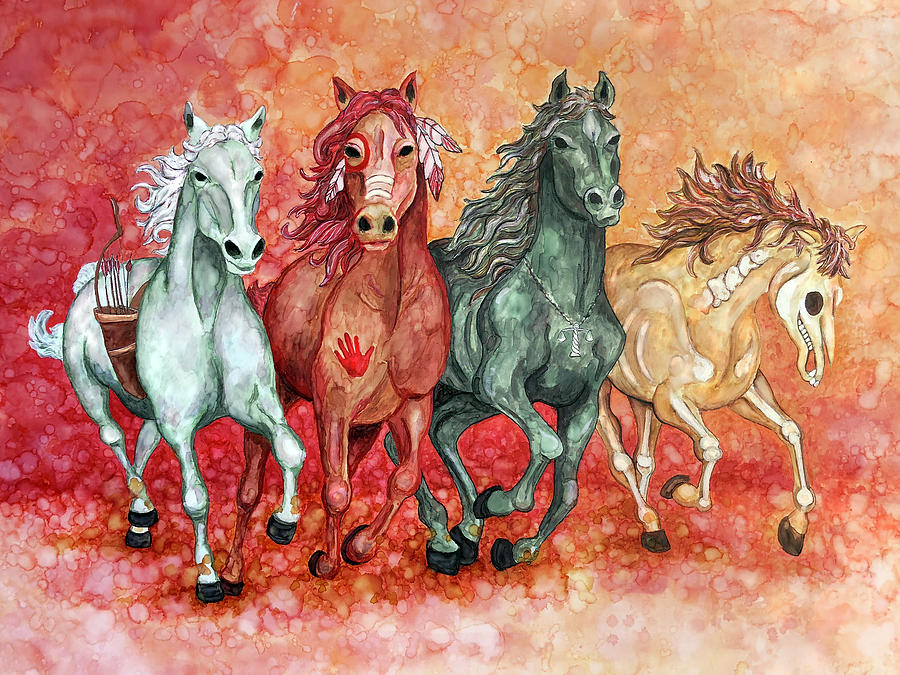
During the Black Death in 14th-century Europe, the Four Horsemen became a widespread symbol for the plague. Artists and chroniclers depicted the pandemic as the ride of Death, accompanied by Famine and War, reinforcing the Horsemen’s association with real-world catastrophe.
Credit: fineartamerica.com
Interpretations Across Art, Literature, And Culture
The Four Horsemen have inspired interpretations that transcend religious boundaries, shaping Western art and literature for centuries.
Medieval And Renaissance Art
From illuminated manuscripts to grand frescoes, the Horsemen appear as both warnings and reminders of mortality. The Triumph of Death motif, common in medieval Europe, often features the Pale Horse, riding through villages as a memento mori.
- Example: Albrecht Dürer’s “The Four Horsemen of the Apocalypse” (1498) remains one of the most iconic woodcuts, capturing the terror and drama of the biblical vision.
Literature And Poetry
Writers have used the Horsemen as metaphors for societal collapse, political upheaval, and personal despair. In T.S. Eliot’s “The Waste Land”, apocalyptic imagery echoes the Horsemen’s ride through a barren world.
- Terry Pratchett and Neil Gaiman’s “Good Omens” reimagines the Four Horsemen as modern-day bikers, blending humor with apocalyptic anxiety.
- Stephen King’s “The Stand” uses the Horsemen as archetypes for the collapse of civilization.
Music, Film, And Popular Media
The Horsemen’s influence extends to modern music and cinema:
- Metallica’s “The Four Horsemen” uses the imagery to evoke themes of destruction and fate.
- In film and television, the Horsemen appear in franchises like Supernatural, X-Men: Apocalypse, and Sleepy Hollow, each adaptation reflecting contemporary fears.
Pro Tip: When analyzing cultural works, look for how each era’s anxieties shape the depiction of the Horsemen, war, plague, or environmental disaster.
Political And Social Rhetoric
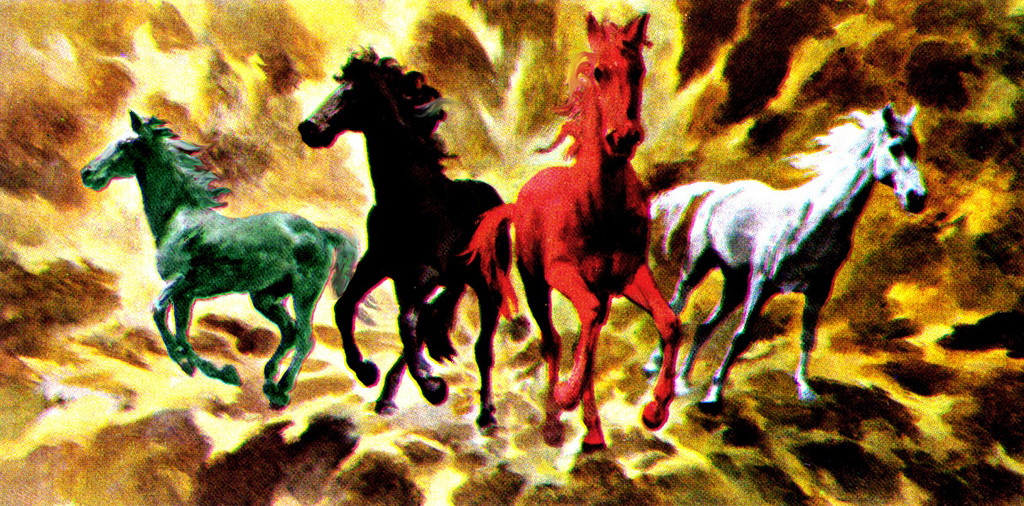
Leaders and commentators invoke the Horsemen during crises, using their imagery to warn of war, economic collapse, or environmental catastrophe. This rhetorical device connects present challenges to ancient archetypes, lending gravitas and urgency.
- Example: During the Cold War, the Horsemen were frequently referenced in speeches about nuclear conflict and global famine.
Credit: www.esotericmeanings.com
The Four Horsemen As Psychological Archetypes
Beyond their literal and historical meanings, the Horsemen function as psychological archetypes, universal symbols reflecting deep human experiences.
Jungian Analysis
Carl Jung identified the Horsemen as “shadow” figures: forces within the human psyche associated with chaos, fear, and transformation. Each Horseman represents a different aspect of existential threat:
- Conquest: The drive for power, expansion, or overreach.
- War: Internal or external conflict.
- Famine: Scarcity, deprivation, or emotional hunger.
- Death: Fear of mortality and change.
By confronting these archetypes, individuals and societies can achieve greater self-understanding and resilience.
Modern Psychology And Coping Mechanisms
Research in trauma psychology shows that personifying disaster (as with the Horsemen) helps communities process collective trauma. By naming and visualizing threats, people can better manage anxiety and develop coping strategies.
- Example: In my experience working with disaster survivors, symbolic frameworks like the Horsemen often provide a narrative structure for making sense of loss and recovery.
The Role Of Ritual And Storytelling
Rituals invoking the Horsemen, such as medieval processions during plague years, served as communal responses to crisis. Storytelling, whether biblical or fictional, remains a vital tool for processing fear and inspiring hope.
Table: The Four Horsemen As Psychological Archetypes
| Horseman | Psychological Archetype | Common Manifestation |
|---|---|---|
| Conquest | Ambition/Overreach | Desire for control, hubris |
| War | Conflict | Anger, aggression, violence |
| Famine | Deprivation | Scarcity mindset, anxiety over loss |
| Death | Mortality/Transformation | Fear of change, existential dread |
Case Studies: The Horsemen In History And Modernity
Examining specific moments when the Horsemen have been invoked or reinterpreted reveals their adaptability and enduring relevance.
The Horsemen And The World Wars
During World War I and II, propagandists and journalists drew heavily on the imagery of the Horsemen to convey the scale of destruction. Posters, editorials, and sermons depicted the conflict as the ride of War and Death across the continent.
- Example: British and American war posters often used the Pale Horse to symbolize the threat of mass casualties.
The Cold War And Nuclear Anxiety
The specter of global annihilation during the Cold War revived interest in apocalyptic prophecy. The Four Horsemen were cited in speeches about the arms race, famine in the developing world, and ecological disaster.
- Example: In 1961, President John F. Kennedy referenced the “riders of the apocalypse” in a speech to the United Nations, urging nuclear disarmament.
The Covid-19 Pandemic
The outbreak of COVID-19 in 2020 saw a resurgence in Horsemen symbolism. Journalists and commentators referred to the pandemic as the ride of Pestilence and Death, linking modern fears to ancient archetypes.
- Example: Numerous editorials and social media posts paired images of the Four Horsemen with graphs of infection rates, reflecting the ongoing power of these symbols.
Environmental Catastrophe And Climate Change
Contemporary discussions of climate change and ecological collapse frequently invoke the Horsemen, especially Famine and Death, as metaphors for potential global disaster.
- Example: The Intergovernmental Panel on Climate Change (IPCC) reports have been described as “warnings from the Horsemen” by environmental activists.
The Four Horsemen In Modern Media And Popular Culture
The Horsemen’s adaptability ensures their continued presence in modern storytelling, from comics to video games.
Graphic Novels And Comics
Graphic novels like “East of West” by Jonathan Hickman and Nick Dragotta reimagine the Horsemen in a futuristic, alternate America, blending Western motifs with apocalyptic prophecy.
- The “X-Men: Apocalypse” storyline features mutants as avatars of the Horsemen, exploring themes of power and destruction.
Video Games
Video games such as Darksiders and Red Dead Redemption: Undead Nightmare use the Horsemen as antagonists or playable characters, inviting players to confront or embody apocalyptic forces.
- In “Darksiders,” each game centers on one Horseman, exploring their motives and moral ambiguity.
Television And Film
Shows like Supernatural and films like Sleepy Hollow portray the Horsemen as supernatural beings influencing world events, often blending horror, fantasy, and social commentary.
- The 2012 film “Four Horsemen” uses the metaphor to critique economic and political systems.
Music
From classical compositions to heavy metal, the Horsemen inspire artists to address themes of mortality, conflict, and societal breakdown.
- Metallica’s “The Four Horsemen” remains a staple of rock music, while classical works like Franz Liszt’s “Totentanz” evoke the Pale Horse’s dance of death.
Example: “good Omens” And Satirical Reinterpretation
In “Good Omens,” the Four Horsemen are reimagined as motorcycle-riding figures named Pollution, War, Famine, and Death, satirizing modern anxieties and the adaptability of apocalyptic myth.
Theological And Philosophical Implications
The Horsemen raise profound questions about fate, free will, and the nature of evil.
Predestination Vs. Human Agency
The Book of Revelation’s vision can be read as a prophecy of inevitable disaster or as a warning that invites human action. The tension between predestination (the sealed scroll) and agency (the call to repentance) has fueled theological debate for centuries.
- Some traditions interpret the Horsemen as literal future events; others see them as symbols of ongoing human challenges.
The Problem Of Evil
The Horsemen personify the problem of evil: Why do suffering, violence, and death exist? The Book of Revelation frames these forces as part of a divine plan, ultimately leading to renewal and justice.
- Philosophers like Leibniz and Augustine grappled with the coexistence of divine goodness and apocalyptic catastrophe.
Hope Beyond Destruction
Despite their terrifying power, the Horsemen are not the final word in Revelation. The narrative promises a new heaven and earth after judgment, suggesting that disaster can be a prelude to renewal.
- This theme resonates in literature, art, and psychology, offering hope amid despair.
Pro Tip: When Discussing The Horsemen In An Interfaith Or Secular Context, Emphasize Their Dual Role As Both Warnings And Symbols Of Transformation.
Cross-cultural Reinterpretations And Global Influence
The Four Horsemen, though rooted in Christian tradition, have been reinterpreted across cultures and religions.
Islamic Eschatology
While Islamic prophecy does not feature the Horsemen per se, it shares similar themes, riders, trumpets, and catastrophic events mark the approach of the Day of Judgment. The figure of Dajjal (the Antichrist) and the descent of Isa (Jesus) parallel apocalyptic narratives.
- Islamic art and literature sometimes borrow Horsemen imagery, especially in regions influenced by Christian iconography.
Hinduism And The Kalki Avatar
In Hindu mythology, the end of the current age (Kali Yuga) is marked by the arrival of Kalki, the tenth avatar of Vishnu, riding a white horse and wielding a sword. This figure brings both destruction and renewal, echoing themes found in Revelation.
Indigenous And Folk Traditions
Folk traditions around the world feature riders or processions as omens of disaster or change. The Wild Hunt in European folklore, for instance, involves spectral horsemen sweeping through the sky, bringing misfortune or death.
Comparative Table: Apocalyptic Riders In World Religions
| Religion/Culture | Apocalyptic Rider(s) | Role/Meaning |
|---|---|---|
| Christianity | Four Horsemen | Harbingers of Judgment |
| Islam | Trumpet Angels, Dajjal | Signals of Qiyamah (End Times) |
| Hinduism | Kalki on White Horse | End of Kali Yuga, Renewal |
| European Folklore | Wild Hunt | Omen of Death/Change |
Example: The Wild Hunt As A European Parallel
The Wild Hunt appears in Norse, Germanic, and Celtic folklore as a spectral procession of horsemen. Like the Four Horsemen, the Wild Hunt is a harbinger of chaos, often associated with storms, war, or plague.
Modern Scholarly Perspectives And Controversies
The Four Horsemen remain a subject of active scholarly debate, with interpretations reflecting broader trends in theology, history, and cultural studies.
Historical-critical Analysis
Scholars using the historical-critical method focus on the context of Revelation’s composition. They examine how the Horsemen reflected the political, social, and religious realities of the late first century CE.
- For a detailed analysis, see Wikipedia: Four Horsemen of the Apocalypse.
Literary And Symbolic Interpretation
Literary critics analyze the Horsemen as part of the apocalyptic genre, a mode of storytelling that uses vivid imagery to express hope, fear, and protest. The Horsemen’s ambiguity allows for endless reinterpretation, making them “open symbols. “
Feminist And Postcolonial Readings
Recent scholarship explores how the Horsemen narrative reinforces or challenges systems of power. Feminist readings highlight the absence of female figures, while postcolonial critics examine how the imagery has been used to justify conquest or resist oppression.
- Example: The use of Horsemen symbolism in colonial contexts, where European settlers cast themselves as agents of divine judgment.
Scientific And Secular Approaches
Some scientists and secular thinkers use the Horsemen metaphor to describe real-world threats, pandemics, nuclear war, climate change, and technological risk. The concept of “existential risk” is sometimes framed as a modern Four Horsemen scenario.
- Example: The Bulletin of the Atomic Scientists references apocalyptic imagery in its Doomsday Clock reports.
Pro Tip: When Engaging With Controversial Interpretations, Reference Multiple Perspectives And Encourage Critical Analysis.
Frequently Asked Questions
What Is The Significance Of The Horsemen’s Colors?
The colors of the horses, white, red, black, and pale (greenish), carry symbolic weight rooted in both biblical and cultural traditions. White is often linked to conquest or ambiguous victory, red to war and bloodshed, black to famine and economic instability, and pale to death and decay. These colors help readers quickly identify the nature of each Horseman’s influence and have been adapted in various artistic and literary contexts to fit different narratives.
Are The Four Horsemen Unique To Christianity?
While the most famous depiction of the Four Horsemen is found in Christian scripture, similar figures appear in other religious and mythological traditions. For example, Hinduism features Kalki, a messianic figure on a white horse, and European folklore includes the Wild Hunt, a procession of spectral riders. The concept of apocalyptic riders is thus not unique to Christianity, though its specific form in Revelation is distinct.
How Have The Four Horsemen Influenced Political Rhetoric?
Throughout history, political leaders and commentators have invoked the Horsemen to underscore the severity of crises such as war, famine, or disease. This metaphorical use lends gravity to political arguments, connecting contemporary issues with ancient archetypes. Notably, references to the Horsemen were common during the World Wars, the Cold War, and in contemporary discussions of climate change and pandemics.
Can The Four Horsemen Be Seen As Positive Figures?
While typically associated with catastrophe, some interpretations view the Horsemen as agents of necessary change or renewal. In this perspective, their destructive power clears the way for new beginnings, reflecting the cyclical nature of history found in many religious traditions. This dual role, both destroyers and harbingers of renewal, adds complexity to their symbolism.
Is There A Consensus Among Scholars About The Meaning Of The Horsemen?
There is no single consensus among scholars regarding the definitive meaning of the Four Horsemen. Interpretations range from literal predictions of future events to symbolic representations of ongoing human struggles. Differences arise based on theological tradition, historical context, and methodological approach. For comprehensive overviews, scholarly resources such as Encyclopedia Britannica provide valuable perspectives.
The enduring legacy of the Horses of the Apocalypse lies in their ability to encapsulate humanity’s deepest fears and hopes. As symbols, they adapt to each era’s unique challenges, reflecting not only the possibility of destruction but also the promise of renewal. Whether encountered in scripture, art, or popular culture, the Four Horsemen continue to ride through our collective imagination, reminders of the forces that shape history and the resilience that endures beyond catastrophe.