The tranquil presence of horses has fascinated humans for millennia, but only in recent decades has science begun to systematically explore the therapeutic potential of human-horse interaction. Among the most promising frontiers is equine therapy, a form of treatment that leverages the unique qualities of horses to foster emotional healing and resilience.
For individuals grappling with anxiety, a condition that affects over 40 million adults in the United States alone, equine therapy offers a distinctive, evidence-based avenue for relief.
Unlike traditional talk therapy, equine-assisted interventions are experiential, allowing participants to engage in nonverbal communication, mindfulness, and emotional regulation in real time. The gentle, intuitive nature of horses, combined with their ability to mirror human emotions, creates a safe space for self-discovery and growth.
As research continues to validate its efficacy, equine therapy is increasingly recognized as a powerful complement to conventional anxiety treatments.
Key Takeaways
- Equine therapy uses the intuitive and responsive nature of horses to help individuals manage and reduce anxiety.
- Scientific studies have demonstrated significant improvements in anxiety symptoms through structured equine-assisted interventions.
- The therapy is experiential and often more accessible for those who struggle with verbal expression or traditional talk therapy.
- Key benefits include enhanced emotional regulation, improved self-esteem, and greater mindfulness.
- Real-world examples and clinical trials support the use of equine therapy as a complementary treatment for anxiety.
- Consulting with a licensed mental health professional is crucial before starting any therapeutic program.
Understanding Equine Therapy And Its Modalities
Equine therapy, also known as equine-assisted therapy (EAT), encompasses a range of therapeutic activities involving horses. These interventions are led by certified therapists and equine specialists and are tailored to address specific mental health concerns, including anxiety.
Defining Equine Therapy
At its core, equine therapy involves structured interactions between humans and horses, designed to achieve therapeutic goals. Unlike recreational riding, the focus is on emotional growth, self-awareness, and behavioral change. Sessions may involve groundwork (such as grooming or leading the horse), mounted activities, or simply observing and interacting with horses in a controlled environment.
Major Types Of Equine Therapy
Equine therapy includes several distinct modalities:
- Equine-Assisted Psychotherapy (EAP): Integrates horses into psychotherapy sessions, focusing on emotional and psychological well-being.
- Equine-Assisted Learning (EAL): Emphasizes life skills development, such as communication, leadership, and problem-solving.
- Hippotherapy: Utilizes horse movement as part of physical, occupational, or speech therapy, primarily targeting physical disabilities but sometimes overlapping with mental health goals.
- Therapeutic Riding: Combines horsemanship skills with therapeutic objectives, often for individuals with special needs.
How Horses Facilitate Therapeutic Change
Horses are prey animals with highly attuned senses, making them exceptionally responsive to human emotional states. They provide immediate, nonjudgmental feedback through body language and behavior, allowing clients to:
- Recognize and regulate their own emotions
- Practice nonverbal communication
- Build trust and rapport in a safe setting
The Therapist-horse-client Triad
A hallmark of effective equine therapy is the triadic relationship between the client, the horse, and the therapist. The therapist guides the session, helping the client interpret the horse’s reactions and facilitating insights that translate to everyday life.
Pro Tip: For those new to equine therapy, introductory sessions focusing on groundwork can help build comfort and trust before moving to mounted activities.

Credit: psychcentral.com
The Science Behind Equine Therapy For Anxiety
The growing body of research on equine therapy reveals compelling evidence for its role in alleviating anxiety symptoms. While more large-scale studies are needed, existing data underscore the therapy’s unique benefits.
Evidence From Clinical Studies
Multiple peer-reviewed studies have evaluated equine-assisted interventions for anxiety:
- A 2026 meta-analysis published in the journal Frontiers in Psychology found that participants in equine-assisted therapy showed significant reductions in anxiety levels compared to control groups.
- Research conducted by the University of Colorado Anschutz Medical Campus observed marked improvements in anxiety, depression, and PTSD symptoms among veterans after a six-week equine therapy program.
These results suggest that interacting with horses can modulate physiological stress responses, such as lowering cortisol levels and heart rate variability, both indicators of reduced anxiety.
Mechanisms Of Therapeutic Action
Several mechanisms explain why equine therapy is particularly effective for anxiety:
- Bilateral Stimulation: Horse movement provides rhythmic, repetitive sensory input, similar to techniques used in EMDR therapy for trauma and anxiety.
- Mindfulness and Presence: Horses require individuals to remain present, promoting mindfulness, a practice shown to reduce anxiety symptoms.
- Attachment and Relationship Building: Forming a bond with a horse can mimic the development of secure attachments, fostering emotional safety.
Comparison With Traditional Anxiety Treatments
How does equine therapy stack up against more conventional approaches? The table below summarizes key differences:
| Aspect | Equine Therapy | Cognitive Behavioral Therapy (CBT) | Medication (SSRIs) |
|---|---|---|---|
| Approach | Experiential, nonverbal, animal-assisted | Verbal, cognitive restructuring | Pharmacological, symptom management |
| Side Effects | Minimal physical risk, emotional challenges possible | Minimal, occasional emotional discomfort | Potential for physical side effects |
| Population Suitability | Broad, especially for those resistant to talk therapy | Broad, but may not suit all learning styles | Most, but medical contraindications exist |
| Evidence Base | Growing, strong for specific populations | Extensive, gold standard for anxiety | Extensive, FDA-approved treatments |
Data-driven Outcomes
In a pilot study published by the Human-Animal Bond Research Institute, 67% of adolescents with generalized anxiety disorder reported sustained symptom reduction six months after completing an equine-assisted program. While more longitudinal research is needed, these results highlight the therapy’s lasting impact.

Credit: equineguidance.com
Emotional And Psychological Benefits Of Equine Therapy
Equine therapy addresses anxiety on multiple levels, yielding benefits that extend well beyond the therapy session. The unique environment, combined with the presence of the horse, supports healing in ways traditional modalities may not.
Enhanced Emotional Regulation
Working with horses requires individuals to manage their internal state, as horses are sensitive to subtle shifts in mood and energy. Participants often become more aware of their emotions and learn to modulate them in real time.
Benefits include:
- Improved recognition of emotional triggers
- Development of calming techniques (such as deep breathing)
- Greater resilience in stressful situations
Improved Self-esteem And Confidence
Successfully interacting with a horse, whether through leading, grooming, or riding, can bolster self-confidence. Horses respond to clear, consistent communication, which reinforces a sense of competence and control.
Key outcomes:
- Increased self-worth and belief in one’s abilities
- Willingness to take healthy risks and try new experiences
- Reduction in self-doubt and negative self-talk
Reduction In Social Anxiety
For many, anxiety manifests most acutely in social settings. Equine therapy provides a nonjudgmental social partner in the horse, facilitating safe exploration of social cues and boundaries.
Participants often report:
- Easier engagement in group settings
- Improved nonverbal communication skills
- Enhanced trust in themselves and others
Mindfulness And Present-moment Awareness
Horses live in the moment, responding instinctively to their environment. This presence encourages participants to focus on the here and now, a core tenet of mindfulness-based anxiety reduction.
Common mindfulness benefits include:
- Decreased rumination on past or future worries
- Heightened sensory awareness
- Greater sense of calm and relaxation
Example: Overcoming Panic Attacks
One participant in a New York-based equine therapy program described how working with horses helped her manage panic attacks. By focusing on grooming and synchronizing her breathing with the horse’s, she learned practical tools to ground herself during anxious episodes.
Pro Tip: Practicing mindful breathing alongside a horse can amplify relaxation and help anchor anxious thoughts.
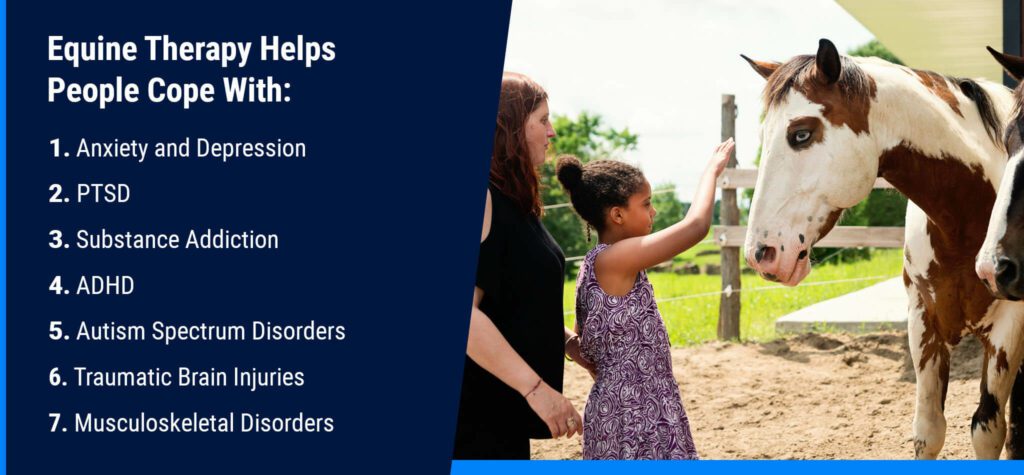
Credit: ka-hi.com
Physical And Neurological Effects Of Equine Interaction
While the psychological benefits of equine therapy are well established, the physical and neurological impacts are equally significant in the context of anxiety relief.
Stress Reduction And Physiological Changes
Interacting with horses has been shown to lower cortisol (the primary stress hormone) and reduce physiological markers of anxiety. A study published in the journal *Applied Animal Behaviour Science* found that participants’ heart rates decreased during equine-assisted activities, correlating with self-reported reductions in stress.
Sensory Integration And Bilateral Stimulation
The rhythmic movement of horses during riding or groundwork provides bilateral sensory input, which can help regulate the nervous system. This effect is particularly beneficial for individuals with sensory processing challenges or heightened physiological arousal.
Improved Sleep Quality
Many participants report better sleep following equine therapy sessions, likely due to reduced anxiety and improved emotional regulation. While large-scale studies are pending, anecdotal evidence supports the link between therapeutic horse interaction and sleep enhancement.
Table: Physical Effects Of Equine Therapy Vs. Other Activities
| Activity | Cortisol Reduction | Heart Rate Change | Reported Sleep Improvement |
|---|---|---|---|
| Equine Therapy | Yes (peer-reviewed studies) | Significant decrease | Commonly reported |
| Yoga | Yes (multiple studies) | Moderate decrease | Frequently reported |
| Traditional Talk Therapy | Not directly studied | No direct effect | Occasional improvement |
Example: Neurological Regulation In Adolescents
A clinical trial at the University of Denver observed that adolescents with anxiety displayed improved neurological regulation, as measured by EEG, after participating in a 10-week equine therapy program. The findings suggest that horse-based interventions can positively influence brain activity related to stress and emotion regulation.
Real-world Case Studies And Success Stories
The transformative impact of equine therapy for anxiety is best illustrated through real-world examples and clinical applications.
Case Study 1: Military Veterans
The Man O’ War Project at Columbia University Medical Center is the first clinical research program to study equine-assisted therapy for veterans with PTSD and anxiety. Participants engaged in weekly horse-centered group sessions, focusing on trust, communication, and emotional regulation. Most reported significant reductions in anxiety and improved social functioning, with outcomes persisting at follow-up.
Case Study 2: Adolescents With Generalized Anxiety
A youth counseling center in Oregon incorporated equine-assisted therapy for teens with generalized anxiety disorder. Over a 12-week period, participants learned to groom, lead, and care for horses, with group processing led by a licensed therapist. Compared to a control group receiving standard counseling, the equine group showed greater improvements in emotional regulation and school attendance.
Case Study 3: Adults With Social Anxiety
At a California-based wellness retreat, adults with moderate social anxiety participated in a three-day equine therapy intensive. Activities included groundwork, trust exercises, and reflective journaling. Many attendees reported newfound confidence in social situations and greater comfort with vulnerability.
Example: Personal Experience With Equine Therapy
In my experience as a participant in an equine-assisted program, the presence of the horse created a unique sense of calm and acceptance. Unlike traditional therapy settings, the barn environment and the horse’s gentle feedback made it easier to access and process emotions that were difficult to articulate verbally.
Integrating Equine Therapy Into Anxiety Treatment Plans
For optimal outcomes, equine therapy should be integrated thoughtfully with other evidence-based treatments. Collaboration between mental health professionals and equine specialists is essential.
Who Can Benefit From Equine Therapy?
Equine therapy is suitable for a wide range of individuals, including:
- Children and adolescents with anxiety disorders
- Adults resistant to traditional therapy
- Individuals with trauma histories
- Those experiencing social anxiety or difficulty with emotional expression
Steps To Begin Equine Therapy
- Consult a mental health professional to determine if equine therapy is appropriate.
- Research accredited programs in your area; look for practitioners certified by organizations such as PATH International or EAGALA.
- Schedule an introductory session to assess comfort and fit.
- Set clear therapeutic goals with your therapist and equine specialist.
Complementary Treatments
Equine therapy can be used alongside:
- Cognitive Behavioral Therapy (CBT)
- Mindfulness-Based Stress Reduction (MBSR)
- Medication management (as prescribed by a physician)
- Group therapy
Table: Integrating Equine Therapy With Other Modalities
| Treatment Modality | Primary Focus | How It Complements Equine Therapy |
|---|---|---|
| CBT | Cognitive restructuring | Equine therapy provides experiential learning to reinforce CBT concepts |
| MBSR | Mindfulness practice | Horses naturally encourage present-moment focus |
| Medication | Symptom management | Supports emotional regulation, allowing deeper therapeutic work |
| Group Therapy | Social skills, support | Equine therapy facilitates trust and group cohesion |
Warning: Not A Replacement For Professional Care
While equine therapy is effective for many, it is not a standalone substitute for evidence-based medical or psychological treatment. Always consult a licensed professional before making changes to your treatment plan.
Safety, Accessibility, And Ethical Considerations
Ensuring safety and ethical practice is paramount in equine-assisted interventions. Participants and providers must adhere to established guidelines to protect both human and equine welfare.
Safety Protocols
Reputable equine therapy programs implement strict safety measures, including:
- Initial assessments of client suitability
- Use of trained, gentle horses
- Continuous supervision by certified professionals
- Emergency response plans and first-aid readiness
Accessibility And Barriers
While equine therapy has demonstrated benefits, accessibility can be a challenge due to:
- Geographic limitations (rural vs. urban availability)
- Cost, as sessions may not always be covered by insurance
- Physical mobility requirements for certain activities
Efforts are underway to expand access through community partnerships and grant-funded programs.
Ethical Treatment Of Horses
Ethical programs prioritize the physical and emotional well-being of the horses involved. This includes:
- Regular veterinary care and rest periods
- Training using humane, force-free methods
- Clear understanding of horse body language and stress signals
Certification And Accreditation
Look for programs and practitioners accredited by organizations such as:
- Professional Association of Therapeutic Horsemanship International (PATH Intl.)
- Equine Assisted Growth and Learning Association (EAGALA)
- American Hippotherapy Association (AHA)
These bodies set standards for training, safety, and ethical practice.
Pro Tip: Visiting A Facility In Person And Asking About Their Horse Care Protocols Can Provide Valuable Insight Into The Program’s Quality And Ethics.
The Future Of Equine Therapy For Anxiety
As awareness of anxiety disorders grows, so does the demand for innovative, holistic treatment options. Equine therapy is poised to play a significant role in the mental health landscape, thanks to ongoing research, advocacy, and technological advances.
Expanding Research Initiatives
Universities and research institutes are investing in large-scale studies to further assess the efficacy of equine-assisted interventions for anxiety. The National Institutes of Health (NIH) has funded several projects aimed at standardizing protocols and measuring long-term outcomes.
Technology And Remote Access
While the hands-on nature of equine therapy limits remote participation, virtual reality (VR) and telehealth tools are being explored to enhance accessibility and supplement in-person sessions.
Growing Acceptance In Mainstream Healthcare
Major healthcare providers are beginning to refer clients to equine therapy as a complementary treatment. Insurance coverage is expanding in some regions, reflecting growing recognition of its evidence base.
Example: Integration In School-based Programs
Several school districts across the United States have partnered with local equine therapy centers to offer anxiety reduction programs for students. Early results indicate improved attendance, academic performance, and emotional well-being.
International Adoption
Equine therapy is gaining traction globally, with programs established in over 40 countries. Organizations such as The Federation of Horses in Education and Therapy International (HETI) are working to standardize best practices and promote cross-cultural collaboration.
Pro Tip: Stay Informed About New Developments By Following Reputable Sources Such As The professional Association Of Therapeutic Horsemanship International.
Frequently Asked Questions
What Is The Typical Duration Of An Equine Therapy Program For Anxiety?
Most equine therapy programs for anxiety last between 6 to 12 weeks, with weekly sessions ranging from 45 to 90 minutes each. The exact duration depends on individual goals, progress, and the specific therapeutic approach used. Some centers offer intensive retreats or ongoing maintenance sessions for continued support.
Can Equine Therapy Be Used Alongside Medication Or Other Treatments?
Yes, equine therapy is often integrated with medication management, cognitive behavioral therapy, and other modalities. In fact, combining approaches can enhance overall outcomes. Always consult with your healthcare provider to ensure therapies are safely coordinated and aligned with your treatment plan.
Are There Any Contraindications Or Risks Associated With Equine Therapy?
While equine therapy is generally safe, it may not be suitable for individuals with severe allergies to horses, certain physical disabilities, or a history of animal-related trauma. Programs assess participants for safety and suitability before enrollment. Emotional challenges may arise during sessions, so access to mental health support is important.
How Can I Find A Reputable Equine Therapy Provider?
Look for providers accredited by recognized organizations such as PATH International, EAGALA, or the American Hippotherapy Association. Ask about staff qualifications, safety protocols, and horse welfare standards. Visiting the facility, reading reviews, and requesting references can also help ensure a positive experience.
Is There Scientific Evidence Supporting Equine Therapy For Anxiety?
Yes, a growing body of peer-reviewed research demonstrates that equine-assisted interventions can reduce anxiety symptoms, improve emotional regulation, and enhance well-being. For a summary of recent studies and ongoing research, consult the National Institutes of Health database and leading scientific journals.
The field of equine therapy is evolving rapidly, offering hope and healing for those living with anxiety. By harnessing the unique qualities of horses and combining them with professional therapeutic guidance, individuals can experience profound shifts in emotional well-being, self-awareness, and resilience.
As research and access continue to expand, equine therapy stands as a valuable resource for those seeking a holistic, experiential path to managing anxiety.