
Horses wear shoes to protect their hooves from excessive wear, injury, and imbalance, especially when they work on hard or abrasive ground. A horse’s hoof is made of keratin, similar to a human fingernail, and while it grows continuously, it can wear down faster than it regrows under a rider’s weight or on rocky terrain. Metal or composite shoes act as a barrier between the hoof and the ground, helping the horse stay sound, move comfortably, and perform tasks that would otherwise damage its feet.
Key Takeaways
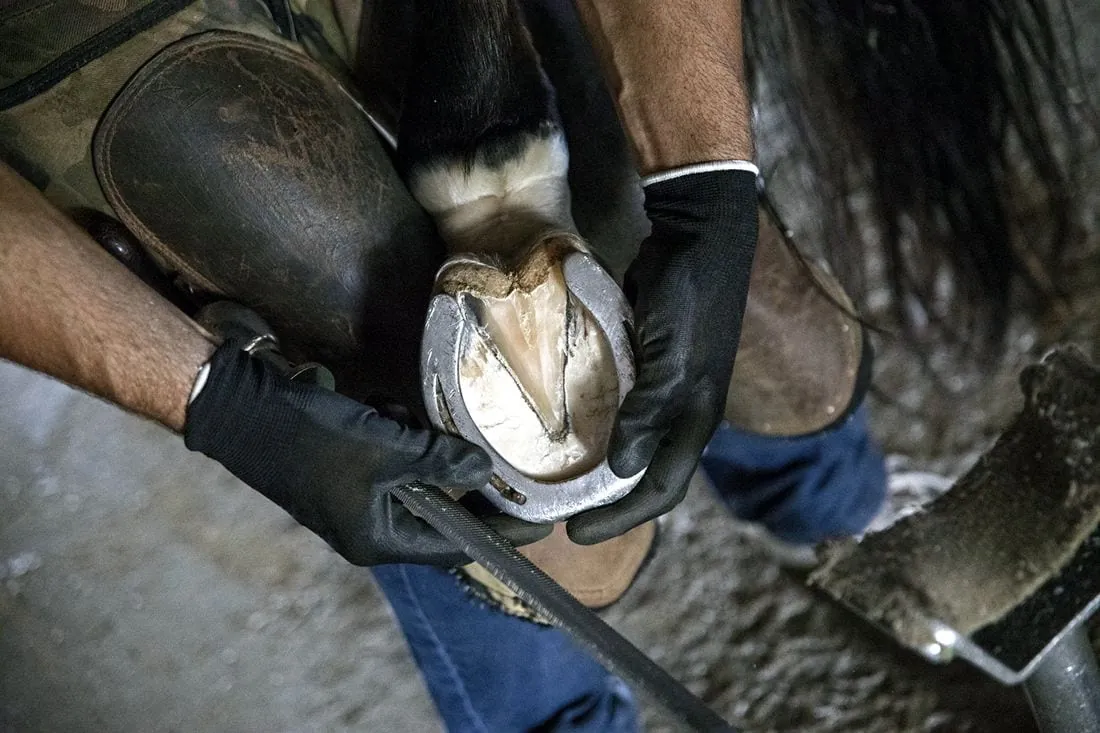
- Shoes protect hooves from wear, cracks, and bruising on hard or rocky ground.
- Correct shoeing can support hoof balance and help manage some lameness issues.
- Not every horse needs shoes; many stay healthy barefoot with regular trimming.
- A qualified farrier should assess your horse’s workload, terrain, and hoof health before you decide.
- Schedule hoof care every six to eight weeks, whether your horse is shod or barefoot.
- Watch for loose shoes, shifting gaits, or tender feet, and call your farrier or veterinarian promptly.
Why Horses Wear Shoes
Domestic horses often face conditions their wild ancestors did not. A shod horse carrying a rider on pavement, gravel, or frozen ground receives protection that a bare hoof may not provide on its own. Shoes also compensate for conformation flaws, such as uneven hoof walls or weak soles, by redistributing pressure across the foot.
In performance disciplines, shoes can add traction or alter the breakover point to support a specific gait. Because hooves grow at different rates and wear unevenly, shoes give the farrier a stable platform to reshape and balance the hoof between trims.
When a Horse Needs Shoes
Not every horse requires shoes all the time. The decision usually depends on workload, terrain, hoof quality, and health history.
- Horses that work daily on pavement or abrasive surfaces often need shoes to prevent rapid sole and wall wear.
- Horses with thin soles, shelly walls, or chronic bruising benefit from the physical barrier a shoe provides.
- Performance horses in jumping, eventing, or driving may wear shoes for grip and support during fast or technical work.
- Horses recovering from laminitis, navicular changes, or tendon injuries sometimes need therapeutic shoes to reduce strain on specific structures.
- Horses kept in soft pasture with light riding often do well without shoes.
Barefoot vs. Shod: A Comparison
The choice between barefoot and shod care affects hoof growth, comfort, and cost. The table below outlines the main differences so you can discuss options with your farrier.
| Factor | Barefoot | Shod |
|---|---|---|
| Hoof protection | Natural hoof wall and sole only | Metal or composite barrier |
| Best for | Light work, soft terrain, strong hooves | Heavy work, hard ground, weak or injured hooves |
| Trimming interval | Usually every 4–8 weeks | Usually every 6–8 weeks |
| Daily maintenance | Pick out feet; check for cracks | Pick out feet; check for loose nails or shifted shoes |
| Typical cost | Lower; trim only | Higher; trim plus shoeing and materials |
Types of Horseshoes and Materials
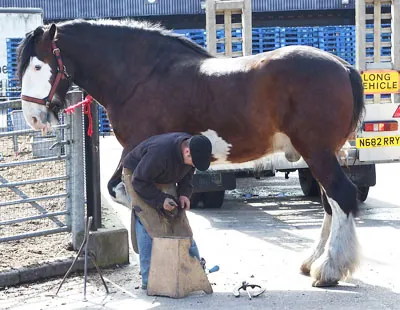
Farriers choose from several shoe styles depending on the horse’s job and hoof condition.
- Steel shoes: Durable and common for general riding, ranch work, and driving.
- Aluminum shoes: Lighter than steel, often used in racing and some performance disciplines to reduce leg fatigue.
- Rubber or polyurethane shoes: Flexible and shock-absorbing; useful for horses with sensitive soles or on paved surfaces.
- Egg bar shoes: Extended at the heel to support the back of the hoof; often used for navicular or heel pain.
- Heart bar shoes: Include a plate that supports the frog; sometimes used in therapeutic cases under veterinary guidance.
- Glue-on shoes: Attached without nails; an option when the hoof wall is too damaged to hold nails securely.
The Shoeing Process Step by Step
A professional farrier follows a careful sequence to fit and attach shoes safely.
- Examine the hoof: The farrier checks the sole, frog, hoof wall, and overall balance while the horse stands and moves.
- Trim the hoof: Excess wall and sole are removed, and the hoof is leveled to match the horse’s conformation.
- Select and shape the shoe: The farrier picks a shoe of the right size and bends it to match the trimmed hoof.
- Fit the shoe: The shoe is held against the hoof to confirm proper alignment and coverage without pinching.
- Nail the shoe: Nails are driven through the hoof wall at the white line, away from sensitive inner structures.
- Clinch and finish: Nail ends are bent over and rasped smooth, and the shoe is sealed to the hoof edge.
- Check movement: The horse walks and trots so the farrier can confirm the shoe doesn’t interfere with stride.
Signs Your Horse May Need Shoes
Certain symptoms suggest the hoof is struggling to keep up with wear or workload.
- Chipped or cracked hoof walls that worsen between trims
- Tenderness on gravel, pavement, or frozen ground
- Shortened stride or reluctance to move forward
- Uneven shoe wear or one hoof wearing faster than the others
- Bruising visible on the sole after riding
- Frequent abscesses or soreness after trimming
If you notice these signs, schedule a farrier visit. A veterinarian should evaluate any lameness that doesn’t improve after shoeing or trimming, because hoof pain can sometimes indicate deeper joint or soft-tissue problems.
Common Shoeing Problems and Troubleshooting
Even well-fitted shoes can develop issues between farrier visits. Knowing what to watch for helps you act quickly.
- Loose or shifted shoe: A shoe that moves or twists can cause bruising or a twisted nail. Remove it if safe to do so and call your farrier; don’t ride the horse until it’s reset.
- Sprung shoe: The shoe pulls away from the hoof wall, creating a gap where debris packs in. This needs prompt farrier attention to prevent infection or white-line damage.
- Lost shoe: If a shoe comes off completely, protect the hoof with a boot or wrap and arrange for replacement; riding barefoot on one hoof can create imbalance.
- Overgrown shoe: As the hoof grows, the shoe becomes too long relative to the foot and can alter stride or increase tendon strain. Regular resets prevent this.
- Nail bind or prick: A nail placed too close to sensitive tissue can cause sudden lameness. This requires immediate farrier and possibly veterinary care.
Pro Tip: Pick out your horse’s hooves every day and feel for heat, unusual odors, or movement in the shoe; catching a loose shoe early prevents more serious injury.
Hoof Care Schedule and Costs
Regular farrier care is the foundation of hoof health, shod or barefoot. The table below gives a typical framework; your farrier may adjust intervals based on growth rate and wear.
| Care item | Typical frequency | Notes |
|---|---|---|
| Hoof picking | Daily | Removes stones, mud, and manure; check for cracks |
| Farrier trim or reset | Every 6–8 weeks | Shod horses need shoes removed, hooves trimmed, and shoes refit |
| Full shoe replacement | As needed | When shoes are worn thin, damaged, or outgrown |
| Veterinary hoof exam | Annually or as needed | Important if lameness, abscesses, or conformation issues recur |
Costs vary widely by region, farrier experience, and shoe type. A basic trim usually costs less than a full shoeing set, and specialty therapeutic shoes cost more than standard steel. Ask your farrier for a written estimate before the first visit so you can budget for ongoing care.
How to Choose a Farrier
A good farrier is essential whether your horse wears shoes or goes barefoot. Look for someone with formal training or apprenticeship background, and ask for references from other horse owners in your area. Certification through a recognized farrier association can indicate a commitment to continuing education, though requirements vary by state.
Your farrier should communicate clearly, explain trimming and shoeing choices, and welcome input from your veterinarian when health issues are involved. Avoid anyone who guarantees results without examining the horse or who refuses to coordinate with veterinary professionals.
Warning: Never attempt to shoe your own horse without formal training. Improper nail placement or unbalanced trimming can cause lameness, abscesses, or permanent hoof damage.
Related guides
- Why Does Horses Wear Shoes? Essential Facts Every Owner Should Know
- Why Does Horses Need Shoes: Essential Reasons Explained Clearly
- Why Don’T Horses Need Shoes in the Wild: Natural Hoof Care Secrets
Frequently Asked Questions
Do all horses need shoes?
No. Many horses stay healthy barefoot with regular trimming, especially if they do light work on soft terrain. Shoes are most useful for horses working on hard ground, carrying heavy loads, or managing hoof injuries.
How often should a shod horse see the farrier?
Most shod horses need a reset every six to eight weeks. Hooves grow continuously, and shoes left on too long can become unbalanced and strain tendons or ligaments.
Can shoes hurt a horse?
Properly fitted shoes applied by a qualified farrier don’t hurt a horse. Poorly fitted shoes, misplaced nails, or overgrown shoes can cause lameness, bruising, or hoof-wall damage.
What is the difference between a trim and shoeing?
A trim shapes and balances the bare hoof by removing excess wall and sole. Shoeing includes trimming plus attaching a protective shoe with nails or adhesive.
Should I call a vet or a farrier for a lame horse?
Call your farrier for shoe or trimming issues, such as a loose shoe or uneven wear. Call your veterinarian for sudden lameness, swelling, heat, or pain that doesn’t improve after farrier care, because these can signal injury or disease beyond the hoof.
Conclusion
Horses wear shoes because domestic workloads and terrain often outpace what a bare hoof can withstand, but shoeing isn’t automatic for every horse. Your next step is to schedule an evaluation with a qualified farrier who can assess your horse’s hooves, workload, and terrain and recommend a shoeing or barefoot plan tailored to the individual animal.