
Chess is a game of deep strategy and creative thinking, played by millions worldwide. Each piece has its own power and rules, but few capture the imagination like the horse—better known as the knight. While its shape stands out on the board, many players, especially beginners, struggle to master how the horse works in chess. Understanding this unique piece can open new tactical paths and even surprise more experienced opponents.
This article will take you from the basics of the chess horse’s movement to advanced tactics. We will discuss its special abilities, give real examples, and show why the horse is sometimes called the soul of chess. Whether you’re just learning or looking to sharpen your strategy, you’ll discover fresh insights and practical advice to use the horse with confidence.
What Is The Horse In Chess?
In chess, the term “horse” is a casual or beginner-friendly way to refer to the knight. The knight’s piece is usually shaped like a horse’s head, which is why many non-players and learners call it the horse. On a standard chessboard, each player starts with two knights. They are placed between the rook and the bishop on both sides: squares b1 and g1 for White, b8 and g8 for Black.
The knight is unique. It is the only piece that can jump over others, and its movement is not in a straight line like most pieces. For these reasons, mastering the horse is essential for both defense and attack.
The Horse’s Movement Explained
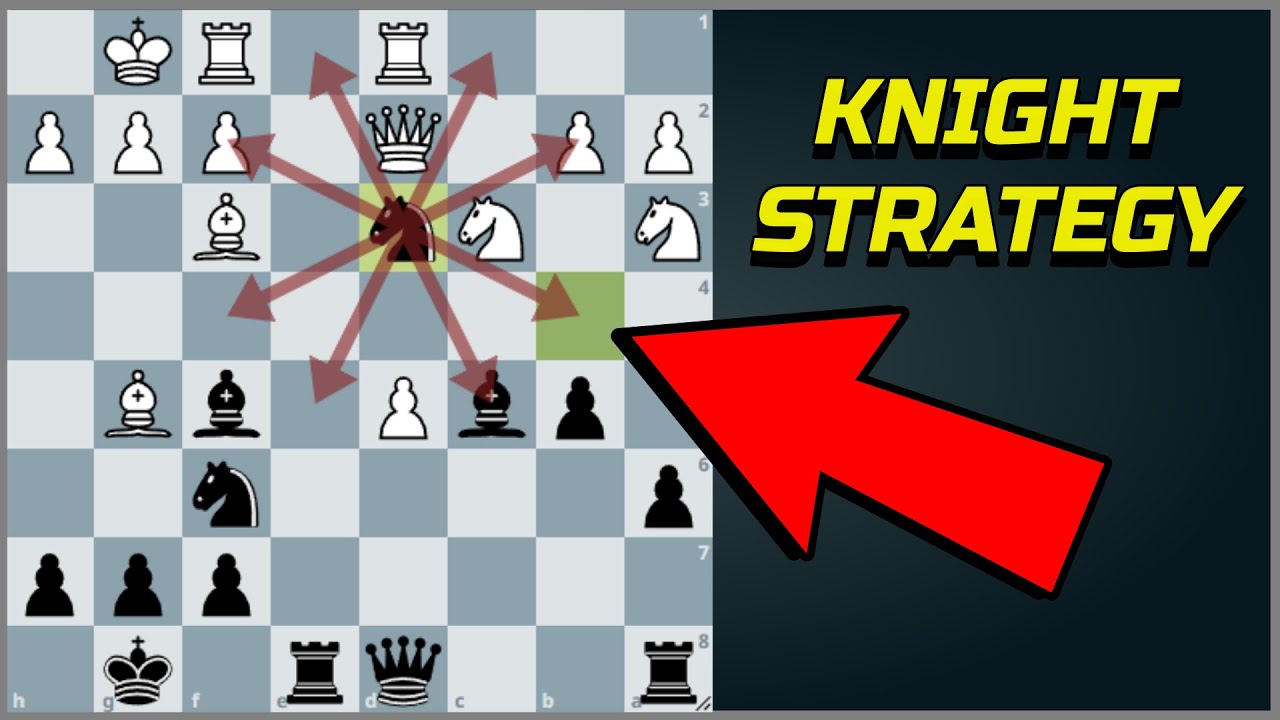
The horse’s movement is unlike any other chess piece. Instead of moving straight or diagonally, it moves in an “L” shape.
- The horse moves two squares in one direction (either horizontal or vertical), then one square in a direction perpendicular to the first move.
- This means the knight always lands on a square of a different color than the one it started on.
- The knight can jump over other pieces (both friendly and enemy) to reach its target square.
Examples Of The Horse’s L-shaped Move
If a knight is on the square d4, it can move to eight possible squares (if not blocked by the edge of the board):
- B3, b5, c2, c6, e2, e6, f3, f5
This pattern is the same wherever the horse is placed, as long as it does not go off the board.
Visualizing The Horse’s Moves
Here’s a simple table to show where a knight on d4 can move:
| Current Position | Possible Moves |
|---|---|
| d4 | b3, b5, c2, c6, e2, e6, f3, f5 |
This ability to jump in an L-shape and leap over other pieces makes the horse a strong tactical weapon.
Special Abilities Of The Horse
The horse’s greatest power is its ability to jump over pieces. No other piece in chess can do this. Whether there are friendly or enemy pieces in the way, the knight simply lands on the target square—either an empty square or one occupied by an opponent’s piece.
Another special feature is that the horse always changes the color of its square with each move. If it starts on a white square, its next move will always be to a black square, and vice versa.
This color-changing property means a knight can never control two adjacent squares of the same color in one move. Advanced players use this to plan both attacks and defenses.
Comparing The Horse To Other Pieces
Understanding how the horse compares to other pieces helps you see its strengths and weaknesses.
| Piece | Movement | Can Jump? | Controls Squares |
|---|---|---|---|
| Horse (Knight) | L-shape (2+1) | Yes | Up to 8, changes color each move |
| Bishop | Diagonals | No | Up to 13, stays on one color |
| Rook | Horizontal/Vertical | No | Up to 14, any color |
| Queen | Any direction | No | Up to 27, any color |
| Pawn | Forward (captures diagonally) | No | 1 (move), 2 (capture) |
This table shows that while the horse controls fewer squares than a queen or rook, its ability to jump and change color is unique.
Basic Strategies For Using The Horse
Mastering the horse starts with a few simple principles:
- Center Control: Knights are most powerful near the center of the board. From there, they can reach more squares.
- Outposts: Place your horse on a square where it cannot be attacked by enemy pawns. This is called an “outpost” and makes the horse difficult to remove.
- Early Development: Bring your knights out early in the game—before your bishops and queen—to prepare for castling and fight for the center.
- Avoid the Edge: Knights on the edge of the board (the “rim”) control fewer squares. “A knight on the rim is dim” is a classic chess saying.
Example: Center Vs. Edge
A horse on d4 or e4 can access eight squares. A horse on a1 controls only two. This difference is why strong players develop their knights to the center early.
Advanced Horse Tactics
As you gain experience, the horse becomes a tool for more complex attacks and defenses. Here are some advanced tactics:
Forks
The knight is famous for its fork—attacking two (or more) pieces at once. Because of its unique movement, it can threaten both a king and queen or two rooks in one move.
For example, a knight on e6 can attack both a king on g7 and a queen on d8.
Outposts And Weak Squares
Placing a knight on a protected central square (like d5 or e5) where it cannot be chased away by enemy pawns is very strong. This is called a knight outpost. Outposts often win material or control key parts of the board.
Knight Maneuvers
Unlike other pieces, knights sometimes need two or three moves to reach their best spot. Players use “knight maneuvers” to re-route their horses through safe squares until they reach a powerful position.
Knight Vs. Bishop
In closed positions (where many pawns block the board), knights are often stronger than bishops because they can jump over obstacles.
Credit: www.chesswoodie.com
The Horse In The Opening Phase
The first moves of a chess game set the stage for everything that follows. Knights play a special role here.
- Most opening principles recommend developing the knights before bishops. This helps control the center and supports quick castling.
- A common sequence: Play your king’s knight to f3 (for White) or f6 (for Black), then the queen’s knight to c3 or c6.
- Early knight moves help defend the center and prepare for other pieces to develop.
Example: Italian Opening
In the Italian Game, the moves are: 1. e4 e5 2. Nf3 Nc6 3. Bc4. Both players develop their knights to the center before bringing out other pieces.
The Horse In The Middlegame
As the board fills with threats, knights shine in the middlegame. They can jump over crowded lines, surprise the enemy with forks, and defend key points.
- Knights excel in closed positions where pawns block long-range pieces like bishops and rooks.
- A well-placed knight can control vital squares and threaten multiple targets at once.
- Watch for “knight outposts” and look for chances to fork enemy pieces.
Example: Knight Fork
Suppose Black’s king is on g8 and rook on f8, and White’s knight jumps to e7. Suddenly, both Black pieces are under attack, and Black cannot save both in one move.
The Horse In The Endgame
In the endgame, with fewer pieces on the board, the horse’s value can rise or fall depending on the position.
- Knights are slow. They take more moves to cross the board than bishops or rooks.
- In positions with pawns on both sides, knights can jump over blockades and control key squares.
- Knights struggle against long, open pawn chains. In such cases, bishops are often better.
Endgame Table: Horse Vs. Bishop
Here is a comparison of typical situations in the endgame:
| Situation | Knight Strength | Bishop Strength |
|---|---|---|
| Closed (pawns block lines) | Strong | Weak |
| Open (few pawns, open lines) | Weak | Strong |
| Pawns on both sides | Equal or slight edge | Equal or slight edge |
| Both sides low on time | Tricky (forks, tactics) | Simple, direct |
This table shows that the horse is best when the board is blocked and complicated.
Common Mistakes With The Horse
Even experienced players sometimes misuse the horse. Here are mistakes to avoid:
- Leaving knights on the edge: They become almost useless and can’t reach the center quickly.
- Ignoring knight outposts: Missing a chance to place a knight on a protected central square can lose control of the board.
- Overlooking forks: Both you and your opponent should watch for potential forks. Losing a queen or rook to a knight fork is a painful mistake.
- Racing with knights: Knights move slowly across the board. Don’t waste time shifting them back and forth without purpose.
- Blocking your own pieces: Sometimes, knights block your bishops or queen. Develop your pieces so they work together.

Credit: us.amazon.com
Non-obvious Insights About The Horse
Most beginners know the basics, but here are two advanced concepts many miss:
- Knights are best in pairs: Two knights can control many squares together, especially in the center. This can make it hard for your opponent to find safe places for their pieces.
- Knights can’t lose a tempo: Unlike bishops or rooks, a knight can’t just “pass” a move by returning to the same square in one step. This matters in tight endgames, where “zugzwang” (forcing the opponent to move) is important.
Another insight: In endgames with only a king and a knight (vs. a lone king), it’s impossible to checkmate. But with a knight and a bishop together, checkmate is possible—if you know the technique.
Famous Games Highlighting The Horse
Many classic chess games have featured brilliant horse moves. A few famous examples:
- In the 1956 “Game of the Century,” 13-year-old Bobby Fischer played a stunning knight sacrifice that led to a winning attack.
- Garry Kasparov, former world champion, often used his knights to create threats that even computers struggled to calculate.
- In the 1997 match between Deep Blue and Kasparov, a key moment came when Deep Blue’s knight landed on an outpost, changing the balance of the game.
These examples show that the horse is not just a beginner’s piece—it is central to high-level chess.
Training Tips To Master The Horse
To get better with the horse, practice is essential. Here are steps to improve your skills:
- Solve knight puzzles: Many books and apps offer L-shaped move challenges or fork drills.
- Play “knight tours”: Try to move a knight to every square on the board without repeating a square. This builds your mental map of the horse’s reach.
- Review famous games: Focus on how top players use their knights for forks and outposts.
- Analyze your games: After playing, check if you missed any tactical chances with your knights.
- Use software: Online chess sites let you practice with computer opponents and hint systems.
How The Horse Works In Chess For Beginners
If you are just starting, here is a simple step-by-step approach:
- Remember the L-shape: Two squares one way, one square the other—always jumping over pieces.
- Develop knights early: Bring them toward the center (c3, f3 for White; c6, f6 for Black).
- Watch for forks: Notice when a knight can attack two pieces at once.
- Avoid the edge: Try to keep your horses away from the rim until you have a good reason.
- Practice: The more you use the knight, the more natural its moves will feel.
Credit: www.youtube.com
The Horse’s Role In Chess Puzzles
Many chess puzzles use the horse because of its surprising moves. Some puzzles ask you to find a fork, others to checkmate with limited pieces. Practicing these will sharpen your tactical sense and help you see hidden threats.
A famous puzzle is the “knight’s tour,” where the goal is to visit every square of the board once with a single knight. This puzzle has fascinated mathematicians for centuries and shows the complexity of the knight’s movement.
For more on the mathematics and history of the knight’s tour, see this Wikipedia article.
Frequently Asked Questions
Why Is The Horse Called The Knight In Chess?
The piece is shaped like a horse’s head, but its official name is knight. In medieval times, knights rode horses in battle. Over time, the name “knight” became common in chess, while “horse” is a casual or beginner’s term.
Can A Horse Move Over Other Pieces?
Yes, the horse is the only piece in chess that can jump over both friendly and enemy pieces. It does not matter if the path is blocked; the knight simply lands on the target square.
How Do You Checkmate With A Horse?
A single knight cannot checkmate a lone king. You need at least a knight and another piece, usually a bishop or queen. With a knight and bishop, checkmate is possible but requires careful coordination. With two knights, checkmate is only possible if the opponent makes mistakes.
Which Is Stronger: Horse Or Bishop?
It depends on the position. In closed positions (lots of pawns blocking the board), the horse is often stronger. In open positions (few pawns, open lines), the bishop usually has an advantage because it can move farther each turn.
Why Do Beginners Struggle With The Horse?
The horse’s L-shaped move is not natural or intuitive. It takes time for new players to see all its possible moves and threats, especially forks. Practicing puzzles and focusing on the center can help overcome this challenge.
Chess is a journey of learning, and the horse is a piece that rewards creativity and practice. Whether you’re playing online or with friends, mastering the knight’s moves and tactics will bring a new level of excitement to your games.
With these insights and strategies, you’re now better prepared to use the horse and surprise your opponents.