
Dog Companionship: The History, Diversity and Benefits of Dogs for Humans
Dog Companionship and Its Benefits to Humans, Have you ever seen how a dog’s presence can turn a bad day into a good one? Perhaps you had a faithful mutt by your side growing up, or maybe you are simply contemplating getting a furry friend. Dogs are not only pets; they become family, helpers, workout companions, and occasionally, the reason for our survival. That is why, for thousands of years, humans have been fascinated by them.
But the question hanging in the air is what truly forms this special bond? And how does it make you feel better? to list a few, dog companionship keeps you in a good mood with the least effort, and regulates your blood pressure. But it should also be mentioned that being a dog owner does bring along some difficulties, such as training, shedding, and certain obligations.
If you really wonder why dogs have become an indispensable part of our lives or you are to take a decision regarding which type of dog would be most compatible with your lifestyle then this is the right moment and place to know this information. So, let’s uncover together not just the origin of this tie but also how the incredible variation in canine breeds, their commonalities and even their “jobs” present tangible benefits together with the factors that must be taken into consideration before moving forward with the decision. You are about to find out how dogs keep humans happier, healthier, and a little less lonely.
The Deep Roots of Dog-Human Companionship
Unraveling the backstory of the fantastical bond between humans and dogs is what we are about to do now. Just as you were informed earlier, dogs are not pets; they are family, teammates, and steadfast supporters. So, how have we come from wild wolves all the way down to a pomeranian sleeping on your lap? The story is old, intriguing, and surprisingly complicated.
Origins of Domestication: From Wolves to Dogs (14,000+ Years Ago)
Before the first grains of corn were planted, the human-dog journey had already begun. The evidence from fossils and DNA indicates that dogs were the first species to be tamed by humans. At the Bonn-Oberkassel archaeological site in Germany, scientists found fossils more than 14,000 years old in which a dog was buried together with two humans. For comparison, agriculture originated several millennia later. So the friendship between dogs and people must have been formed during the hunter-gatherer era.
What unfolded such a scenario? According to the majority of experts, some ancient wolves must have decided to linger around human camps and feed on the remnants. The less shy and more affable wolves gained from their proximity to humans, as they got food scraps, among other things! After many generations, these wolves changed to the extent the became tamer, smaller, and the features of their faces and bodies softened. The researchers argue that the earliest modifications took place in their brains, which rendered them more predisposed to cohabitate with humans and less likely to escape or attack.
According to the genetics of the ancient dogs, the very first dogs are believed to be in Siberia, over twenty-three thousand years ago, after which they moved with humans to the east and the west. The great journey took them across Eurasia and at times, they were even accompanying the first people to the Americas.
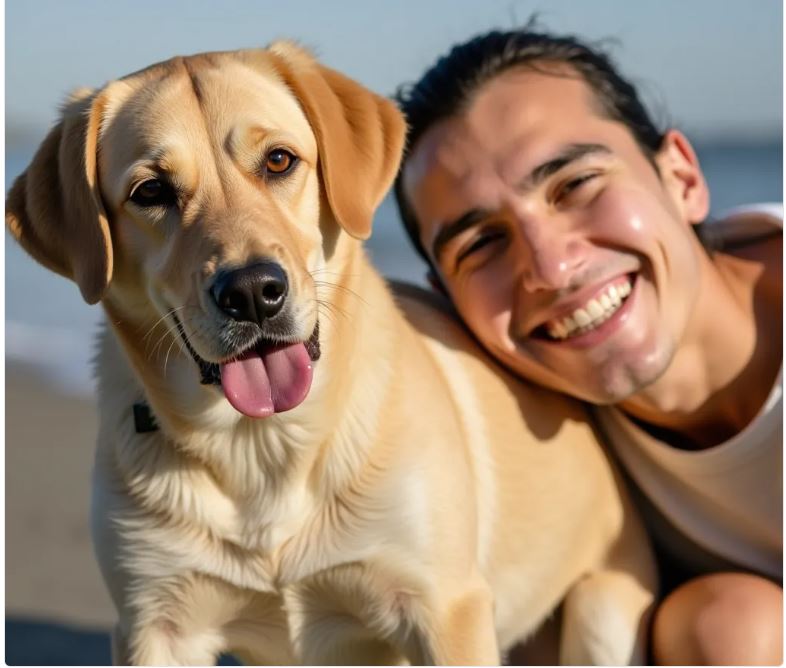
Evolution of the Human-Canine Bond
Dogs became more than pets once they settled alongside humans, the relationship developed. Unlike other animals, dogs were selected mainly according to their social characteristics and not only for their physical ones or the amount of meat they could give. It was discovered that the DNA contrasts between dogs and wolves mainly concern behavioral aspects, and that the genes which code for traits such as tameness and hypersociality are the ones that have been modified in dogs.
Animals like dogs learned your emotions and even responded to your voice, face and gestures. Over thousands of years, they changed their behavior to fit the human routine and body language. A research carried out in 2019 confirmed that dogs have a specific area of the brain that is activated when they see human smiles and hear human voices, thus, a kind of experience they share with children!
Practitioners even speculate that social skills of dogs are very similar to those of a young human child. This explains why you dog is so good at sensing your mood and the reason why a simple turning of the head can be so adorable to you.
Dogs in Ancient Civilizations and Changing Global Attitudes
In the course of time, the status of dogs in society experienced a change. Dogs were considered holy in ancient Egypt. Some Asian cultures used dogs as a symbol for loyalty and protection. For instance, nearly 40% of households in the United States and Europe have dogs, and they are mainly companions and family members who live in these places. However, many dogs that roam freely in the world still live with people in villages and towns that are far away from cities, where they survive by scavenging and forming loose groups that receive little direct human care.
Dogs were present at different times in history doing different jobs: they participated in hunts, they protected the owners, they helped in herding animals and they even guided people spiritually. In some places, dogs were treated with reverence, but in others they were just animals necessary for life or even regarded as a source of food. These ways of thinking keep on changing with time such as the fact that China, Singapore, and Thailand have only recently prohibited the consumption of dog meat in 2024 which shows that the idea of dogs as “man’s best friend” is still spreading.
Dogs as Sacred, Working and Companion Animals throughout History
Dogs have always done a lot of work. Dogs such as mastiffs which belonged to ancient breeds used to guard not only houses but also livestock; sighthounds which were slim always hunted with their people in Egypt as well as the Middle East; shaggy shepherds, for example, herded sheep in the British Isles; huskies dragged sleds over the Arctic tundra.Some were even buried with honors others with their human families.
There are stories and artworks around the world that point out the special bond that humans and dogs have which in some cases is the very same bond the dogs are portrayed to share with their gods. Dogs committed to the gates of the underworld in Greek, Norse, and Hindu myths. In Mesopotamia dogs were regarded as the symbol of healing. In the 20th and 21st centuries that loyalty gradually moved from the farm to the family room. Most dogs today are pampered pets, however, there are still millions which live and work away from the home.
The connection between you and your dog is one of the many things these narratives have in common: it is a long relationship and it is still developing. After you have grasped the depth of these roots, let us instead talk about the incredible pack of dogs and how centuries of selective breeding have changed them into the companions (and characters) of today.
The Extraordinary Diversity of Dogs: Breeds and Adaptations
Since you have found out just how human and dog relationship is so strong, now let’s switch to another interesting topic: the astonishing variety and adaptability of dog breeds. One may ask why some dogs are used in herding and others make perfect lap dogs? The truth is that the answer is purely selective breeding and dog adaptation for the given roles.
Early Breeding: Roles in Hunting, Herding, Guarding and More
Expanding on the topic of ancient dogs working alongside humans, it is quite obvious that the 1st breeders were inclined to think of the dogs as workers. Long ago, humans started selecting dogs based on the traits they needed for the job. Fastness, Ferocity, Acute Senses, and Loyalty are the characteristics people might want to pick for the Task. For instance, greyhounds were bred to posesses the speed that is required to chase fast preys, while mastiffs were raised to be the hefty defenders and even warriors.
Dogs were not only killing machines, and they did some protecting too. They drove sheep, and pulled sleds, and tracked down rodents, and guarded homesteads. Britannica and National Geographic reveal that sled dogs have been selectively bred for cold for over 9,000 years, besides the German Shepherd and Collie have become famous for their skills of herding. In Egypt, for example, Greyhounds were highly esteemed for their hunting skills and grace of form, on the other hand Japanese Akitas were used for tackling bears and boars.
If you ask me, since day one of domestication people have bred purebred dogs not only based on their looking but more importantly, on how well they performed on their task. Focusing on the purpose of these dogs has given us a broad spectrum of all different breeds suitable for all kinds of lifestyles and needs even up to today.
What we should do next is to find out how this“job-oriented breeding” resulted in the official recognition and the worldwide explosion of breeds, which in turn had dogs’ roles far beyond their original ones, and so on.
(Up next: How breed recognition, dog shows, and modern standards transformed a few working types into hundreds distinctly recognized breeds—each with its look, personality, and place in homes worldwide.)
Dogs at Work: Service, Utility and Assistance Roles
We have just discovered the diversity and adaptability of dog breeds and now, building on that, let’s discuss the real-life <em>production</em> of your dog. The thing is, dogs do not just fetch balls of tennis. Dogs have been side by side with us for thousands of years, performing jobs that no other animals can do. They are not merely pets. They are helpers, teammates, and sometimes, real lifesavers.
Traditional Working Roles: Herding, Hunting, and Protection
Different dogs were deliberately bred to do specific tasks throughout history. For instance, shepherds would not have been able to herd their flocks unless they had dogs and therefore breeds like Australian Shepherd and Collie came into being. These dogs used their brains and herding instincts to not only protect flocks but wolves and livestock that stray can even be outsmarted today with the help of those dogs.
It was a different skill set that hunters needed and that Labradors, retrievers, and pointers were designed for. Labradors, which are still the most popular breed in America, were created to find and bring back ducks from water, on the other hand, beagles and dachshunds helped hunt rabbits and badgers by flushing them out. As per National Geographic, the scent abilities and endless energetic use of these dogs have made them famous as the perfect hunting companions.
Ancient dogs were given the job of protection as well. For example, bull-baiting (a now-defunct sport) was the origin of Bulldog breeds, where the dogs became protectors and competitors. Extremely large and powerful canines like Mastiffs and Akitas were guarding not only homes but also estates and entire villages. In fact, the Akita which was bred in Japan was used to track and hunt down bears too. Talk about bravery!
The traditional works that these dogs performed not only shaped their physical appearances (such as thick coats for cold weather, muscular builds for pulling or fighting) but also their characters. Herding breeds are intelligent and eager to learn quickly. Protective dogs are loyal and, sometimes, a bit stubborn. When you encounter a Collie circling your kids at the park or a Labrador excitedly following a scent, you are witnessing the work of thousands of years of selective breeding for work.
Let us now explore how these working roots have developed into modern, high-stakes jobs for dogs all over the world. Next up: How today’s dogs serve in search and rescue, law enforcement, and the military, keeping people safe and even saving lives.
How Dogs Benefit Human Health and Society
One of the things that we have found out is that dogs have been working with humans side by side for thousands of years. Now, we are going to see the potent ways in which merely cohabiting with dogs can perk up your health and even create a positive impact on your community. The bond between humans and dogs is no longer just about “man’s best friend”—it is changing how you move, feel, and interact with others every single day.
Physical Health: Exercise, Heart Health and Longevity
It is evident from the last chapter about breeds and working abilities that dogs were made for activity. This is a fact that is very beneficial for your health. If you are a dog owner, you are more likely to be more active compared to a person without a dog. A large research has demonstrated that dog owners exercise more than cat owners or people with no pets (BMJ, 2005). Who gives you a reason to walk in rain or shine? On lazy weekends pups can still push you off the couch for that much-needed walk.
It is not only movement that is involved here. There is strong scientific evidence that dog owners can have healthier hearts. To give an example, after heart attacks, people who have dogs are much less likely to die within a year as compared to those without dogs (American Journal of Cardiology, 1995). This is a very strong point, you could say.
Moreover, pet owners have indicated that they have had fewer hospital visits and have taken less medication for heart and sleep problems (BMJ, 2005). It is all one big math problem. Regular dog walks can reduce your risk factors for obesity—which is very important considering that obese dogs have a life span that is on average a year and a half shorter than healthy ones (Scientific Reports, 2024). The conclusion: Dogs’ need for walks, play, and fresh air pulls you into routines that are good for both of you to live longer, healthier lives.
Of course, each breed and mix has its own energy level. From speedy border collies to lap-loving pugs, every dog brings a unique exercise rhythm. But almost any dog, given the chance, will nudge you toward better habits.
Now that you are aware of the ways that dogs can be the motivators of healthy routines, let‟s move to the discussion about the mental and emotional benefits these companions have when it comes to supporting you.
Next up: The reason why having a dog is not just good for your heart but also for your mood, mind, and everyday outlook.
Challenges and Responsibilities of Dog Ownership
You have discovered all the ways in which dogs enrich our lives and now it is time to talk about the real work of having the dog. The truth is that bringing a dog into your home is a big responsibility. You are not only getting a dog to play with you but you are also taking on a lot of responsibility for the dog’s welfare, health, and happiness. Some of the difficulties and main duties of every dog owner are broken down.
Dog Health, Nutrition and Lifespan (Including Breed-Specific Issues)
Based on the diversity of the breed topic, every dog is unique in that its size, age and even the breed are factors that can affect its needs. The average lifespan of dogs is around 12.7 years but the breed, genetics and the weight can be determining factors. Were you aware that overweight dogs have a life span of about one and a half years less than dogs at a healthy weight? Reducing your dog’s weight is not just for the sake of appearance but it can also make your pet live longer (Scientific Reports, 2024).
Nutrition is very important. Dogs are omnivores and gradually over centuries of adaptation they have become able to survive on a diet made up of grains, meat, and vegetables. But they are unable to produce vitamins, vitamin D for example, and their food must be supplemented. Each breed can have its own food sensitivity or health needs. For example, large breeds such as Great Danes can suffer from joint problems while bulldogs are prone to breathing difficulties because of their short snouts (brachycephalic breeds).
Regular vet visits are a must. Dogs can get diseases like parvovirus, distemper, and rabies, but the good news is that all of these can be prevented by the vaccines that are given to the dogs. Parasites like ticks, fleas, and worms can also lower the health of the victim, so regular checkups and prevention meditations are also a must.

We should also mention the terminal care part. Dogs get basically the same illnesses as people—heart disease, arthritis, and cancer. Being ready for the hard decisions and providing comforts when your dog gets older is part of the package of being a responsible owner.
For the next, let‟s explore the significance of proper training and socialization as two events that can profoundly affect your experience as a dog parent.
Through the amazing world of dog companionship, we have come to the end of our journey. The dogs of today bear the imprint of the vast diversity that they inherited from their ancient roots alongside early humans, and on the other hand, the characteristics that dogs have brought and they have been noticed by the people in turn. The story that has been told arguably turns out as one that has been affected and at the same time has affected human lives, dogs have neither the power nor the will to change one thing.
We have seen that the human intervention through selective breeding, from working collies to gentle lapdogs, results in very character traits perfectly matching every human need. You have also been made aware that dogs do not only bring us joy, they also help us keep physically fit, reduce our stress levels, and increase our sense of community. Still, it should be acknowledged that raising a dog entails mostly good things but it also comes with some serious obligations ranging from virtuous training to taking good care of your four-legged friend for the rest of his life.
The introduction of a dog into your life is much more than just having a pet it is welcoming a loyal companion, a helper, and at times, a true hero. Wondering which breed fits your lifestyle the best? Just do it next step: research, reflect, and decide if a dog’s needs would fit your world. When the time comes, just let your heart and home be open to a new best friend. The bond you create could change your life one wag at a time.
Frequently Asked Questions
Dog Companionship and Its Benefits to Humans
Can you tell if a certain dog breed is right for my lifestyle?
Definitely! Think of aspects such as your activity level, the space that is available at home and the time that you can allocate for grooming or training. To exemplify, the Border Collie is only suitable for those owners who can provide it with enough physical and mental stimulation it needs, whereas a Bulldog will be an excellent companion for a calm and quiet life. Consider your day-to-day life and do not hesitate to seek advice from breeders or shelters.
Can you adopt a mixed-breed dog and still enjoy the same benefits as a purebred?
Mixed-breed dogs are just as good as purebred dogs in terms of loyalty, companionship and health benefits. Most of them have good temperaments and are less prone to genetic health issues. In addition, adopting from a shelter is giving a home to a dog that is in need and this can be very gratifying.
Can dogs really recognize human emotions?
Dogs are extremely sensitive to the emotional states of humans. Research demonstrates that dogs look at the human’s body language, hear the tone of the voice and even recognize facial expressions. Many dogs will closely cuddle or be gentle towards the human if they feel that he/she is sad, hence proving the strength of the human-canine connection.
Can having a dog help make new friends?
Walking your dog or going to the dog park are some of the things that would make you acquainted with other dog owners and therefore making new friends. Dogs are excellent “icebreakers” and there are a lot of people who find that they have got more friends in their community just because they are out with their dog.
Can you avoid common health risks when living with a dog?
Most of the health risks can be prevented by following certain simple habits. Regular visits to the vet, taking the vaccinations, and maintaining proper hygiene are all ways of keeping both you and your dog safe. Teaching kids how to approach dogs in a safe manner and always being there during the playtime so that there is no chance of a bite or scratch can also be implemented.
Can you own a dog if you or someone in your family has allergies?
There is a possibility, but you have to be cautious. Some dog breeds like Poodles and Bichon Frises are considered to be more hypoallergenic. Grooming and cleaning help lessen allergens but it is better to spend time with the dog first and then see how your allergies react. Thanks for Reading “dog companionship and its benefits to humans”