
Big Bend Ranch State Park offers the most expansive and scenic terrain for those searching for the best place to ride horses in texas. This vast wilderness provides miles of rugged trails that suit riders looking for authentic desert experiences. While other regions feature manicured arenas, this state park stands out because of its natural landscape and remote atmosphere. Choosing where to ride depends on whether you prefer challenging mountain paths or flat, guided trail rides.
Where to ride horses in Texas
This table highlights popular areas for equestrian activities across the state. You should check each park’s official website for current trail conditions before you trailer your horse.
| Riding location | Best for | Example |
|---|---|---|
| Big Bend Ranch State Park | Rugged wilderness | Closed Canyon trails |
| Hill Country State Natural Area | Scenic hills | West Peak trails |
| Palo Duro Canyon State Park | Dramatic views | Lighthouse Trail area |
| Tyler State Park | Forested paths | Piney Woods trails |
| Lake Mineral Wells State Park | Lakefront riding | Penitentiary Hollow area |
Big Bend Ranch State Park
Big Bend Ranch State Park is the largest state park in the region, featuring over 300,000 acres of Chihuahuan Desert landscape. It suits experienced riders who are comfortable navigating steep inclines and rocky terrain without constant supervision.
- Provides expansive, uncrowded trails that allow for multi-day backcountry trips.
- Features diverse geological formations including volcanic domes and deep canyons.
- Offers primitive campsites where you can keep your horse overnight.
If you plan to ride here, you must carry enough water for both yourself and your horse, as natural water sources are scarce. You can find detailed maps and permit information on the Texas Parks and Wildlife Department website. An example of a common ride involves a four-hour loop through the Sauceda area, which requires a horse that’s well-conditioned for high-heat conditions.
Hill Country State Natural Area
Hill Country State Natural Area provides a classic Texas landscape with rolling hills and grassy valleys. It suits riders who enjoy moderate difficulty and wish to see wildflowers during the spring season.
- Contains over 40 miles of trails specifically designed for hikers, cyclists, and equestrians.
- Offers dedicated equestrian campsites with stalls and water troughs for your animals.
- Provides panoramic views of the surrounding limestone bluffs and cedar forests.
This location is ideal for those who want a structured experience with clear trail markers. If you’re a beginner, stick to the lower valley loops to avoid the steep climbs found on the perimeter trails. A typical day trip involves riding the West Peak trail, which takes about three hours at a walking pace for most horses.
Palo Duro Canyon State Park
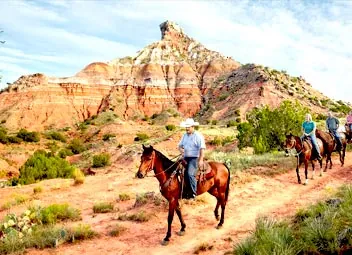
Palo Duro Canyon State Park is famous for its vibrant red rock formations and deep, dramatic vistas. It suits riders who want a visually striking environment that feels distinct from the rest of the state.
- Features a dedicated horse trail that runs along the canyon floor.
- Includes a specialized equestrian area with pens for overnight boarding.
- Provides access to views of the famous Lighthouse formation from the canyon floor trails.
You must be aware that the terrain is sandy and can be soft in areas near the river. If you encounter heavy rain, the trails can become slippery and dangerous; always check the park status before you arrive. A standard ride here is the 6-mile loop through the canyon base, which usually takes about two hours depending on your horse’s speed.
Tyler State Park
Tyler State Park offers a completely different experience, focusing on dense pine forests and shaded paths in East Texas. It suits riders who prefer cooler, wooded environments and soft, dirt-based trails.
- Provides a 13-mile loop that winds through tall pines and hardwood forests.
- Offers a quieter, more humid atmosphere compared to the western desert parks.
- Features well-maintained paths that are easy to follow for casual weekend riders.
The park is very popular on weekends, so you should arrive early to secure a parking spot for your horse trailer. If you aren’t an experienced trailer driver, be careful on the narrow park roads. A common session is a morning ride around the lake loop, which takes roughly 90 minutes at a steady trot.
Other notable riding destinations
- Lake Mineral Wells State Park: This area features rocky outcrops and lake views. It’s excellent for riders who want a mix of technical terrain and water scenery near the Dallas-Fort Worth metroplex.
- Caprock Canyons State Park: Known for the Texas State Bison Herd, this park offers vast, open plains. It’s best for riders who want to experience the feeling of the historic open range.
- Ray Roberts Lake State Park: Located near North Texas, this park has extensive, flat trails. It’s perfect for those who want a relaxed, low-stress ride through grassy meadows.
Choosing your riding destination
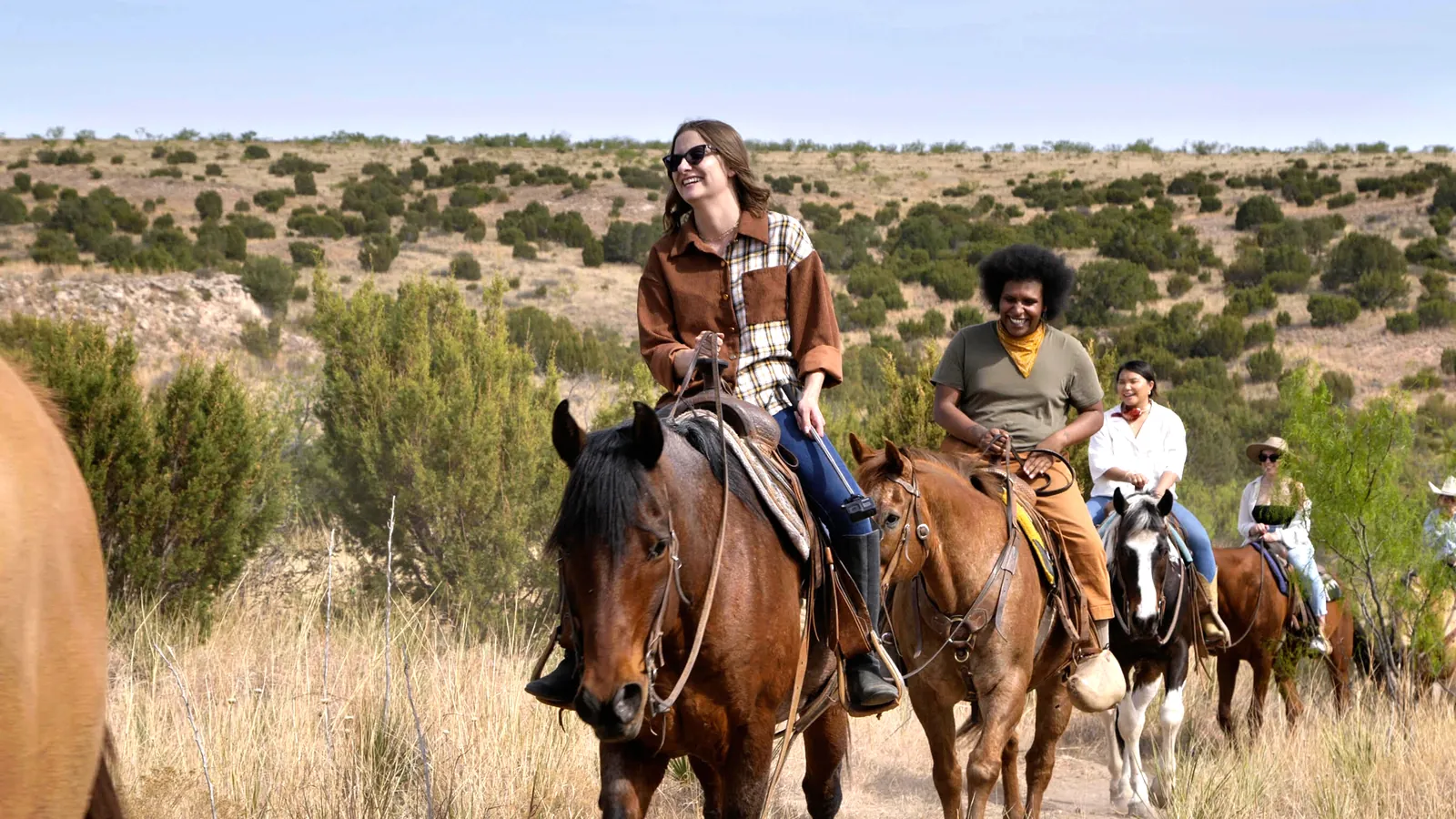
Photo: fortworthstockyardsstables.com on Google
Deciding where to ride depends on your horse’s experience and your own comfort level with specific terrains. If you have a horse that isn’t used to heights or loose rock, avoid the steep canyons of Big Bend or Palo Duro. Instead, choose the softer, forested paths of Tyler State Park. If you’re training for long-distance endurance, the vast, open trails of the Hill Country or Big Bend are your best options.
Most of these locations require you to bring your own horse, as public parks rarely provide rentals. If you don’t own a horse, you should look for local commercial stables that offer guided tours, as these facilities are separate from state park operations. Picking one location usually means committing to a specific style of riding, as you can’t easily combine desert and forest terrain in a single day.
Frequently asked questions
Do I need a permit to ride in Texas state parks?
Yes, you need a daily entrance permit for each person and a separate equestrian permit or day-use fee at most locations. You can check the exact fees for your specific date on the Texas Parks and Wildlife website. Always keep your proof of payment visible in your vehicle while you ride.
Is it safe to ride alone in Texas parks?
It’s generally safe if you stick to marked trails, but you should always tell someone your planned route and expected return time. If you’re heading into remote areas like Big Bend, riding with a partner is significantly safer. Avoid riding alone in extreme heat or during potential flash flood conditions.
What should I bring for my horse?
You must bring your own water supply, feed, and a basic first-aid kit for your animal. Most state parks don’t provide hay or grain, so you must pack enough for the duration of your stay. Check the park’s specific rules regarding weed-free hay, as many parks require it to prevent invasive species.
How long are the trails at these parks?
The trail lengths vary from 5 miles to over 40 miles depending on the specific park you choose. You can find the exact mileage for each loop on the official park map provided at the entrance. Always measure your ride length against your horse’s current fitness level to avoid exhaustion.
Can I camp with my horse in these parks?
Yes, several parks offer dedicated equestrian campsites that include pens or stalls for your horse. You should reserve these sites months in advance, especially during the spring and fall seasons. Check the park’s reservation page to see which specific sites allow animals.
What happens if the weather turns bad?
You should immediately head back to your trailer if you see dark clouds or lightning, as trails can become impassable. Trail conditions change rapidly in the desert, and flash floods are a real risk in canyon areas. Always check the local weather forecast specifically for the park location before leaving home.
Conclusion
Start by checking the trail maps for your chosen park online to plan your route based on your horse’s fitness. You can expect a successful ride if you arrive early and find the trails clear of debris. If you notice your horse showing signs of extreme fatigue or lameness, stop immediately and contact the park office for assistance.