
Breeding horses means pairing a mare and a stallion so she can conceive and carry a foal to term. It’s a serious commitment of time, money, and knowledge, and most owners shouldn’t attempt it without veterinary support.
Key Takeaways
- Confirm both horses are healthy with a pre-breeding veterinary exam before making any plans.
- Track the mare’s heat cycle closely so breeding happens during her fertile window.
- Choose live cover, artificial insemination, or embryo transfer based on your goals, budget, and the stallion’s availability.
- Budget for stud fees, veterinary care, feed, and emergency costs before the mare is bred.
- Plan for foaling and newborn care, including a clean stall and a veterinarian on call.
Selecting Breeding Stock
Start by deciding what you want the foal to do—ride, drive, show, or work—and choose a mare and stallion whose conformation, temperament, and performance records support that goal. Review pedigrees carefully to avoid pairing close relatives, which increases the risk of genetic disorders. Ask for recent health records, vaccination history, and any genetic test results relevant to the breed. A sound, well-mannered mare with good maternal instincts is usually a better foundation than a flashy horse with health issues.
Pre-Breeding Health Exam
A veterinarian should examine both horses before breeding begins. For the mare, this typically includes a reproductive tract ultrasound or palpation, a uterine culture or biopsy if she is older or has foaled before, and confirmation that she is cycling normally.
The stallion needs a semen evaluation to check motility, morphology, and concentration, plus testing for contagious equine metritis and other transmissible diseases. Vaccinations and deworming should be current for both animals. This exam can’t guarantee pregnancy, but it identifies problems that could waste a breeding season.
Understanding the Mare’s Cycle
Mares are seasonally polyestrous, meaning they come into heat during longer daylight hours, roughly spring through early fall. A typical heat cycle lasts about 21 days, with the mare receptive to the stallion for four to seven days.
Signs of heat include frequent urination, winking of the vulva, tail raising, and interest in a stallion or teaser. Because ovulation timing varies, your veterinarian can use ultrasound to track follicle growth and pinpoint the best day to breed. Breeding outside the fertile window won’t produce a pregnancy.
Methods to Breed Horses
Live Cover
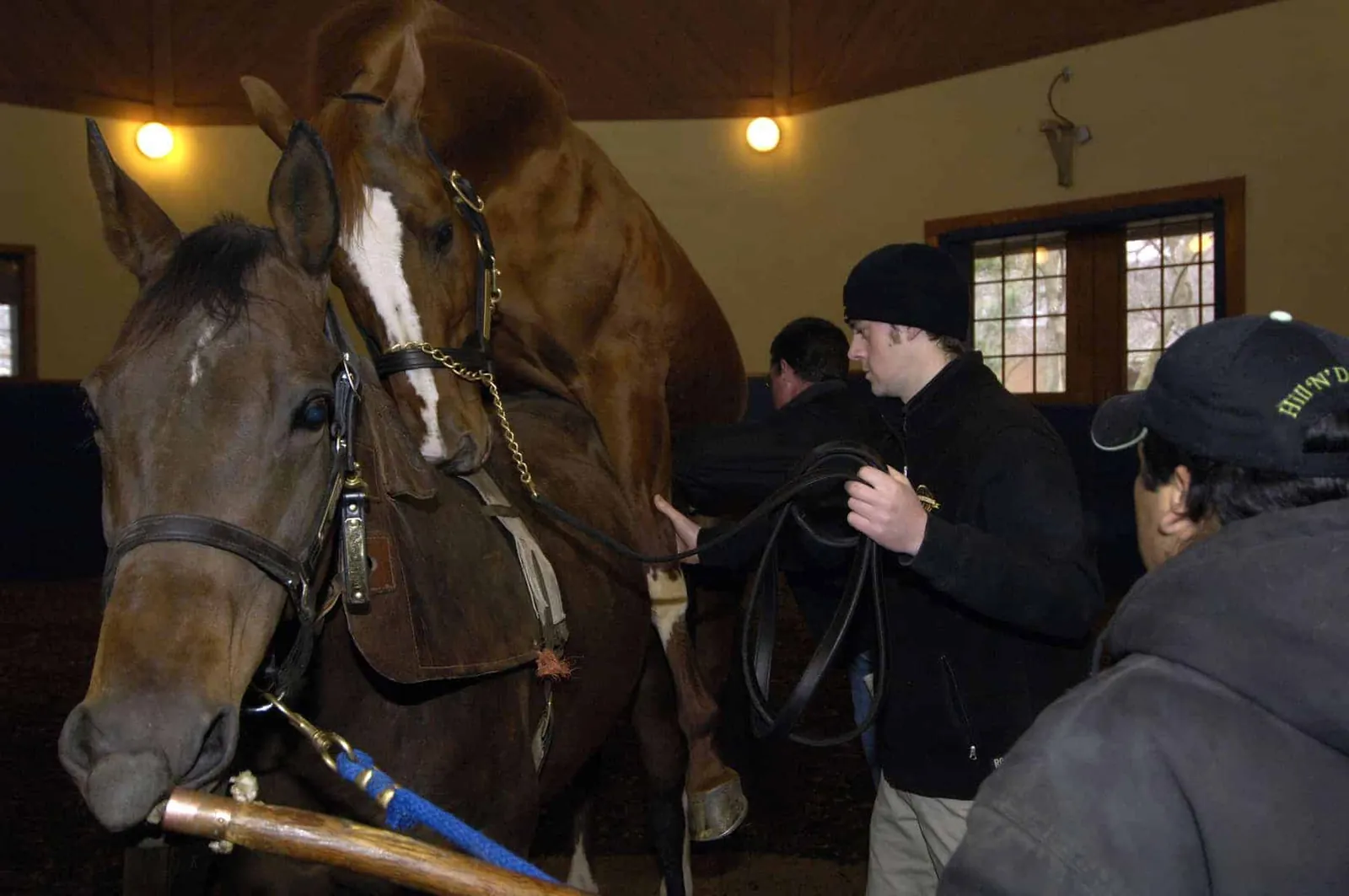
Live cover means the stallion mounts the mare directly, usually at a breeding farm under supervision. It’s the traditional method and often requires fewer veterinary interventions than artificial insemination. The mare travels to the stallion, or the stallion comes to her, and handlers manage the encounter to prevent injury. Success rates vary by farm and individual horses, and transport adds cost and stress.
Artificial Insemination
Artificial insemination (AI) deposits collected semen into the mare’s uterus without physical contact between the horses. It can use fresh, cooled, or frozen semen, which makes it possible to breed to a stallion in another state or country. Cooled semen usually remains viable for 24 to 48 hours, while frozen semen can be stored for years but requires precise timing around ovulation. AI reduces injury risk and disease transmission, but it demands more veterinary involvement and careful scheduling.
Embryo Transfer
Embryo transfer flushes a seven- to eight-day-old embryo from a donor mare and places it into a recipient mare who carries the pregnancy. This lets a performance mare produce a foal without interrupting her training or competition schedule, or allows older mares to foal through a younger surrogate. It’s expensive, requires specialized veterinary facilities, and success isn’t guaranteed.
Timing the Breeding
Your veterinarian will examine the mare with ultrasound every day or two once she shows heat. The goal is to breed within 24 to 48 hours before ovulation. With fresh semen, breeding can occur slightly earlier; with cooled or frozen semen, timing must be tighter because the sperm lifespan is shorter.
After breeding, a pregnancy check by ultrasound is usually done 14 to 16 days later, and again around day 30 to confirm a heartbeat and rule out twins. Twins are dangerous in horses and often require reduction to save one foal.
Managing the Pregnant Mare
Once pregnant, the mare needs good-quality forage, clean water, and regular hoof and dental care. Most mares can continue light exercise through the first seven or eight months, but strenuous work should taper off as the due date approaches. Vaccinations and deworming should follow your veterinarian’s schedule, and some vaccines are given specifically to protect the foal through colostrum. The mare should be separated from other horses a few weeks before foaling to reduce stress and disease exposure.
Nutrition Through Gestation
For the first seven to eight months, a pregnant mare can often maintain condition on forage alone if she isn’t being worked hard. During the last trimester, when the foal grows most rapidly, she needs more calories, protein, calcium, and phosphorus.
A ration balancer or feed formulated for broodmares can fill those gaps, but overfeeding is just as risky as underfeeding because obese mares are more prone to foaling difficulties. Body condition should be monitored regularly, and adjustments made based on the mare’s weight, not a fixed calendar.
Foaling Preparation
Most mares foal between 320 and 360 days after breeding, with 340 days being typical. Prepare a clean, well-bedded foaling stall or paddock at least two weeks before the expected date. Have a foaling kit ready with clean towels, iodine for the umbilical cord, a flashlight, and your veterinarian’s phone number.
Watch for signs that foaling is near: udder filling, waxing of the teats, relaxation of the tailhead, and restlessness. Most mares foal at night and without assistance, but you should be nearby in case something goes wrong.
The Foaling Process
Stage one labor can last several hours and looks like colic—the mare paws, gets up and down, and sweats. Stage two begins when the water breaks and ends with the birth of the foal, usually within 20 to 30 minutes. The foal should appear front feet first, followed by the head.
If you see red membranes instead of white, or if no progress occurs within 15 to 20 minutes of the water breaking, call your veterinarian immediately. Stage three is the passing of the placenta, normally within three hours; a retained placenta is an emergency.
Newborn Foal Care
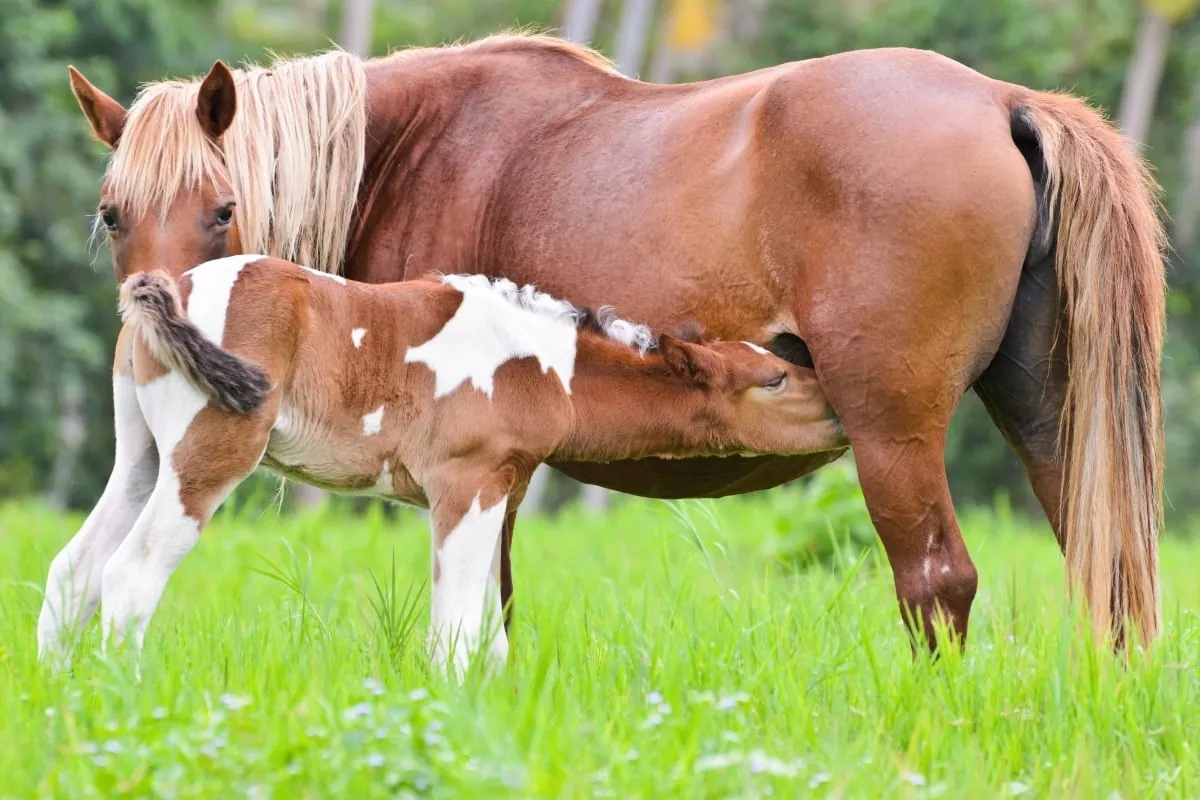
A healthy foal should stand within one hour and nurse within two hours. The first milk, colostrum, contains antibodies the foal needs because equine placentas don’t transfer immunity before birth. If the foal doesn’t nurse promptly, or if the mare leaks milk before foaling, the foal may need colostrum from another source or a plasma transfusion.
Dip the umbilical stump in diluted iodine to prevent infection, and watch for meconium passage within the first 12 to 24 hours. A veterinary exam within 12 to 24 hours of birth is recommended to check the foal’s IgG levels and overall health.
Costs and Budgeting
Breeding is rarely profitable for casual owners. Stud fees range widely by stallion and breed, and AI adds shipping, collection, and veterinary fees. You’ll also pay for pre-breeding exams, ultrasound monitoring, pregnancy checks, increased feed, foaling supplies, and emergency veterinary care. Raising the foal to weaning age adds months of feed, farrier visits, deworming, and vaccinations before any sale or training income is possible.
Common Problems and Troubleshooting
Failure to Conceive
A mare may fail to conceive because of poor timing, uterine infection, age-related changes, or stallion fertility issues. Your veterinarian can culture the uterus, re-evaluate the cycle, or recommend a different breeding method.
Twins
Twin pregnancies in horses often result in abortion or weak, nonviable foals. Early ultrasound detection allows your veterinarian to reduce one embryo, improving the odds for the remaining foal.
Abortion
Abortion can occur from infection, twinning, stress, or genetic abnormalities. Any vaginal discharge or premature udder development during pregnancy warrants an immediate veterinary call.
Dystocia
Difficult birth is an emergency. Malpresentation, such as one leg back or the foal upside down, requires veterinary assistance within minutes to save the mare and foal.
Rejected Foal
Occasionally a mare won’t accept her foal, especially after a difficult first birth. Hand-rearing a foal is labor-intensive and usually requires bottle feeding every few hours, so have a backup plan and veterinary guidance ready.
Frequently Asked Questions
How long is a horse pregnant?
The average gestation length is about 340 days, but normal range is roughly 320 to 360 days. Your veterinarian can narrow the window using ultrasound and ovulation timing.
Can I breed my mare on my own without a vet?
You can, but it isn’t advisable. A veterinarian improves conception odds, catches health problems early, and can handle emergencies such as twins or difficult birth.
What is the best age to breed a mare?
Many mares are bred between four and fifteen years old, though healthy mares can conceive older. Fertility generally declines with age, and older mares may need more veterinary intervention.
How much does it cost to breed a horse?
Costs vary enormously by stud fee, breeding method, location, and veterinary needs. Budget for the stud fee, semen handling, ultrasounds, pregnancy checks, feed, foaling supplies, and potential emergencies before you begin.
What if my mare doesn’t get pregnant?
Your veterinarian can investigate with uterine culture, cycle tracking, and stallion semen evaluation. Some mares need treatment for infection or hormonal support before they can conceive.
Conclusion
Breeding horses is a long-term project that starts with healthy parents and ends with responsible care for the foal. Your next step is to schedule a pre-breeding veterinary exam for your mare and discuss which breeding method fits your goals and budget.