
Colic describes abdominal pain in horses, and it happens when something irritates, blocks, twists, or twangs the gastrointestinal tract. Because a horse’s gut is long, coiled, and can’t vomit, even a small upset can turn serious fast. Colic isn’t one disease; it’s a sign that something inside is wrong, and the causes range from mild gas to a life-threatening twist of the intestine.
Key Takeaways
- Call your veterinarian immediately if your horse shows colic signs; early treatment improves outcomes.
- Remove feed but offer fresh water while waiting, unless your vet says otherwise.
- Walk the horse gently only if it’s safe and your vet approves; don’t exhaust the animal.
- Know your horse’s normal vital signs so you can report pulse, respiration, and temperature changes.
- Prevent colic with consistent feeding, regular dental care, parasite control, and constant access to clean water.
What Is Colic in Horses
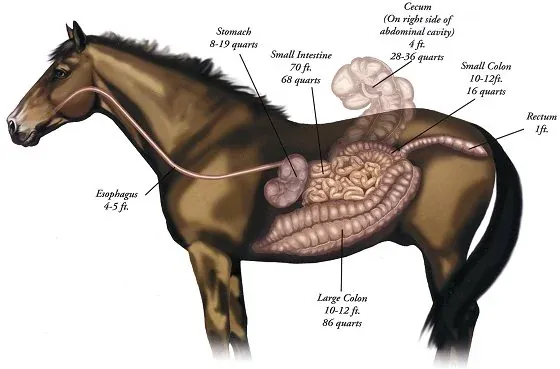
Colic is a general term for abdominal pain, most often linked to the digestive system. The equine gut is roughly 100 feet long and includes twists, narrow bends, and a large cecum that ferments fiber. Gas can build up, feed can become impacted, or part of the intestine can shift position. Because horses can’t vomit, pressure has nowhere to go except through the manure or through the gut wall, which makes pain intense and complications likely.
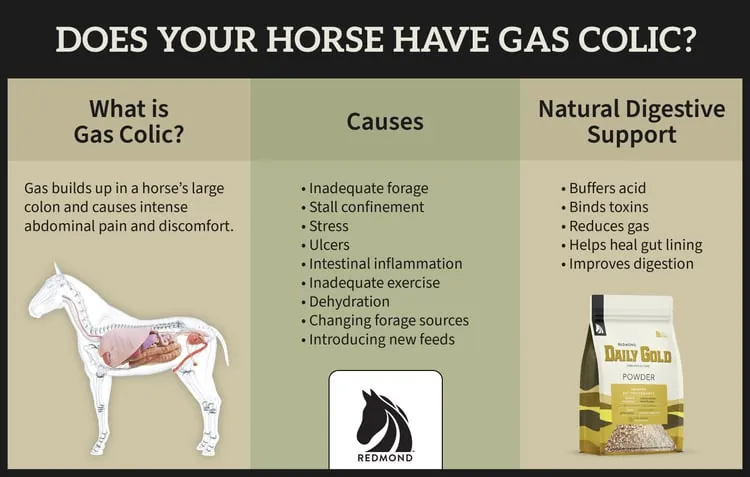
Common types include gas colic, impaction colic, spasmodic colic, and displacement or torsion colic. Gas colic happens when fermentation produces excess gas. Impaction colic occurs when feed or debris blocks the intestine, often at a flexure. Spasmodic colic involves painful gut contractions. Displacement or torsion means a section of intestine has moved or twisted, which can cut off blood supply and requires emergency surgery.
How Do Horses Get Colic
Horses get colic when normal digestion is disrupted by diet, management, health issues, or anatomy. Sudden feed changes are a leading trigger because the microbes in the hindgut need time to adjust to new starches or sugars. Poor-quality hay, moldy grain, or too much concentrate can overwhelm the digestive system. Dehydration dries out intestinal contents, making impaction more likely, especially in winter when water is cold or frozen.
Parasites can damage blood vessels and inflame the gut lining. Dental problems prevent proper chewing, so large particles reach the intestine and are harder to move. Sand ingestion, common when horses eat off sandy ground, can accumulate in the large colon. Stress from travel, competition, or stall confinement changes gut motility. Some horses are simply more prone due to age, prior colic episodes, or conformation.
Dietary triggers include abrupt grain increases, lush pasture access after a dry period, and feeding large meals instead of smaller, frequent ones. Horses are trickle feeders designed to graze nearly constantly, so long stretches without forage leave the stomach empty and the hindgut unstable.
Common Causes of Colic
Several specific factors raise the risk of colic:
- Sudden changes in hay, grain, or pasture
- Inadequate water intake or frozen water sources
- High-grain, low-forage diets
- Dental disease or sharp points on teeth
- Heavy parasite burden or ineffective deworming
- Sand or dirt ingestion
- Lack of turnout or sudden stall rest
- Transport and competition stress
- Previous abdominal surgery or colic history
Older horses may face additional risks from worn teeth, Cushing’s disease, or reduced mobility. Foals can develop colic from ulcers, meconium impaction, or congenital issues. Mares in late pregnancy can experience uterine torsion that presents as colic-like pain.
Warning Signs to Watch For
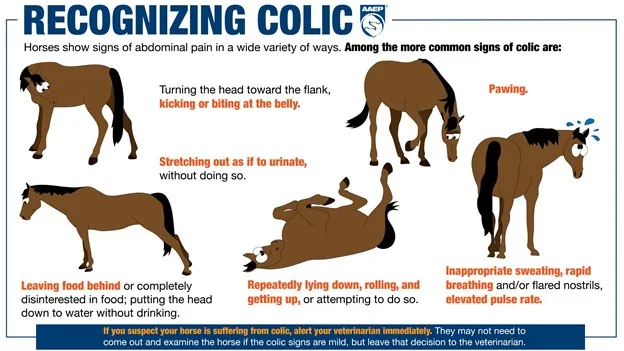
Early recognition saves lives. A horse with colic may paw at the ground, look at or bite its flank, lie down and get up repeatedly, or roll. It may stretch out as if to urinate without passing urine, sweat without exercise, or have a rapid breathing rate. Gut sounds may be absent or excessively loud. Appetite usually drops, and manure may become smaller, drier, or absent.
Severe signs include violent rolling, continuous pawing, elevated heart rate above 60 beats per minute, pale or tacky gums, and distress that doesn’t improve with walking. These suggest a possible surgical condition such as a twisted intestine.
What to Do If You Suspect Colic
Call your veterinarian immediately. Colic can progress from mild to critical within hours, and only a professional can determine whether the horse needs medication, fluids, or surgery. While waiting, remove all feed and hay so the gut doesn’t have more material to process. Offer fresh water unless your vet advises against it.
Move the horse to a safe, well-bedded area where it can’t injure itself if it goes down. Walk it gently for short periods if your vet agrees and the horse is calm enough to handle; walking can distract from mild pain and prevent rolling, but never force exercise on a horse that’s exhausted or violently thrashing.
Note the time symptoms started, vital signs, recent feed changes, and the last normal manure passage. Don’t administer medication unless your veterinarian instructs you to do so, because drugs can mask signs and complicate diagnosis.
Risk Factors by Horse Type
Different horses face different colic risks based on age, use, and management.
| Horse type | Typical colic risks | Prevention focus |
|---|---|---|
| Pleasure horse | Impaction from poor hay, dehydration, dental issues | Consistent forage, water access, annual dental exam |
| Performance horse | Gas colic from high-grain diets, transport stress, stall confinement | Frequent small meals, turnout, gradual travel conditioning |
| Senior horse | Worn teeth, reduced motility, Cushing’s disease | Senior feed, regular dental floats, parasite monitoring |
| Broodmare | Uterine torsion late in pregnancy, foaling stress | Veterinary prenatal checks, clean foaling environment |
| Foal | Meconium impaction, ulcers, congenital defects | Early veterinary exam, clean foaling area, colostrum intake |
Prevention Strategies You Can Use
Preventing colic centers on consistency and gut health. Feed at the same times each day, and make any feed or hay changes over seven to ten days. Provide clean, fresh water at all times, and check that troughs aren’t frozen in winter. Maximize turnout and grazing time; horses kept in stalls with limited movement have higher colic rates than those with regular access to paddocks.
Schedule annual dental exams so sharp points or missing teeth don’t interfere with chewing. Follow a veterinarian-approved deworming program based on fecal egg counts rather than a fixed calendar. Avoid feeding on sandy ground; use feeders or mats to reduce sand intake. Limit grain to the minimum needed for work, and split concentrates into multiple small meals. Keep a regular exercise routine, and introduce changes in workload gradually.
Warning: Never give a horse Banamine or other pain medication before speaking with your veterinarian, as it can hide signs of a surgical condition and delay treatment.
When Colic Becomes an Emergency
Some colic cases resolve with medication and supportive care, but others require immediate referral to a surgical clinic. Signs that suggest a surgical abdomen include persistent pain despite medication, a heart rate over 60 beats per minute, toxic-looking gums, absent gut sounds, or a distended abdomen. A rectal exam, ultrasound, and abdominal fluid sample at the clinic help the veterinarian decide if surgery is needed.
Surgery can correct a twisted intestine, remove an impaction, or repair damage, but it’s expensive and carries risks. The sooner a horse reaches a referral hospital, the better the chances of survival. Have a plan in place before an emergency: know the location of the nearest equine surgical center, keep trailer access clear, and discuss financial limits with your veterinarian ahead of time.
What to Expect at the Veterinary Clinic
The veterinarian will perform a physical exam, listen for gut sounds, check hydration, and likely pass a nasogastric tube to relieve stomach pressure. Because horses can’t vomit, a bloated stomach can rupture if not decompressed. A rectal exam allows the vet to feel for displacements or impactions. Blood work, ultrasound, and abdominocentesis (sampling abdominal fluid) may follow.
Treatment depends on the type and severity. Mild spasmodic or gas colic often responds to pain relief, fluids, and walking. Impactions may need oral or intravenous fluids, laxatives, and sometimes repeated tubing with mineral oil or electrolytes. Surgical cases go to the operating room under general anesthesia. Recovery involves stall rest, gradual reintroduction of feed, and close monitoring for complications such as laminitis or infection.
Recovery and Aftercare
After a colic episode, return to feed slowly. Start with small amounts of soaked hay or grass, then increase over several days as manure production resumes. Avoid grain until the gut is moving normally. Keep the horse in a clean, dry stall or small paddock initially, then increase turnout as your veterinarian advises. Monitor manure quantity and consistency, appetite, attitude, and temperature daily.
If your horse had surgery, follow the discharge instructions exactly, including incision care, hand-walking schedules, and medication timing. Horses that have colicked once are at higher risk of colicking again, so review feeding, deworming, dental, and water management with your veterinarian to reduce recurrence.
Frequently Asked Questions
Can colic go away on its own?
Mild gas or spasmodic colic sometimes resolves without intensive treatment, but you can’t tell at home whether a case is mild or life-threatening. Call your veterinarian for every colic episode because delay can be fatal if the intestine is twisted or blocked.
How much walking is safe for a colicky horse?
Short, gentle walking may help a calm horse with mild pain and prevent rolling, but only if your veterinarian approves and the area is safe. Don’t force a tired or thrashing horse to walk, and never walk a horse to exhaustion.
Can I give my horse Banamine for colic?
Don’t give Banamine or any other medication before calling your veterinarian. Pain relief can mask signs that indicate a surgical emergency, making diagnosis harder and potentially delaying life-saving treatment.
What are normal vital signs for a horse?
A typical adult horse has a resting heart rate of 28 to 44 beats per minute, a respiration rate of 8 to 16 breaths per minute, and a temperature around 99 to 101.5 degrees Fahrenheit. Learn your own horse’s baseline so you can report meaningful changes to your vet.
Does deworming prevent colic?
A strategic deworming program based on fecal egg counts can reduce parasite-related colic risk, but deworming alone doesn’t prevent all colic. Combine it with dental care, consistent feeding, clean water, and regular turnout for the best protection.
Conclusion
Colic is one of the most serious emergencies a horse owner can face, so save your veterinarian’s emergency number in your phone today and post it in the barn. Knowing your horse’s normal behavior, manure, and vital signs gives you the best chance of spotting trouble early and getting help before a manageable problem becomes critical.