
Current estimates suggest that there are approximately 58 to 60 million horses in the world, though exact numbers fluctuate based on agricultural census data and regional reporting standards. Because these animals are used for work, sport, and companionship across nearly every continent, tracking the total global population requires combining data from local veterinary ministries and international livestock databases. You can verify the most recent figures through the Food and Agriculture Organization of the United Nations livestock database.
Population counts change depending on economic conditions and the demand for horses in specific industries. The most common mistake people make is assuming that wild horse populations represent a large share of the global total, when in reality, the vast majority of horses are domesticated and managed by humans.
If the local economy relies heavily on animal labor, the count in that region remains stable; if the region focuses on mechanized farming, the count often drops as owners shift toward tractors and trucks.
Estimating Global Equine Populations
Identify the specific region or country you’re researching, as global totals are aggregates of individual national reports. You must isolate the geography before beginning your search.
Consult the national agricultural department or the primary livestock census office for that specific country to find the most recent count. These agencies often maintain digital archives of past surveys.
Determine if the count includes ponies, donkeys, and mules. Some nations group these under the broad term “equids,” while others separate them. You must verify the definition used in the dataset to avoid overestimating the horse population.
Adjust for current trends, such as the growth of the equestrian sports industry or a decline in agricultural work. These shifts can move totals by 2–5% annually in developing nations. Look for recent news on land use or veterinary registration to gauge these fluctuations.
Cross-reference the national figure with the global database provided by international agriculture agencies. Ensure the data matches the year of your report. Mismatched timelines create significant gaps in your final estimate.
Always look for the date of the census. A count from five years ago won’t reflect the current reality of a region undergoing rapid urbanization.
If you’re looking for specific numbers in a country like the United States, check the USDA National Agricultural Statistics Service. They provide the most accurate breakdown of horses by state and use. This resource helps distinguish between working livestock and recreational animals, which is essential for accurate modeling.
Factors Influencing Population Trends
The speed at which you can determine a local horse population depends on the quality of the regional reporting system. In countries with advanced digital agricultural tracking, data is updated annually, while other areas may only perform a full census every decade.
| Situation | Data Availability | What changes it | What to watch for |
|---|---|---|---|
| Developed Nations | High | Urbanization and land costs | Declining backyard ownership |
| Agricultural Regions | Medium | Seasonal labor demands | Changes in farming technology |
| Protected Wild Areas | Low | Environmental policy changes | Herd management programs |
These trends matter because they reveal whether a population is stable or shifting toward niche usage. In developed nations, for instance, horses are increasingly moving from utility roles to high-end recreational or competitive sectors. This transition often hides the true number of animals, as hobbyists may not register their horses in the same databases as commercial breeders.
Meanwhile, in agricultural regions, the adoption of automated machinery often leads to a rapid decline in working equine populations. If you notice a sudden drop in local census figures, check if the region has recently subsidized tractor or equipment upgrades.
If your search for local data is taking longer than expected, look for the latest “Livestock Census” report from the national ministry of agriculture rather than general internet news articles. These official documents typically categorize horses by primary use, which prevents the common mistake of confusing working livestock with companion animals.
Identifying Reliable Population Data
You can tell when a population estimate is accurate by checking if the report distinguishes between working horses, sport horses, and feral herds. A granular breakdown prevents the common error of conflating diverse equine roles, which often leads to significant overcounting or undercounting in rural sectors.
An official report will cite a specific census year and define the methodology used for the count, such as farm tax records or mandatory veterinary registrations. These primary sources provide a verifiable trail that allows you to cross-reference the data against local agricultural or livestock ministry archives.
If a source provides a number without a reference year, it’s likely an outdated estimate and shouldn’t be used for serious analysis. You must also check if the data accounts for seasonal migration or nomadic herds, which are frequently omitted in static counts.
The final test of reliability is whether the total aligns with the known trends of the region’s agricultural output. If the horse population spikes while local farming activity declines, the estimate is likely flawed.
Common Reporting Errors
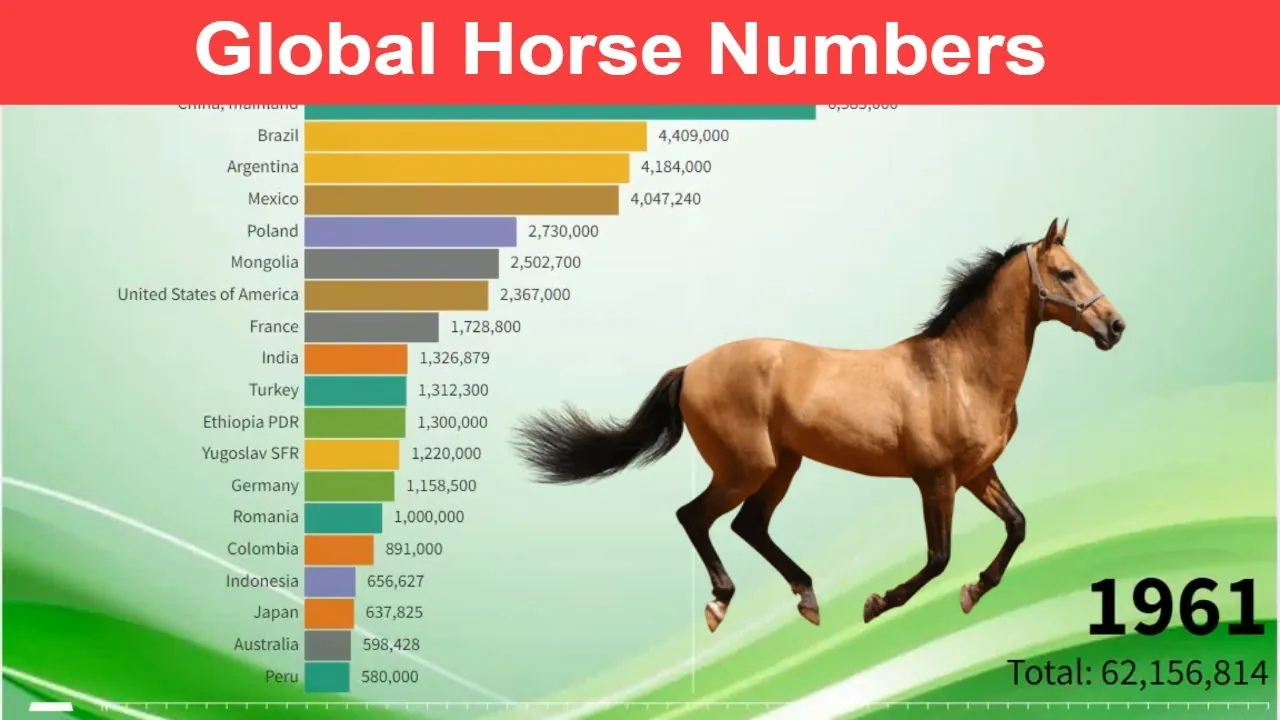
Many reports lump horses, donkeys, and mules into one category, which inflates the horse count. Always check the specific definitions used by the reporting agency to ensure you’re only counting horses. If a report uses the broad term “equine,” it likely includes donkeys and mules, which can lead to an overcount of several million animals.
People often use a single number from a decade ago to describe today’s population. You must find the most recent year of the census to avoid reporting obsolete data. Check the footnotes of the source material to confirm the data collection date. If the information is older than five years, it may not reflect recent shifts in agricultural use or environmental policy.
Feral horses often capture public attention, but they make up a tiny fraction of the global total. Focusing on them leads to a skewed view of the total equine population, which is dominated by domestic animals. Because feral herds are highly visible in media, researchers often mistakenly extrapolate their growth rates to the entire global population, ignoring the stable or declining numbers of working horses.
Related guides
- How Many People Ride Horses in the World: Surprising Global Stats
- How Many Horses are in the World? Surprising Global Stats
Frequently asked questions
How many horses are in the world today?
There are approximately 58 to 60 million horses in the world, based on the latest global agricultural reporting. This figure includes all breeds and types of domesticated horses across all continents. Because this number is an estimate derived from individual national reports, it changes slightly each year as countries update their livestock census data. You should check the current FAOSTAT database for the most recent annual update.
Why is it hard to count horses?
It’s hard to count horses because many are kept on private, non-commercial land that isn’t captured by standard agricultural surveys. While large breeding farms and commercial stables are easy to track through tax and health records, private recreational horses often go uncounted. This creates a gap between the official agricultural data and the true number of animals living in a country.
How often do countries update horse counts?
Most countries update their official horse counts periodically as part of a broader livestock census. Some nations with highly active equestrian industries may publish updates more frequently, but this varies significantly by region. If you need a current figure, check the website of your country’s department of agriculture to see when their last official survey was completed.
Are horse populations increasing?
No, the global horse population has remained relatively stable or seen a slight decline in many regions over the last few decades. As farming becomes more mechanized, the need for horses in agriculture has dropped, though this is partially offset by their continued popularity in sport and leisure. The total number fluctuates based on the economic health of the equestrian industry in each specific country.
Do wild horses count toward the total?
Yes, wild horses are included in the total population count, but they represent a very small percentage of the global figure. Most wild populations are managed by government agencies, which perform their own specific surveys to track herd health and environmental impact. These numbers are reported separately from domestic livestock counts, but they’re factored into the final global estimate provided by international organizations.
Conclusion
Whether you’re interested in their history or just love seeing them in fields, these animals remain a vital part of our global landscape. If you’re curious about the breeds in your own country, check your local agricultural department’s website. You’ll find it’s a great way to learn more about your neighbors.