
Understanding Budgie Nutrition: What Foods Do Budgies Prefer Most?
What Food Do Budgies Like the Most, Have you ever pondered what would surely brighten your budgie’s day? If the little one through the house is hopping around and nibbling curiously at different foods, you would know that they can be quite picky. The choice of the right food is not always so easy, particularly when you want your budgie to be happy, healthy, and full of energy.
It is not enough for the pet to just eat seeds. Wouldn’t it be better to know what budgies like most? There are so many choices available at the pet store and online, and not all of these are good for the feathery friend of yours. And with all the tips in the world, it can be hard to figure out what is safety and nice taste for your bird.
If you do not want to feel that way, then this is the right spot for you. The reasons for budgies to like certain foods, the foods that keep them healthy, and how to feed them so that they sing are just some of the things you can get from this manual. Let us uncover the best foods for budgies and the facts that support their preferences, and the ways to make their diet more enjoyable and even.
The Basics of Food and Nutrition for Animals
In continuation with the introduction it is fundamental to comprehend what food means to animals, including budgies. Food is not just anything you feed your pet. The definition that the Food and Agriculture Organization provides for food is “food is any substance that is ingested to provide nutritional support and energy for an organism.” In all animals, food is not just a matter of taste. It makes them strong, it helps them grow, and it keeps their organs functioning well.
Nutrients contain the main ingredients of food. They consist of carbohydrates, proteins, fats, vitamins, and minerals. Every group of nutrients has a particular function. Carbohydrates and fats provide energy. Proteins develop the muscle and mend the body tissues. Vitamins, as well as minerals, are the helpers in the body, which make the organ system work effortlessly. Though water is not regarded as a nutrient, it is also a matter of life-death—it transports the nutrients to different parts of the body and keeps the animals hydrated.
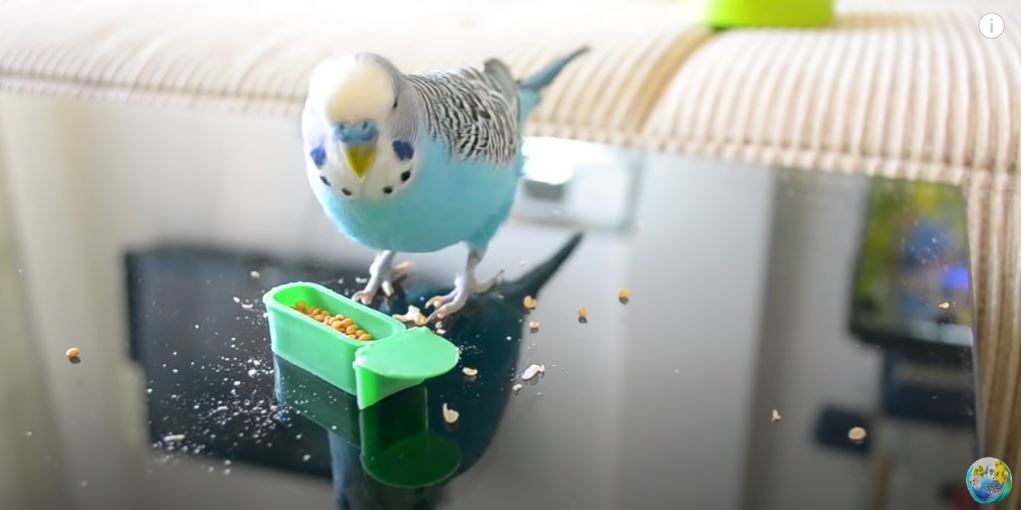
The different animal species require different nutrient combinations. These needs are the result of the changes that have been taking place throughout the history of different animals’ lives. For instance, herbivores such as parakeets (or budgerigars) eat only plants or plant derivatives, and they flourish on it. Their digestive organs have been adjusted to digest the tough fibers of plants that they would not eat if they were meat-eaters.
Carnivores, on the other hand, require a lot of protein and fat coming from animals. It is, therefore, impossible for the parakeets to be fed in the same way as the dog or cat that is, because their bodies process food differently.
Thetastemachanism plays a very important role in the selection of food by animals. Human beings can feel five main tastes, whereas birds can only taste fewer things because they ave very few taste buds- for example, there are only 30 taste buds in a chicken. Hence, budgies fail to recognize all the flavors that humans do. Their taste is still quite powerful to them to help them distinguish the healthy food from the poisons. Some flavors also persuade them to eat at this time, making sure they get enough food.
It is quite a lot easier to see why eat-in buds’ preferences become progressively stronger once you realize the base of nutrition in animals. Let’s first understand whatcom eat-in naturally and then why this food is appropriate for their specialised ntritional needs.
Natural Food Preferences of Budgies
First, it helps to reference what was mentioned earlier about food and nutrition. Now, the topic is budgies and what they eat. Their nature and situations as herbivores are the main factors that reveal their choices. Budgies—aka budgerigars—are standard herbivores and primary consumers. In other words, they get the major part of their diet from plants and consume no animals directly. In the wild, budgies are mostly engaged in finding food, which is an activity that shows that they are adapted to feed on seeds that are plentiful in nature. Their strong,
curved beaks are perfect for opening the hard shell of seeds, a skill that is not common to carnivores or omnivores. While, biologically, seeds are the main part of a budgie’s diet under natural conditions. Seeds are the main components of many grass species in Australia where most of the wild budgies are found, as reported in the Food and Agriculture Organization data and its summary research. The seeds are energy-dense, they contain carbohydrates and healthy fats that the budgies can use during their energetic lifestyle. The seeds have the protection of seed coatings, which the budgies are capable of breaking, therefore, the nutrients-rich are easily accessible.
Nevertheless, seed is not the only item in the diet of budgies. The diet of the birds in the wild is very different from the one in the captivity and is much more diverse. In addition to the seeds, budgies also eat a wide variety of plant foods. They have fruits, vegetables, and edible greens in their menu if they are available. To name a few, the leafy greens provide vitamins and minerals, while some berries and portions of fruit can offer natural sugars and antioxidants. With these, wild budgies not only get the necessary vitamins and minerals but also complete their diet with nutrients that are not present in seeds alone.
This assortment enables the budgie’s robust health and reflects their ecological adaptability. As herbivorous consumers, their plant-based choices ensure that they obtain a variety of nutrients necessary for their development and vigor.
Since you now know exactly what plant-based foods budgies are looking for, let us go into details of these foods, especially seeds, and find out why they are so important for their health from a nutritional point of view.
Nutritional Value of Seeds and Plants for Budgies
After elucidating the food choices inherent in the behavior of budgies, it is necessary to outline why it should be so that seeds, grains, fruits, and vegetables become indispensable for their nutrition. Do you remember that wild budgies depend on a varied plant-based diet? Let us dissect the nutritional aspects of these foods and outline the significance of your budgie’s health from this standpoint.
Macronutrients in Seeds: Carbohydrates, Fats, and Proteins
Budgies incorporate seeds in their diets as these deliver the rquired macronutrients. To be precise,seeds provide carbohydrates which are the major source of energy from which your budgie derives daily activities and its body is kept warm. The carbohydrates present in seeds are mostly starches and simple sugars through which they are converted into energy by the digestive system of the budgie which is easy to process.
Seeds are also a source of fats. As mentioned in Food – Wikipedia, fats are the most energy-dense nutrient. These good fats keep the skin and feathers of your budgie, support the function of the cells, as well as the general health of the body. Moreover, seeds have proteins which are indispensable to the maintenance of muscles and also for the process of tissue repair. This is the reason why budgies living in the wild are always on the lookout for seeds to make up their meals as the easiest way to satisfy their energy and protein requirements through a single food source.
Vitamins and Minerals Essential for Budgie Health
Nevertheless, the seeds on their own do not yield a complete and well-balanced nutrition. They provide some vitamins and minerals, but they lack many essential micronutrients or those contents are only in small amounts. Here robins have a crucial role. As an illustration, fruits may have up to 90% water and be high in vitamin C, whereas leafy greens and vegetables can be a source of potassium, folate, and dietary fibre (Food – Wikipedia). These nutrients serve as regulators of growth, immune response, and general wellness in your budgie.
The Importance of Variety: Balancing Seeds with Fresh Produce
In the long run, insecurity-limited seeds consumption only may lead to nutritional imbalances and health problems. Budgies in nature, feed instinctively to balance their diet with different plant-based foods. Giving your budgie a combination of seeds, grains, fresh greens, and small pieces of fruit you are actually replicating the variety found in their natural environment. This balancing is not only about preference and choice but is essential for the bird’s health, longevity, and feather brightness.
Don’t forget that a diet formulated from these tenets will not only address your budgie’s energy and growth needs but also act as a preventive measure against deficiencies that are often linked to single feeding habits.
After the importance of a good nutrition and dietary variety have been established, the next part will be about how budgies figure out what foods to eat why taste and selection are a part of their eating habits.
How Budgies Taste and Select Their Food
To fully comprehend the significance of good nutrition and the necessity for variety, it becomes pertinent to know how budgies are aware of the food that they need to consume. The sense of taste, although basic in birds, nevertheless has a direct influence on the selection of food and the general health condition. Together, let’s find out the details of this process for your budgie.
Anatomy of Taste in Birds: Comparison with Other Animals
As mentioned previously, birds such as budgies have significantly fewer taste buds in comparison to humans. In the article titled “Food – Wikipedia,” one of the references states that a chicken has only 30 taste buds. On the other hand, humans have 2000-4000, and a catfish can have more than 1,000,000. The implication is that budgies have a very limited yet concentrated taste sense. The major part of their taste buds is those that are positioned on the roof and the base of the beak where the food is coming.
Even though their sensory range
is not as broad as yours, it still has its own function. Birds identify only the basic things that are very important for them to live mainly sweet, sour, salty, and bitter. They cannot detect complex flavors, but at the same time, they can very quickly respond to a taste that shows them if a food is beneficial or harmful.
Role of Taste in Distinguishing Between Nutritious and Harmful Foods
Taste in budgies is like the first step in the defense line. Bitter tastes can be the signs of toxins or of food that are not safe , which the budgies instinctively avoid. Sweetness generally implies the existence of natural sugars and non-harmful energy sources, whereas sour or rotten flavors may alert them of decay or the presence of bacteria. This is a defense system that has been formed through evolution. As it is also mentioned in the “Food – Wikipedia” article, taste helps birds in particular herbivorous ones, to pick out the foods that are energy sources and at the same time to avoid those that are likely to cause some sort of diseases.
Why Budgies Prefer Certain Flavors and Textures
As a result of earlier points, budgies favor flavors that are most likely to be those of their natural diet: quite sweet, nutty, and fresh. They love the textures of seeds, grains, and fresh plant materials. For instance, the love of crunchy seeds is not only about taste. It also meets their requirement to look for food and grind, which is an instinct very much a part of their biology.
If you ever find that your budgie is seeking a particular seed or that it refuses a leaf that looks wilted then it is a natural reaction. The things that they taste direct them to foods that are safe, fresh, and packed with the nutrients that they need.
Gaining insight what food do budgies like the most
into their tasting power will definitely guide you on the kinds of food that you should provide for your pet. Moving on, we shall discover how your feeding habits and the environment that you have set could have an impact on your budgie’s eating behavior, safety, and even health.
Human Influence and Safe Feeding Practices for Budgies
After we have covered the taste and food selection, the question of how human care and domestication can affect the diet of a bird is very important. The decisions you make as an owner determine what your bird eats every day, thereby affecting its overall health and even flavor preferences. In addition to being a responsibility, the effort of giving off caring and healthy food can also become a significant occasion through which you can elevate the quality of your budgie’s life.
Differences between Wild and Captive Budgie Diets
Wild budgies, as mentioned earlier, feed on a variety of fresh seeds, grasses, and greens as well as seasonal fruits and vegetables. They naturally select foods that will give them a fair balance of nutrients as they forage around. On the other hand, pet budgies are fully dependent on the foods that are given to them by their owners. They live a different lifestyle than their wild counterparts and they are exposed to formulated foods, processed seeds plus the dietary habits are solely a result of their human caretakers. Such a change can lead to nutrient deficiency areas, and if precautions are not taken, it can result in imbalance of nutrients.
Safe Types of Food to Offer Pet Budgies
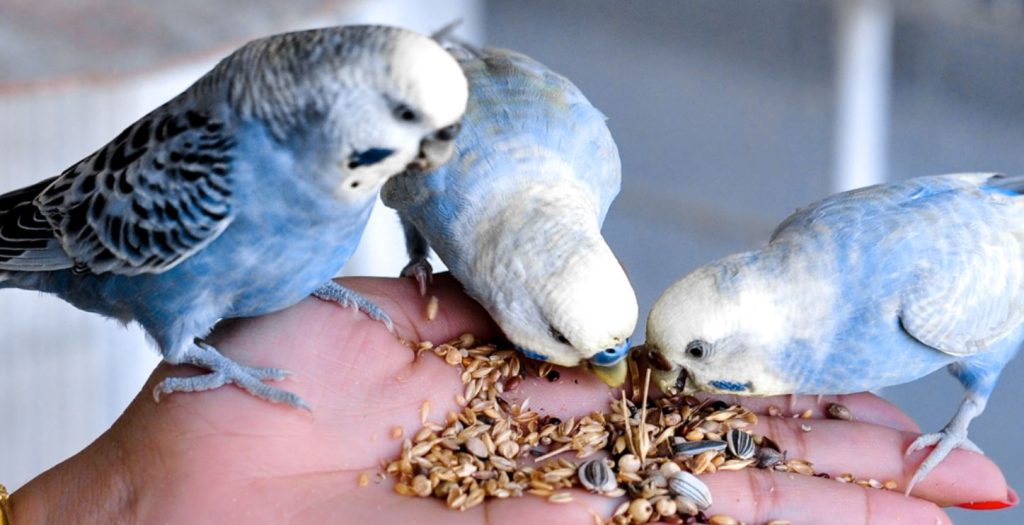
The primary objective should be the recreation of the natural variety while guarding your budgie against possible hazards. As per the nutritional guidelines, nutritious seed mixes, fresh vegetables (for example, spinach and carrots), and limited amounts of fruits (like apple or berries, with cores and seeds removed) are the basic means of strengthening the immune system. For example, greens are a good source of potassium and fibre, which are the most important supplements to the energy that comes from seeds. Apart from food, hygiene is also an important factor. The leftover or expired food from your bird’s cage can become a home to bacteria and other parasites.
Absolutely no processed foods and snacks made for humans. Also, foods with salt, added sugars, caffeine, or fats must be entirely excluded. Your bird can get sick from these foods or they can become toxic. Raw or minimally processed plant foods should be the focus of the diet, and should be avoided if cooking methods add oil or seasoning.
Risks of Unhealthy or Unsafe Foods and the Role of Food Safety
If food safety is very important for humans then it is equally very important in the care of birds. The World Health Organization states that contaminated or improperly stored food is at the root of millions of illnesses each year, even in humans. For the little budgie, foodborne diseases become very severe. Unwashed fruits and vegetables, moldy seeds, and exposure to household chemicals are some of the direct causes of diseases. Thoroughly washing all fruits and vegetables, storing seeds and food in dry and airtight containers, and removing spoiled portions promptly are the ways you lower these risks.
If you really want to give your budgie the best and the longest life possible, you need to combine the feeding of the bird with the application of the best researched scientific findings in the field of husbandry. This doesn’t only provide your feathered friend with the necessary ingredients to live a healthy and long life, but it does also install within it the foundation of being firm vibrant in the ensuing days. This article has been the most thorough one on the budgie food preferences and the everyday practical steps you can take to keep your little feathered friend in the pink of health.
Feeding is the time when we want to be sure that our birds not only like the food offered to them but they actually also love and need it. Nature has trained budgies to eat seeds, and the likes of greens and fresh seeds are naturally good for them because they have been herbivores and seed specialists for millions of years. And as it has been shown, their diet can’t be based on seeds alone.
Addition of fresh fruits and leaves to the diet brings the bird that vitamin and mineral it can neither obtain from the seeds nor can it liberate the seeds from their imbalanced nature. To sum it up, the birds’ simple taste puts them on safe foods, but eating what they like daily means that it is you who is the provider of real variety and the highest nutrition for the day.
Being a person who chooses highquality plant-based foodstuff for their bird and is very cautious not to feed processed or harmful foods, you automatically become the very best partner for the health and happiness of your budgie. Eat fresh, keep the color, and ensure the safety of the meal. Wash the produce properly and always be gentle when introducing new foods.
Are you willing to positively see your budgie thrive? The perfect time to change their diet is now. You are going to witness the beauty in the feathers, their vigor, and their happiness when nutrition is done properly. Fill your budgie with the lively and well-balanced diet of which they are worthy!
Frequently Asked Questions
Is it possible to feed a budgie only seeds properly?
Feeding a budgie only seeds will cause it to be unhealthy in the long run. Seeds are good for providing energy but only a few nutrients. Budgies will not weaken and will remain energetic only by combining seeds with fresh vegetables and small portions of fruit.
Can you give your budgie human food snacks?
Most human foods are not safe for budgies. A lot of human snacks have salt, sugar, caffeine, or fat that can injure birds. Rather than exposing your budgie to risky foods, feed the bird safe, simple foods like fresh greens, carrots, and a small piece of apple (without seeds) to make your budgie content.
Can you tell if your budgie likes a new food?
Yes! Budgies manifest their food likings by the zeal of their consumption and the fact whether they come back to the same food. Your budgie is a good one if it explores, pecks, and finishes new foods. Sometimes they need to taste it a few times before they accept it so your patience will be rewarded.
Can you give budgies different vegetables every day?
Sure it’s a good idea to give your budgie a daily veggie treat! For example, the vegetables offer such as spinach, broccoli, and bell pepper, provides a different nutrient and keep meals from getting boring. Just make sure you have washed the fruits and veggies well and throw away any food that has gone bad.
Can budgies get bored with their food?
Yeah, budgies can become tired of eating the same food over and over again just like humans. Providing different greens, fruits, or changed seed types will lead them to explore and forage that is good for their physical and mental health. Allowing your budgie to try new foods that are safe will be a pleasure for him during feeding time.
Can your feeding habits change your budgie’s taste preferences?
For sure! Budgies that are given a variety of fresh and healthy foods are usually the ones that choose them as their favorites while the kiddos that are fed with only seeds tend to become selective. To introduce your budgie to a more balanced, colorful diet, start with small portions of new foods and be consistent.
Should You Get 3 or 4 Budgies? Find the Best Choice for You!