
A healthy horse on light work usually needs a trim every 6 to 8 weeks. That range assumes steady hoof growth of roughly 6 to 10 mm a month, which is typical for most adult horses. Leave it twice as long and the hoof wall starts to flare, the toe runs forward, and the horse’s stride changes before you see anything wrong.
How often to trim, by how hard your horse works
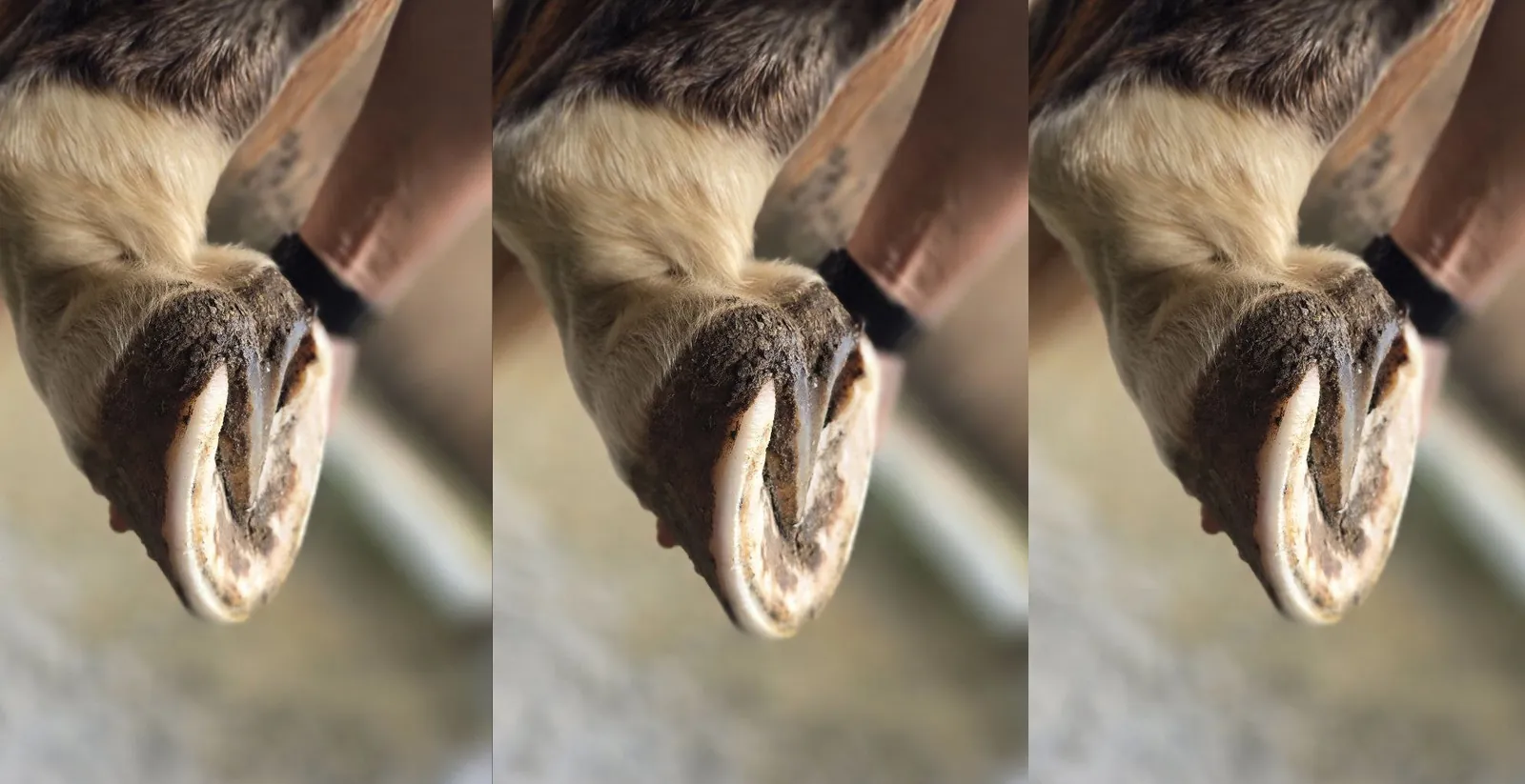
Hoof growth doesn’t speed up with work, but wear does. A horse in daily turnout on hard ground wears hooves down faster than one standing in a soft paddock, so the trim interval shifts with use, not with the calendar.
| How you use it | How often | What tells you it’s due |
|---|---|---|
| Pasture pet, light turnout | Every 8 to 10 weeks | Toe looks long from the side |
| Light riding, 2 to 3 days a week | Every 6 to 8 weeks | Slight flare at the hoof wall |
| Schooling or trail work, most days | Every 5 to 6 weeks | Shoe or hoof rings sit uneven |
| Competition or heavy road work | Every 4 to 5 weeks | Toe grabs the ground, lands flat |
| Shod horse in full work | Every 4 to 6 weeks | Clenches rise, shoe feels loose |
| Growing foal under 1 year | Every 4 to 6 weeks | Hoof looks tall for the leg |
A farrier can reset a shoe on the shorter end of that range, but the hoof still needs trimming at the same time. Pulling a shoe and leaving the hoof alone doesn’t count as a trim.
What happens when a horse’s hooves go untrimmed
The first thing that changes is the breakover point — the spot at the front of the hoof where the horse rolls off each step. As the toe grows past it, the horse has to work harder to lift and extend the leg, and the stride shortens. You’ll often notice this as a horse that feels “choppy” or lazy rather than lame.
After a few months, the hoof wall flares outward under the added load. The white line — the soft band between the wall and the sole — stretches wider than it should, and that’s the gap dirt and bacteria get into. A farrier sees this as a hoof that no longer matches the leg above it.
Keep going and the consequences get harder to reverse. Deep cracks can reach the sensitive tissue inside the hoof, and the pedal bone can rotate out of its normal position in the worst cases. That’s a veterinary problem, not a trimming one. If you’re not sure how far gone your horse’s feet are, ask a farrier to look before you book a routine visit — the difference between a trim and a shoeing rehab plan matters.
A horse with thin soles, a previous laminitis episode, or one on a high-sugar diet may show these changes faster. There’s no single number of weeks that fits every horse, and the honest answer is that your farrier’s written notes on your own horse’s feet tell you more than any general range.
Signs your horse’s hooves are overdue
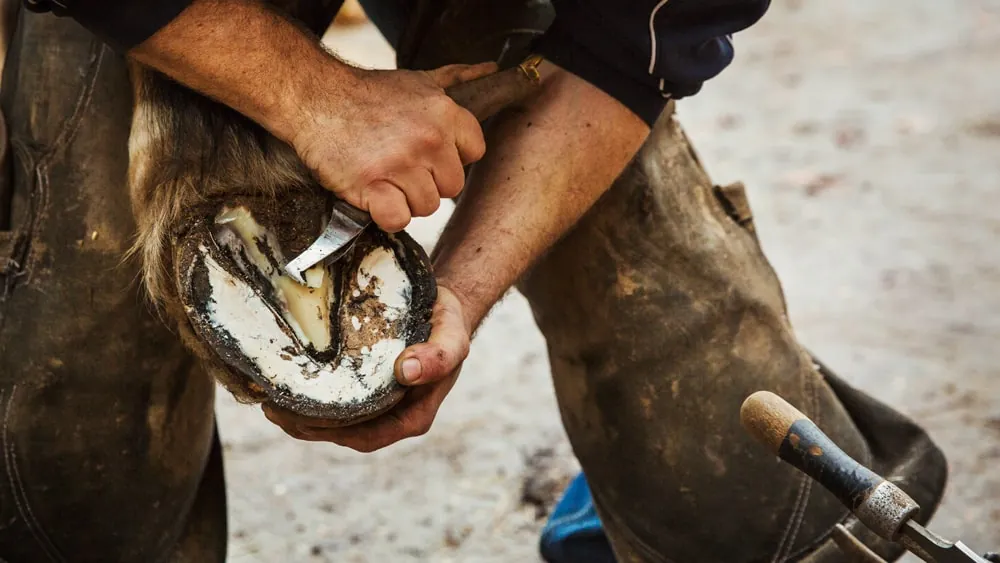
You can check most of these yourself in a few minutes with the horse standing square on flat ground. Pick up each foot and look at it from the side and from underneath.
- The toe looks long from the side. The hoof wall at the front runs ahead of the sole by more than a thumb’s width.
- The hoof wall flares out. The sides of the hoof bulge wider than the coronet band above them.
- You can see rings on the hoof wall. Uneven growth rings, closer together at the heel, mean the hoof is loading unevenly.
- The white line looks wide or stretched. A soft, crumbly band more than a few millimeters wide is a flare starting.
- The horse lands toe-first. Watch it walk on hard ground — a heel-first landing is normal, toe-first means the toe is too long.
- The shoe is loose or the clenches have risen. On a shod horse, risen clenches mean the hoof has grown past the shoe.
- The horse trips or stumbles more than usual. A long toe catches the ground and the horse can’t get out of its own way.
What a trim actually asks of you
A routine trim takes a farrier about 30 to 45 minutes for all four feet. You’ll need the horse clean and dry, standing on a hard, level surface. Mud and soft footing make it hard to see the hoof properly.
Your job is mostly preparation and patience. Pick out the feet the day before so the farrier isn’t digging out packed dirt, and have the horse calm and tied somewhere safe. If your horse pulls its feet away or leans, the farrier may not get the feet as balanced as they should be.
The cost of a trim isn’t money — it’s the standing appointment. You’re committing to a date every 6 to 8 weeks for as long as you own the horse, and moving that date costs you more than the visit itself. If you can’t hold that rhythm, a barefoot horse on soft ground is more forgiving than a shod one in hard work.
How to stretch the time between trims
You can’t slow hoof growth much, but you can slow how fast the hoof goes out of balance. These habits buy you a few weeks over a year.
- Keep the horse moving on varied ground. Turnout on hard, dry footing wears the hoof naturally between visits, so the toe stays shorter for longer.
- Feed for hoof quality, not hoof speed. Biotin, zinc, and good-quality protein support a strong wall, but they don’t make it grow slower — they make it less likely to crack between trims.
- Pick out feet daily and check the white line. Catching a small flare early means the farrier trims less off next time.
- Keep the diet low in sugar and starch. Rich grass and grain are linked to laminitis, which changes hoof shape fast and shortens the safe interval.
- Book the next visit before the farrier leaves. A standing date every 6 weeks beats a phone call when you notice the toe is long.
Frequently asked questions
How often should you trim horses hooves in winter?
Every 6 to 8 weeks, the same as summer, if the horse stays in work. Hooves grow a little slower in cold weather, so a light-work horse on soft ground can stretch to 10 weeks. Don’t skip a visit just because the ground is frozen — hard, rutted mud does its own damage.
Can a horse go 12 weeks without a trim?
Yes, but only a barefoot horse on soft ground with light use. At 12 weeks the toe is usually long enough to change how the horse lands, and a farrier will need to take more off to correct it. That bigger trim is harder on the horse than two smaller ones.
Why does my horse’s hoof split even though I trim on time?
Splits usually come from a dry hoof wall or a diet short of biotin and zinc, not from the trim interval. A wall that chips at the bottom edge needs moisture and better nutrition, not a shorter schedule. Ask your farrier to check the white line for flare at the same time.
Is it safe to trim a horse’s hooves yourself?
No, not without training. A farrier reads the sole, the white line, and the angle of the leg before making a cut, and a wrong cut can lame a horse for months. You can safely pick out feet, check for heat, and book the farrier — leave the trimming to someone qualified.
What happens if you never trim a horse’s hooves?
The toe grows forward, the wall flares, and the horse’s stride shortens within a few months. Over a year or more, deep cracks and rotation of the pedal bone inside the hoof become possible. At that stage it’s a veterinary case, and the horse may need months of corrective care.
Does a shod horse need trimming as often as a barefoot one?
Yes, and often more often. A shoe holds the hoof at a set length while the wall keeps growing underneath, so clenches rise and the shoe loosens. Most shod horses in work need a reset every 4 to 6 weeks, which includes a trim.
How do I know if my farrier is trimming too much?
Watch your horse walk on hard ground the day after. Short, careful steps or heat in the hoof within 24 hours can mean too much sole was taken. A good trim leaves the horse moving the same or better than before — if it’s worse, say so at the next visit.
Does hoof growth change with the seasons?
Yes. Hoof growth is usually fastest in spring and summer and slows in cold weather, so your interval can shift by a week or two across the year. Keep the same farrier and let them adjust the schedule rather than setting it yourself.
Conclusion
Book your next trim for 6 to 8 weeks from the last one, and write the date where you’ll see it. Expect the horse to move the same or slightly better the next day — that’s the sign the trim was right. If your horse is lame, has heat in a hoof, or you see a crack reaching up toward the coronet band, stop and call your vet or farrier instead of waiting for the next appointment.