
Teaching A Young Horse To Lunge: A Comprehensive Guide
Lunging is a foundational skill in the world of horse training, providing young horses with the groundwork needed for future riding, discipline, and confidence. The process is about more than just exercise; it’s a structured method for instilling respect, communication, and trust between horse and handler.
Whether you’re preparing your horse for saddle work, introducing it to new environments, or simply seeking a safe way to channel its energy, proper lunging sets the stage for long-term success.
Yet, teaching a young horse to lunge comes with unique challenges. Young horses are often energetic, distractible, and unfamiliar with basic cues. Approaching lunging with patience, clear technique, and a well-planned progression can transform the experience from frustrating to rewarding.
This guide explores best practices, common pitfalls, and expert insights, ensuring your horse learns to lunge safely and efficiently.

Credit: horsesport.com
Key Takeaways
- Lunging builds groundwork skills, trust, and obedience in young horses.
- Proper preparation, equipment, and handler safety are crucial for successful training.
- Training should progress in clear steps, starting from basic cues to more advanced movements.
- Real-world examples highlight practical strategies for overcoming common challenges.
- Common mistakes can be avoided with patience, consistency, and awareness.
- FAQs provide additional guidance for unique situations and troubleshooting.
Understanding The Purpose And Benefits Of Lunging
Lunging is far more than a circle exercise; it’s a strategic tool for shaping behavior, fitness, and communication.
Physical And Mental Conditioning
Lunging helps young horses develop balance, coordination, and muscle tone. The repetitive motion encourages:
- Rhythm and relaxation
- Suppleness in the body
- Focus and attention on the handler
According to the American Association of Equine Practitioners, consistent lunging sessions improve cardiovascular health and reinforce obedience, making future training smoother (AAEP).
Safety And Control
For young horses, lunging allows handlers to maintain a safe distance while establishing control. It’s particularly valuable for:
- Assessing temperament before riding
- Teaching voice commands and response to cues
- Safely introducing new tack or environments
Preparing For Advanced Training
Lunging forms the bridge between groundwork and ridden work. Horses familiar with lunging:
- Adapt more quickly to saddle and bridle
- Learn to respond to body language
- Develop confidence in new situations
Pro Tip: Start lunging sessions in a calm, enclosed area to minimize distractions and maximize focus.
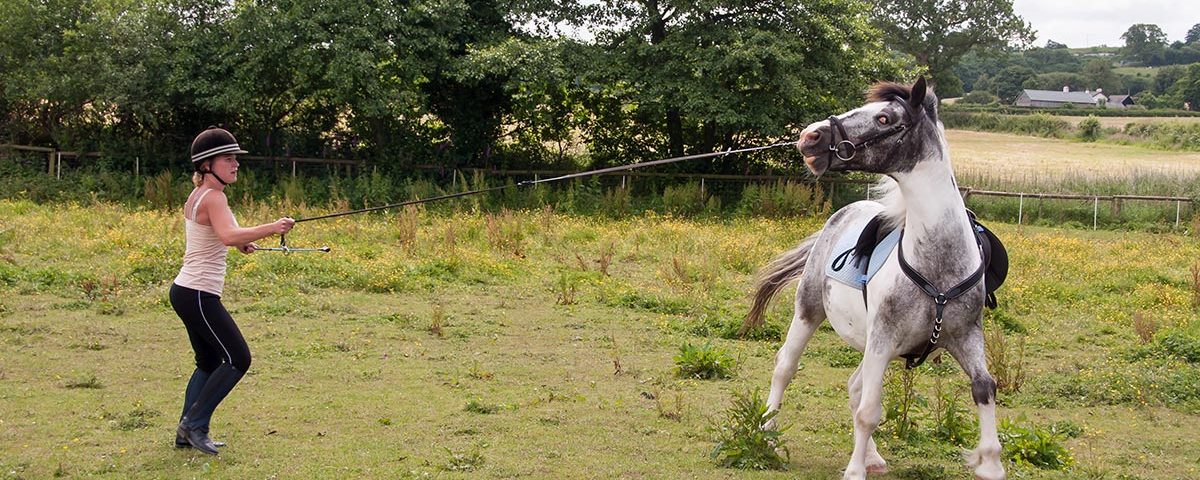
Credit: uswhip.com
Essential Equipment And Safety Measures
Before beginning, ensure you have the right tools and safety protocols in place.
Selecting Lunging Equipment
The correct equipment makes training safer and more effective. Key items include:
- Lunge line: 25, 30 feet, strong and lightweight
- Lunge whip: Used for encouragement, not punishment
- Halter or cavesson: Preferably padded for comfort
- Protective boots: Prevents injury during energetic movement
- Gloves: Protects handler’s hands
| Equipment | Purpose | Recommended For |
|---|---|---|
| Lunge Line | Guides movement; maintains safe distance | All young horses |
| Lunge Whip | Signals commands; encourages forward motion | Horses hesitant to move |
| Halter/Cavesson | Attaches lunge line; offers control | Horses new to lunging |
| Protective Boots | Prevents leg injuries | Energetic or unbalanced horses |
| Gloves | Protects handler; aids grip | All handlers |
Setting Up A Safe Environment
Choose a location that supports learning and safety:
- Round pen or enclosed arena is ideal
- Clear debris and hazards
- Ensure good footing to prevent slips
Handler Safety Protocols
Never underestimate the importance of safety when working with young horses:
- Wear sturdy boots and gloves
- Keep the lunge line organized, avoid tangles
- Remain attentive to horse’s body language
Warning: Never wrap the lunge line around your hand or body, as this poses a risk of serious injury.

Credit: horsesport.com
Step-by-step Process For Teaching A Young Horse To Lunge
Patience, consistency, and clear progression are key. Here’s a proven step-by-step method:
Introducing The Equipment
Start by familiarizing the horse with the gear:
- Let the horse sniff and examine the lunge line and whip.
- Place the halter or cavesson gently, rewarding calm behavior.
- Attach the lunge line and allow the horse to walk beside you before starting circles.
Establishing Basic Movement
Encourage the horse to move forward on the circle:
- Stand at the center, facing the horse’s shoulder.
- Use the lunge whip to signal forward movement, paired with a verbal cue (e.g., “walk”).
- Allow the horse to walk a small circle, gradually increasing diameter.
Example: In my experience, a young horse initially hesitant to move forward responded well when I paired a gentle tap of the whip with a soothing voice command, reinforcing calm progress.
Teaching Direction And Halt
Once movement is consistent, introduce changes in direction and stopping:
- Use clear, consistent voice commands (“whoa,” “trot,” “walk”).
- To change direction, bring the horse to a halt, walk towards its shoulder, and calmly switch sides.
- Reward every successful halt and direction change with a scratch or treat.
Introducing Trot And Canter
With basics established, gradually ask for faster gaits:
- Use a verbal cue and whip to signal trot, maintaining a relaxed posture.
- Observe body language; if the horse shows anxiety, return to walk and try again later.
- Canter should only be introduced after the horse is confident in walk and trot.
Pro Tip: Keep sessions short (15, 20 minutes) for young horses to prevent fatigue and encourage focus.
Reinforcing Consistency And Confidence
Repeat each stage until the horse responds reliably:
- End every session on a positive note (successful halt or direction change).
- Gradually increase session length and complexity as the horse’s confidence grows.
Common Challenges And Solutions
Young horses can present a variety of behavioral and training hurdles. Addressing these early builds lasting trust.
Resistance Or Anxiety
Horses may refuse to move forward, pull away, or show nervousness:
- Stay calm; never punish resistance.
- Use gentle encouragement and repeat cues.
- If anxiety persists, reduce session length and simplify tasks.
Distraction And Loss Of Focus
Young horses are easily distracted by sights and sounds:
- Train in a quiet, familiar setting.
- Use clear, assertive cues and body language.
- Gradually introduce mild distractions to build focus.
Overexcitement Or Bolting
Excitable horses may bolt or rush on the circle:
- Maintain a firm, gentle grip on the lunge line.
- Use calm voice commands and avoid chasing with the whip.
- If bolting occurs, bring the horse to a halt and start again.
Example: A client’s young gelding repeatedly tried to bolt during lunge sessions. We resolved this by introducing short, controlled circles and rewarding calm behavior, reducing the urge to rush.
Difficulty Changing Direction
Some horses resist switching directions:
- Break down the process: Halt, reposition, gentle cue, reward.
- Practice frequently, but avoid frustration by limiting repetitions.
Real-world Examples And Case Studies
Practical applications demonstrate the value of clear, patient lunging techniques.
Example 1: Gradual Progression With A Nervous Filly
A two-year-old filly initially refused to leave her handler’s side. By starting with quiet walk sessions, gradually introducing the lunge line, and using consistent verbal cues, she learned to circle calmly within three weeks.
Example 2: Overcoming Distraction In A Busy Barn
A young colt was easily distracted by other horses and barn activity. Moving training to a round pen away from the main barn reduced distractions. Over time, mild distractions were reintroduced, improving his focus and obedience.
Example 3: Building Confidence With A Rescue Horse
A rescue horse with a history of neglect was fearful of the whip and halter. Positive reinforcement, slow introduction to equipment, and short, stress-free sessions helped him accept lunging and build trust with his new handler.
Progression And Advanced Lunging Techniques
Once the basics are mastered, lunging can expand to include more advanced skills.
Introducing Side Reins And Tack
For horses moving towards riding, side reins or surcingle can be added:
- Introduce tack slowly, allowing the horse to examine each piece.
- Side reins should be adjusted for light contact, never tight.
- Monitor the horse’s reaction; discontinue if anxiety or resistance increases.
Lunging Over Poles And Obstacles
Ground poles and obstacles enhance coordination and responsiveness:
- Start with a single pole; reward calm passage.
- Gradually increase complexity (multiple poles, raised obstacles).
- Maintain slow, controlled gaits to prevent injury.
Incorporating Voice Commands And Signals
Expand the horse’s vocabulary:
- Consistently use distinct commands for each gait (“walk,” “trot,” “canter”).
- Pair commands with body language and whip cues.
| Command | Associated Cue | Expected Response |
|---|---|---|
| Walk | Gentle whip, relaxed posture | Moves forward calmly |
| Trot | Raised whip, energetic voice | Transitions to trot |
| Canter | Whip flick, strong voice | Canters on circle |
| Whoa | Lower whip, firm voice | Stops moving |
| Reverse | Move to opposite side | Changes direction |
Transitioning To Ridden Work
Lunging prepares horses for the saddle:
- Use lunging to introduce saddle and bridle without mounting.
- Assess the horse’s response to tack before riding.
Pro Tip: Consult a professional trainer when introducing advanced lunging techniques or transitioning to ridden work.
Evaluating Progress And Troubleshooting
Regular assessment ensures the horse is learning effectively and safely.
Tracking Progress
Maintain a log to monitor training sessions:
- Record session length, gaits achieved, and behavioral notes.
- Identify patterns: Improvement, resistance, fatigue.
Adjusting Training Plans
If progress stalls, reconsider your approach:
- Simplify tasks or return to previous steps.
- Vary rewards and cues to maintain interest.
- Seek expert advice for persistent challenges.
Recognizing Signs Of Stress
Observe the horse for:
- Sweating, trembling, or heavy breathing
- Tail swishing or ear pinning
- Refusal to move or aggressive behavior
If stress signs appear, end the session and reassess next steps.
| Sign of Stress | Possible Cause | Recommended Action |
|---|---|---|
| Sweating | Overexertion, anxiety | Shorten session, provide water |
| Trembling | Fear, nervousness | Reduce intensity, reassure |
| Refusal | Confusion, frustration | Return to easier tasks |
| Aggression | Pain, overwhelming cues | Consult veterinarian or trainer |
Comparing Lunging Methods: Traditional Vs. Modern Approaches
Different lunging methods yield varied results, depending on handler experience and horse temperament.
Traditional Lunging
The traditional method relies on basic equipment, clear circles, and simple cues:
- Focuses on walk, trot, canter
- Minimal use of tack
- Emphasizes handler’s body language
Modern Lunging Techniques
Modern methods incorporate advanced tools and psychological principles:
- Use of side reins, surcingle, and voice commands
- Incorporates groundwork exercises and obstacles
- Emphasizes positive reinforcement
| Method | Key Features | Advantages | Drawbacks |
|---|---|---|---|
| Traditional | Simple equipment, basic cues | Easy for beginners, low cost | Limited versatility |
| Modern | Advanced tack, varied exercises | Enhanced conditioning, adaptability | Requires experience, higher cost |
Example: According to Wikipedia, modern lunging techniques offer greater flexibility and engagement, especially for horses preparing for competition or complex tasks.
Frequently Asked Questions
What Age Is Best To Start Lunging A Young Horse?
Most experts recommend starting basic lunging between 18 months and 2 years old. At this age, horses are physically capable of handling short sessions but still mentally adaptable. Early lunging should focus on simple walk and halt commands, avoiding strenuous activity until the horse is older.
How Long Should Each Lunging Session Last For A Young Horse?
For young horses, 15, 20 minutes is optimal. Short sessions prevent fatigue, keep the horse engaged, and reduce the risk of injury. As the horse gains confidence and fitness, session length can gradually increase, but handlers should always monitor for signs of stress.
Can Lunging Replace Other Forms Of Groundwork?
While lunging is valuable, it should complement, not replace, other groundwork. Activities like leading, desensitization, and basic handling teach skills lunging alone cannot. Combining lunging with broader groundwork creates a well-rounded, responsive horse.
How Do I Handle A Horse That Refuses To Move On The Lunge?
Start by checking for physical discomfort or inappropriate equipment. If the horse is healthy, use gentle, consistent cues and positive reinforcement. Sometimes, moving to a smaller circle or changing the environment helps. If resistance persists, consult a professional trainer for tailored advice.
Is Lunging Suitable For All Horse Breeds And Temperaments?
Lunging can benefit most horses, but some breeds or individuals may require modified techniques. Highly energetic breeds might need shorter, more frequent sessions, while sensitive horses benefit from slow, calm progression. Always tailor your approach to the horse’s needs and seek expert guidance for unusual challenges.
Teaching a young horse to lunge is a transformative process that builds the foundation for future training, safety, and partnership. With the right equipment, clear techniques, and patient guidance, you’ll foster trust, obedience, and confidence. Remember to monitor progress, adapt to your horse’s unique needs, and seek professional help when challenges arise.
The investment in proper lunging pays dividends throughout your horse’s life, enabling smoother transitions to advanced skills and a stronger bond between horse and handler.