
Training a young horse to jump can feel both exciting and challenging. You want to see your horse confident and safe as it clears each obstacle, but it takes the right approach to get there.
If you’re unsure where to start or how to build trust and skill step by step, this guide is for you. Keep reading to discover simple, effective tips that will help you and your horse enjoy the jumping experience together without stress or confusion.
Your journey to a happy, jumping horse begins here.

Credit: www.youtube.com
Preparing The Young Horse
Training a young horse to jump requires careful preparation to ensure safety and success. Preparing the young horse builds a strong foundation for learning. This phase focuses on physical health, mental readiness, and basic skills. It helps the horse become confident and ready for more advanced training. Taking time in this stage prevents injuries and builds a positive experience with jumping.
Assessing Physical Readiness
Before starting jump training, check the horse’s body carefully. Young horses grow fast, so their bones and muscles must be strong enough. Jumping too soon can cause injuries. Watch for these signs of physical readiness:
- Strong, even gait without limping
- Good muscle tone, especially in legs and back
- Healthy joints without swelling or heat
- Proper weight – neither too thin nor too heavy
- Age – usually at least 3 years old for light jumping
Consult your vet to confirm the horse’s readiness. A vet can check bones, joints, and overall health. They may suggest X-rays or other tests. Use this table to track physical signs:
| Physical Aspect | Signs of Readiness | Actions if Not Ready |
|---|---|---|
| Gait | Walks and trots smoothly | Rest and light exercise |
| Muscle Tone | Firm muscles, especially in legs | More conditioning work |
| Joints | No swelling or pain | Vet check and rest |
| Weight | Balanced and healthy | Adjust diet and exercise |
Start slow. Avoid heavy jumping until the horse is fully ready.
Building Trust And Confidence
Trust between horse and trainer is key for jumping. A young horse must feel safe and calm. Building confidence takes patience and kindness. Begin with simple, positive experiences. Praise and gentle handling help the horse relax.
Steps to build trust:
- Spend time grooming and talking calmly
- Use consistent commands and signals
- Reward good behavior with treats or pats
- Introduce new objects and environments slowly
- Allow the horse to explore without pressure
Confidence grows with small successes. Let the horse try easy tasks before moving to harder ones. Avoid forcing the horse. This can cause fear and resistance.
Signs of good trust:
- Horse follows commands without hesitation
- Relaxed body and soft eyes
- Willingness to approach and interact
Remember, a confident horse learns faster and jumps better.
Basic Groundwork Exercises
Groundwork prepares the horse’s body and mind for jumping. It teaches control, balance, and communication. Basic exercises build strength and obedience. Use a calm, open space for training.
Key groundwork exercises include:
- Leading and stopping on command
- Backing up smoothly
- Walking over poles on the ground
- Turning and changing direction
- Standing still for grooming and saddling
Walking over poles helps the horse learn to lift its feet. This improves coordination for jumping. Start with poles on the ground, spaced about 2 feet apart. Increase spacing as the horse improves.
Use clear signals and stay patient. Keep sessions short and positive. End with praise or a treat. These exercises build a strong base for future jump training.
Credit: useventing.com
Introducing Jumping Concepts
Training a young horse to jump requires patience and a clear introduction to basic jumping concepts. Introducing these concepts carefully helps the horse build confidence and learn the right techniques. Early training focuses on simple exercises that prepare the horse physically and mentally for jumping. Starting with easy steps reduces fear and teaches the horse to enjoy the activity. This section covers key stages in introducing jumping to young horses, making sure they develop good habits from the start.
Starting With Poles On The Ground
Begin by laying poles flat on the ground. This is the simplest way to introduce jumping concepts without overwhelming the horse. Poles teach the horse to watch its feet and learn rhythm. The horse starts to understand stepping over obstacles safely.
- Use evenly spaced poles:Space poles about 3 to 4 feet apart for a young horse.
- Walk over poles first:Walk the horse over the poles to build confidence.
- Progress to trotting:Trotting over poles helps the horse develop timing and balance.
- Keep sessions short:Limit training to 10-15 minutes to avoid fatigue and stress.
Poles on the ground also help the rider practice position and timing. It’s easier to correct mistakes at this stage. A simple table below shows the benefits of ground poles:
| Benefit | Description |
|---|---|
| Improves Coordination | Encourages the horse to lift its feet and step carefully. |
| Builds Confidence | Introduces obstacles without height, reducing fear. |
| Develops Rhythm | Helps the horse find a steady pace over obstacles. |
| Enhances Rider Skills | Allows rider to practice balance and timing in a safe way. |
Mastering poles on the ground sets a strong foundation. The horse learns to trust the rider and understand basic jumping cues.
Progressing To Small Crossrails
After poles, introduce small crossrails. These are low jumps formed by two rails crossing in the middle. Crossrails encourage the horse to jump up, not just step over. They build the horse’s jumping muscles and teach it to judge height and distance.
- Start low:Keep crossrails around 12-18 inches high for young horses.
- Maintain a calm approach:Ride with a steady rhythm and relaxed seat.
- Use positive reinforcement:Praise the horse after each successful jump.
- Vary the exercises:Change the angle and spacing of crossrails to keep the horse engaged.
Small crossrails introduce the idea of jumping as a movement. The horse learns to push off the ground and fold its legs. This stage improves coordination and builds confidence to clear higher fences later.
Use this checklist to prepare for crossrail training:
- Check the horse’s soundness and fitness level.
- Warm up with walking and trotting poles.
- Set up crossrails in a straight line or a small grid.
- Ride with a forward, balanced seat.
- Give clear signals before each jump.
- Allow the horse to rest between attempts.
Progressing slowly helps the horse understand jumping without stress. Small crossrails are key to developing a good jumping technique.
Encouraging Proper Form
Proper form is crucial for safe and effective jumping. Focus on the horse’s body position and movement through each jump. Good form reduces injury risk and makes jumping easier for the horse.
Key points for encouraging proper form:
- Head and Neck:The horse should stretch its neck forward and down over the jump.
- Back:The back should round in a smooth arc, known as “bascule.”
- Legs:Front legs tuck neatly, and hind legs push off powerfully.
- Rhythm:Keep a steady pace before, during, and after the jump.
Riders can help with form by:
- Maintaining a balanced seat and soft hands.
- Giving the horse freedom to stretch its neck.
- Using consistent, gentle aids to guide the horse.
- Practicing exercises that build strength and flexibility.
Observe the horse carefully and adjust training to correct form problems early. Good habits develop through repetition and positive experience. Below is a simple form checklist for riders:
| Focus Area | What to Watch For | Rider Tips |
|---|---|---|
| Head and Neck | Stretching forward, relaxed | Release reins slightly before jump |
| Back | Rounded, smooth arc | Encourage impulsion from hind legs |
| Front Legs | Tucked and even | Keep horse straight and balanced |
| Rhythm | Steady pace throughout | Maintain consistent leg aids |
Encouraging proper form early leads to a confident, safe jumper. It also makes training more enjoyable for horse and rider.
Developing Strength And Balance
Training a young horse to jump requires a strong foundation in both strength and balance. These two elements help the horse move confidently and safely over obstacles. Developing strength improves muscle power, while balance ensures smooth, controlled movements. Focusing on these skills early makes jumping easier and reduces injury risks. Exercises that build muscle and teach the horse to stay steady prepare it well for the challenges of jumping.
Hill Work And Conditioning
Hill work is one of the best ways to build a young horse’s strength and endurance. Walking and trotting up gentle slopes improve muscle tone in the hindquarters and shoulders. This added muscle helps the horse push off the ground during a jump.
Key points for effective hill work:
- Start with short, easy slopes to avoid strain.
- Use a slow, steady pace—walk and trot only.
- Limit sessions to 10-15 minutes at first.
- Include downhill work to improve balance and coordination.
Hill work also helps the horse learn to adjust its body on uneven ground. This skill is critical for maintaining balance while jumping. A simple weekly schedule might look like this:
| Day | Exercise | Duration |
|---|---|---|
| Monday | Hill walk and trot | 10 minutes |
| Wednesday | Flat ground conditioning | 15 minutes |
| Friday | Hill work with downhill walk | 12 minutes |
This routine builds muscle without overworking the horse. Consistency matters more than intensity at this stage.
Lateral Movements And Flexibility
Lateral movements help the horse become more flexible and balanced side to side. These exercises teach the horse to move its body with control and ease. Flexibility reduces stiffness and improves jumping form.
Common lateral movements include:
- Leg yields:The horse moves diagonally while staying straight.
- Shoulder-in:The horse bends around the rider’s inside leg, moving forward and sideways.
- Haunches-in:The horse’s hindquarters step slightly inward while moving forward.
Benefits of lateral work:
- Strengthens small stabilizing muscles.
- Improves coordination between front and back legs.
- Encourages the horse to remain supple over jumps.
Start with slow, simple lateral movements on straight lines or large circles. Gradually increase difficulty as the horse learns. Keep sessions short to avoid frustration.
Building Rhythm And Timing
Rhythm and timing are essential for smooth jumps. A young horse must learn to keep a steady pace and take off at the right moment. Developing these skills makes jumping safer and more comfortable.
Ways to build rhythm and timing:
- Use ground poles spaced evenly to encourage a consistent stride.
- Practice canter transitions to teach balance and control.
- Set up small cross rails to help the horse learn when to push off.
Focus on repeating exercises to create a natural rhythm. Watch the horse’s stride and adjust pole spacing as needed. Timing improves when the horse feels confident about its takeoff point.
Tips for success:
- Keep exercises fun and positive.
- Use clear, calm cues to guide the horse.
- Reward steady effort and good form.
Rhythm and timing practice lays the groundwork for jumping courses. It trains the horse’s mind and body to work together smoothly.
Safe Jumping Practices
Training a young horse to jump requires care and attention to safety. Safe jumping practices protect both the horse and the rider. These practices help prevent injuries and build confidence. A safe environment allows the horse to learn at a steady pace without fear. Following clear guidelines and using the right tools makes the training smoother and safer. Safety is not just about avoiding accidents; it also means creating trust between horse and rider.
Using Proper Equipment
Proper equipment is key for safe jumping training. The horse needs gear that fits well and supports movement. Poor equipment can cause pain or injury, making the horse unwilling to jump.
- Saddle:Use a jumping saddle with a deep seat and knee rolls. It helps the rider stay balanced.
- Bridle and Bit:Choose a gentle bit that suits the horse’s mouth. The bridle should be adjusted to avoid discomfort.
- Leg Protection:Use boots or bandages to protect the horse’s legs from knocks and scrapes.
- Jump Poles and Standards:Use lightweight, breakaway poles to reduce injury risk if the horse hits them.
Check equipment before every session. Look for wear, damage, or loose parts. Proper maintenance keeps the gear safe and effective.
| Equipment | Purpose | Key Features |
|---|---|---|
| Saddle | Rider balance and comfort | Deep seat, knee rolls, correct fit |
| Bridle & Bit | Control and communication | Soft bit, proper bridle fit |
| Leg Protection | Prevent leg injuries | Boots or bandages |
| Jump Poles | Safe obstacles | Lightweight, breakaway |
Spotting Common Mistakes
Training a young horse to jump has common mistakes to watch for. Spotting these early helps fix problems before they grow. This protects the horse’s health and encourages better learning.
- Rushing the Process:Trying to jump too high or fast can scare the horse.
- Poor Approach:A crooked or fast approach makes the horse jump awkwardly.
- Incorrect Rider Position:Leaning too far forward or back unbalances the horse.
- Ignoring Signs of Discomfort:Limping or refusal to jump signals pain or fear.
Use simple exercises to build confidence. Start with low jumps and clear lines. Watch the horse’s body language closely.
| Mistake | Effect | Fix |
|---|---|---|
| Rushing | Fear, refusal | Slow progression, low jumps |
| Poor Approach | Bad jump form | Practice straight lines, steady pace |
| Wrong Rider Position | Unbalanced jump | Rider training, correct posture |
| Ignoring Discomfort | Injury, fear | Vet check, rest |
Ensuring Rider Safety
Rider safety is essential in young horse jumping training. The rider must protect themselves and stay calm to help the horse feel safe. Proper gear and training reduce risks.
- Wear a Helmet:Always wear a certified riding helmet to protect the head.
- Use a Body Protector:A vest shields the torso from falls or bumps.
- Check Tack Fit:Ensure saddle and girth fit well to avoid slipping.
- Learn Proper Riding Skills:Take lessons to improve balance and control.
- Stay Alert:Watch the horse’s behavior and be ready to react calmly.
Practice falling safely and know how to stop the horse in an emergency. Safe riding protects both horse and rider and builds trust during jumping training.
| Safety Measure | Reason | Tips |
|---|---|---|
| Helmet | Head protection | Use certified helmets only |
| Body Protector | Protect torso | Wear during all jumping sessions |
| Proper Tack Fit | Prevent slipping | Adjust saddle and girth each ride |
| Riding Skills | Balance and control | Take regular lessons |
| Alertness | Quick reaction | Watch horse cues closely |
Advanced Jumping Techniques
Training a young horse to jump requires patience and skill. As the horse gains confidence, advanced jumping techniques become essential. These methods help improve the horse’s ability, balance, and focus. They prepare the horse for more complex courses and challenges. Advanced training also reduces the risk of injury by building strength and agility.
Introducing Height Gradually
Increasing the jump height slowly is key to building trust and skill. Start with small jumps that the horse can clear comfortably. Raise the height step by step over several sessions. This approach helps avoid fear or resistance.
Tips for introducing height:
- Begin with poles on the ground to practice rhythm.
- Move to low cross-rails before straight vertical jumps.
- Increase height by 2-4 inches every few rides.
- Observe the horse’s reaction and adjust pace accordingly.
- Rest between height increases to build muscle strength.
Use a table like the one below to track progress:
| Session | Jump Height | Horse Reaction | Next Steps |
|---|---|---|---|
| 1 | Ground Poles | Calm, confident | Introduce small cross-rails |
| 2 | Cross-rails (6-12 inches) | Good rhythm, eager | Raise to vertical jumps |
| 3 | Vertical (12-16 inches) | Focused, steady | Increase height gradually |
Combining Jumps In Courses
Working on courses with multiple jumps helps develop the horse’s agility and thinking. It teaches the horse to adjust stride length and speed between obstacles. This training builds endurance and improves rider-horse communication.
Effective course training methods:
- Start with simple two-jump lines spaced evenly.
- Practice turns between jumps to improve control.
- Use combinations like one-stride or two-stride distances.
- Introduce varied jump angles for balance and focus.
- Gradually increase the number of jumps in the course.
Keep sessions short and positive. Watch for signs of tiredness or loss of focus. Rest and reward the horse to maintain motivation.
Handling Different Jump Types
Young horses must learn to jump various obstacles. Each type requires different skills and confidence. Training should expose the horse to verticals, oxers, and natural jumps gradually.
Common jump types and training focus:
| Jump Type | Description | Training Tips |
|---|---|---|
| Vertical | A single straight bar or plank | Focus on timing and straight approach |
| Oxer | Two bars close together, wider jump | Build strength, encourage long stride |
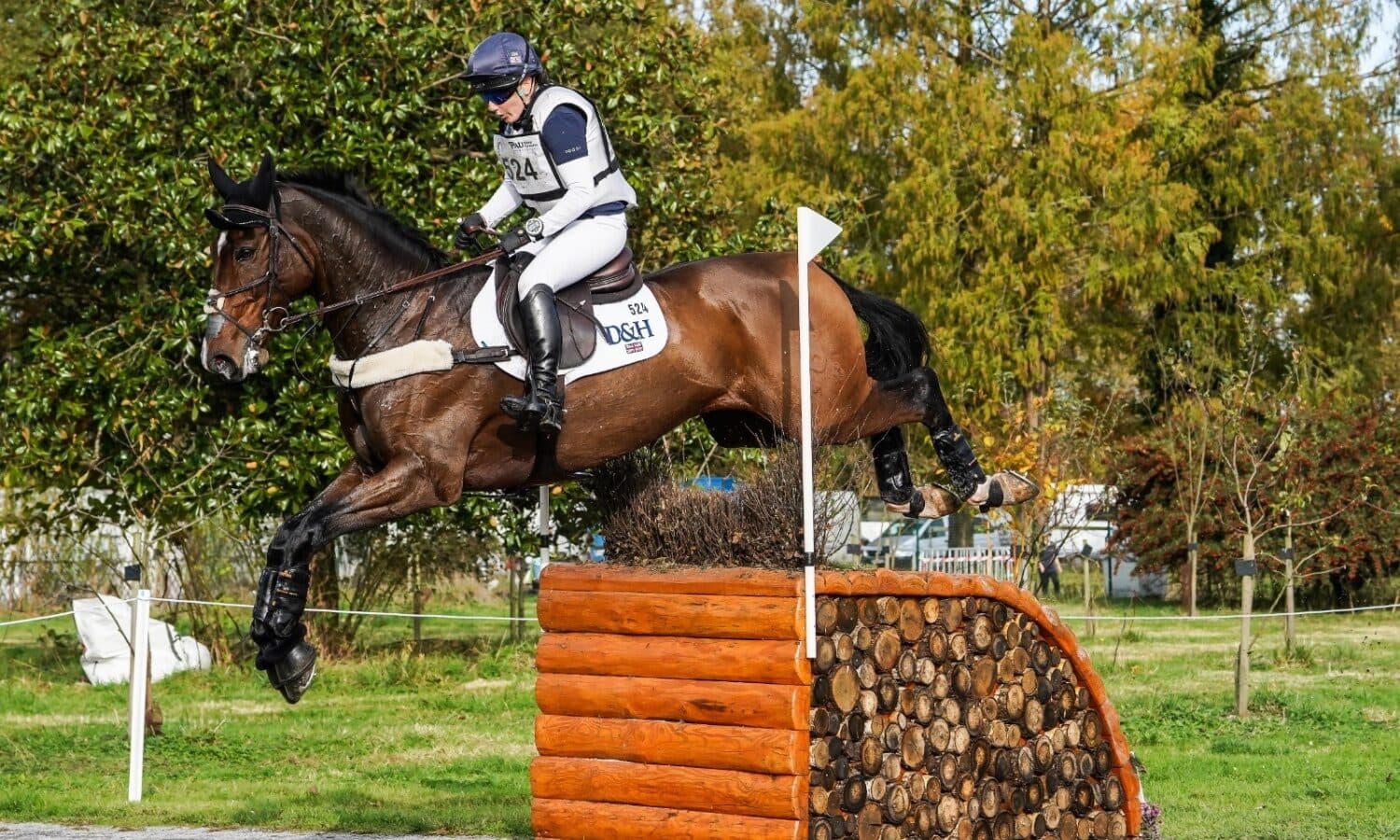
| Natural (logs, walls) | Solid obstacles simulating outdoor jumps | Desensitize and build confidence gradually |
Introduce new jump types one at a time. Use ground poles and low obstacles before full-sized jumps. Praise the horse for calm, confident efforts. This builds trust and skill over time.
Credit: useventing.com
Maintaining Progress And Motivation
Training a young horse to jump requires patience and consistency. Maintaining progress and motivation is key to helping the horse build confidence and skill. Without steady progress, the horse may lose interest or become fearful. Keeping the training enjoyable and balanced ensures the horse stays eager to learn and perform. This section focuses on ways to keep your horse motivated and moving forward safely.
Regular Training Schedule
Setting a regular training schedulehelps the horse develop a routine. Consistency builds muscle memory and trust between you and the horse. It also reduces stress by creating clear expectations. A good schedule balances work and rest to avoid burnout or injury.
Here is an example of a weekly training routine for a young jumper:
| Day | Activity | Focus |
|---|---|---|
| Monday | Flatwork and basics | Balance and rhythm |
| Tuesday | Small jumps and grids | Technique and confidence |
| Wednesday | Rest or light walking | Recovery |
| Thursday | Flatwork with lateral exercises | Flexibility and control |
| Friday | Jumping course practice | Jump combinations and flow |
| Saturday | Trail ride or free movement | Relaxation and mental break |
| Sunday | Rest | Recovery and rest |
Keep sessions short, about 20-30 minutes, to maintain focus. Gradually increase difficulty based on the horse’s progress. Avoid pushing too hard; rest days are essential for growth.
Positive Reinforcement
Positive reinforcement encourages the young horse to repeat good behavior. Rewarding correct jumping builds confidence and a willingness to try new challenges. Use treats, pats, or verbal praise immediately after the horse completes a jump well.
Important tips for effective positive reinforcement:
- Timing:Reward right after the desired action.
- Consistency:Always reward good attempts.
- Variety:Use different rewards to keep the horse interested.
- Calm praise:Use gentle tones to avoid startling the horse.
Example rewards include:
- Small carrot pieces
- Soft pats on the neck
- Soothing words like “good boy/girl”
Remember, avoid punishment or harsh corrections. Negative experiences can cause fear or resistance. Positive reinforcement builds a trusting relationship and makes jumping enjoyable.
Monitoring Health And Wellness
Keeping a young horse healthy is crucial for steady progress. Watch for signs of fatigue, soreness, or stress. A healthy horse learns faster and stays motivated.
Key health and wellness checks include:
- Daily inspection:Check legs, hooves, and body for injuries or swelling.
- Proper nutrition:Provide balanced feed to support energy and recovery.
- Hydration:Ensure fresh water is always available.
- Regular vet visits:Schedule check-ups and vaccinations.
- Farrier care:Keep hooves trimmed and balanced.
Signs of overtraining or illness to watch for:
- Limping or stiffness
- Loss of appetite
- Unusual behavior or irritability
- Excessive sweating or heavy breathing
Rest days and light activity help prevent injuries. Use a journal to track training, health, and mood. This record helps spot patterns and adjust your program for best results.
Frequently Asked Questions
How Do I Start Training A Young Horse To Jump?
Begin with groundwork to build trust and balance. Introduce poles on the ground before small jumps. Gradually increase height as confidence grows. Always reward progress to encourage learning and reduce stress.
What Age Is Best To Start Jump Training?
Start basic training around 3 to 4 years old. Young horses need physical and mental maturity before jumping. Early groundwork is essential before introducing actual jumps. Avoid heavy jumping to prevent injuries during growth.
How Often Should I Train A Young Horse To Jump?
Train young horses 2 to 3 times weekly. Allow rest days for muscle recovery and mental rest. Short, consistent sessions prevent fatigue and keep learning effective. Adjust frequency based on the horse’s progress and health.
What Safety Gear Is Essential For Jump Training?
Use a properly fitted helmet for the rider. Equip the horse with protective boots on legs. Use a well-maintained saddle and bridle. Always train in a safe, enclosed area with good footing.
Conclusion
Training a young horse to jump takes time and patience. Start with small obstacles and build confidence step by step. Always reward your horse for effort and stay calm during training. Keep sessions short to avoid stress or tiredness. Trust and clear communication create a strong bond.
Remember, every horse learns at its own pace. Enjoy the journey and celebrate small wins along the way. Consistent practice helps your horse improve safely and happily. Jumping becomes fun for both rider and horse with steady work. Thanks reading the training a young horse to jump.
What are Draft Horses: Powerful Giants of the Working World