
Horses are remarkable animals, shaped by millions of years of evolution. When we see wild horses running across open plains, many people wonder: how do their hooves stay healthy without human care? Domestic horses need regular trimming from a farrier to avoid painful hoof problems, so what is different for horses living in the wild? The answer lies in nature’s own system for hoof maintenance—one that is complex, effective, and surprisingly logical.
Understanding how wild horses trim their hooves is not just interesting for horse lovers. It also gives us clues about natural hoof health, the needs of domesticated horses, and the delicate balance between animal and environment. This article takes you deep into the world of wild horses, exploring the natural processes that keep their hooves in top condition, the challenges they face, and what lessons we can learn for modern horse care.
The Basic Structure And Growth Of Hooves
To understand how wild horses maintain their hooves, it helps to know what hooves are made of and how they grow. A horse’s hoof is like a thick fingernail, but much more complex. The outer wall is tough, made of keratin, which is the same protein that forms human hair and nails. Inside, there are softer tissues and blood vessels that support growth and absorb shock.
A horse’s hoof grows continuously, usually at a rate of about 6 to 10 millimeters per month. This growth rate depends on factors like age, health, and the season. If a hoof is not trimmed or worn down, it can grow too long and start to crack or split, causing pain and even lameness. In domestic horses, farriers trim the hooves every 4 to 8 weeks. Wild horses, however, have no human help—so how do they keep their hooves at the right length?
Natural Trimming: How The Wild Does It
Wild horses live a very different life compared to their domestic relatives. Their hooves are naturally trimmed by environmental factors and daily activities. Here’s how nature keeps their hooves healthy:
Constant Movement
Wild horses roam long distances every day, often traveling 10 to 20 miles (16 to 32 kilometers) in search of food, water, and shelter. This constant movement across varied terrain acts like a natural file, wearing away the hoof as fast as it grows. Rocky, sandy, and hard-packed surfaces are especially good at keeping hooves short and tough.
Diverse Terrains
The surfaces wild horses walk on are rarely soft. They may cross rocks, gravel, dry grasslands, and sometimes even mud. Harder surfaces help wear down the hoof wall and prevent overgrowth, while softer patches allow the hooves to recover from minor cracks or chips. This balance of surfaces is crucial for healthy, naturally trimmed hooves.
Foraging And Survival Habits
Wild horses spend many hours each day foraging. Unlike domestic horses, they rarely stand still for long periods. Their feeding habits force them to move constantly, scraping and twisting their hooves as they dig for grass or water. This dynamic activity adds to natural hoof wear, especially on the outer edges.
Herd Dynamics And Social Behavior
Living in a herd means more than just safety—it also means more movement. The group may walk long distances to avoid predators, find better grazing, or reach water holes. This herd movement increases the daily mileage and ensures that all members get enough hoof wear.
Weather And Seasonal Changes
Hoof growth and wear can change with the seasons. In dry months, hooves wear down faster on hard ground. In wet seasons, the hooves may grow a bit faster, but the softer ground provides less abrasion. Wild horses adapt by seeking out terrain that balances out these effects.

Credit: www.reddit.com
Comparing Wild And Domestic Horse Hooves
Why do domestic horses need so much hoof care, while wild horses do not? The differences are striking, and understanding them can help horse owners make better choices.
| Feature | Wild Horses | Domestic Horses |
|---|---|---|
| Movement per Day | 10–20 miles (16–32 km) | Often less than 5 miles (8 km) |
| Terrain | Mixed—hard, rocky, sandy, grassland | Mainly soft pastures or stalls |
| Hoof Trimming | Natural (by movement and terrain) | By farrier every 4–8 weeks |
| Common Hoof Problems | Less common, mostly trauma-related | Overgrowth, cracks, laminitis, founder |
One of the biggest differences is activity level. Domestic horses are often kept in stalls or small pastures, where their hooves do not wear down naturally. This is why regular trimming is essential for them.
The Role Of The Natural Environment
The environment has a huge impact on hoof shape and health. In the wild, horses live in places that help or challenge their hooves in different ways.
Rocky Plains And Deserts
In dry, rocky regions—like the American West—wild horses develop short, tough hooves. The abrasive ground acts like sandpaper, making the hooves hard and resistant to cracks. These horses rarely suffer from overgrown hooves, but may be more prone to chips or breaks from sharp rocks.
Grassy Steppes And Prairies
Horses living in grasslands still move a lot, but the ground is softer. Their hooves may grow a bit longer and wider, with a more rounded shape. They rely on walking longer distances to balance hoof growth and wear. If drought makes the ground harder, hooves will naturally toughen.
Wetlands And Marshes
Wild horses in wet areas face the opposite problem. Soft, wet ground does not wear hooves down as quickly. These horses may have slightly longer hooves and can be more prone to infections if the hooves are constantly wet. However, herd movement and foraging still prevent dangerous overgrowth.
Seasonal Variation And Adaptation
Many wild horses experience wet and dry seasons. Their hooves adapt by changing structure—a process called adaptive remodeling. In wet periods, hooves grow faster and may become softer. In dry times, growth slows and hooves harden. This seasonal cycle helps avoid extreme hoof problems.
Credit: www.bayequest.com
Common Problems In Wild Hooves
While wild horses generally have healthy hooves, problems can still happen. Nature is not perfect, and wild living comes with risks.
Overgrowth
If a wild horse is injured, sick, or old, it may not move as much. This can lead to overgrown hooves, which crack, split, or curl. Such horses are at a disadvantage, and may not survive long in the wild. In healthy herds, this is rare.
Cracks And Chips
Walking on rocks can cause cracks or chips in the hoof wall. Most are minor and do not affect the horse, as the hoof grows and wears down quickly. Deep cracks, however, can lead to infection if not worn away or healed naturally.
Laminitis
This painful condition, where the hoof tissue becomes inflamed, is rare in wild horses. It usually occurs when horses eat too much rich grass or grains—something that rarely happens in the wild. Wild diets are generally low in sugar and starch, protecting against this disease.
Infections
Wet environments can sometimes cause hoof infections, like thrush. However, constant movement and exposure to sun and wind usually keep these problems under control.
The Natural Hoof Shape: What Does It Look Like?
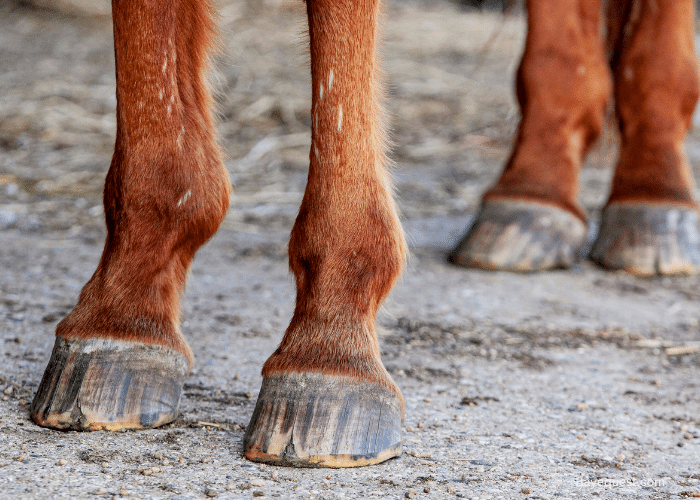
Wild horses develop a “mustang roll”—a rounded, beveled edge on their hooves. This shape is the result of constant wear and helps prevent cracks from spreading. The sole of the hoof is usually slightly concave, which gives better traction and shock absorption.
The frog, a V-shaped structure on the bottom of the hoof, is tough and healthy in wild horses. It contacts the ground frequently, helping pump blood through the hoof and support the entire leg.
Here’s a quick comparison of wild vs. domestic hoof shapes:
| Aspect | Wild Horse Hoof | Domestic Horse Hoof |
|---|---|---|
| Hoof Wall Edge | Beveled (“mustang roll”) | Often flat or sharp |
| Sole | Concave | Can be flat or thin |
| Frog Condition | Thick, resilient | Can be soft or damaged |
| Hoof Size | Short, wide | Varies by breed, care |
Insights From Modern Research
Modern studies of wild horse hooves have revealed important facts. For example, research on the Brumbies (wild horses of Australia) and Mustangs (wild horses of North America) shows that:
- Wild horse hooves are shorter, wider, and tougher than most domestic horses.
- The natural concave shape and beveled edge reduce the chance of cracks and injuries.
- Wild horses rarely suffer from chronic hoof diseases common in stabled horses.
- Hoof wear closely matches hoof growth, except in cases of illness, injury, or extreme drought.
A study published in the Australian Veterinary Journal found that wild horse hooves had fewer abnormalities and were better adapted to hard terrain than those of domestic horses in similar climates.
What Happens When Nature Fails?
Nature is effective, but not perfect. Sometimes wild horses develop severe hoof problems. Here’s what usually happens:
- Survival of the Fittest: Horses with hoof issues may not keep up with the herd, making them more vulnerable to predators.
- Natural Selection: Over generations, only horses with strong, healthy hooves survive and reproduce. This shapes the genetics of wild populations.
- Death or Exclusion: Severely crippled horses may die from starvation or predation, or be driven away from the group.
This may sound harsh, but it keeps wild populations healthy over time. Domestic horses, on the other hand, rely on humans to manage these problems.
Can Domestic Horses Go “barefoot” Like Wild Horses?
Many owners wonder if their horses can live without shoes or regular trimming, just like wild horses. The answer depends on several factors.
Genetic Differences
Wild horses have been shaped by natural selection for tough, resilient hooves. Domestic horses come from breeds selected for size, speed, or appearance—not always hoof strength. Some breeds are more suited to barefoot life than others.
Environment And Lifestyle
If a domestic horse lives on soft pasture and moves little, its hooves will not wear down enough on their own. Hoof trimming is essential in these conditions. However, horses kept in more natural, active environments—with time to toughen their hooves—may do well barefoot.
Transition Period
Switching a domestic horse from shoes to barefoot requires a transition period. The hooves need time to adapt, grow stronger, and develop natural calluses. This can take months or even years, and should be done with guidance from an experienced hoof care professional.
Modern Barefoot Movement
Some horse owners follow the “natural hoof care” philosophy, trimming hooves to mimic the wild mustang roll. This can work well if the horse’s lifestyle supports it, but is not always possible for every horse.
Practical Lessons For Horse Owners
Wild horses offer valuable lessons for keeping domestic horses healthy. Here are some insights:
- Encourage Movement: The more a horse moves, the healthier its hooves. Pasture turnout, exercise, and varied terrain all help.
- Watch the Diet: Avoid rich grains and sugary feeds, which can lead to laminitis.
- Provide Mixed Surfaces: Hard, dry footing helps toughen hooves; too much soft ground can weaken them.
- Regular Hoof Checks: Even barefoot horses need routine checks for cracks, infections, or overgrowth.
- Work With Nature: Mimic wild conditions when possible, but remember every horse is unique.
Non-obvious Insights Most Beginners Miss
While many people know wild horses do not need farriers, there are some lesser-known truths:
- The balance between growth and wear is delicate. If a wild horse moves less (due to injury, drought, or old age), hoof problems appear quickly. In other words, wild horses are not immune to hoof issues—they are just shaped by their environment and natural selection.
- Wild horses sometimes show uneven hoof wear. The front and hind hooves can develop different shapes depending on the terrain, herd behavior, and the horse’s role in the group. For example, lead mares may have tougher hooves from constant vigilance and movement.
- Not all wild environments are ideal. Horses living in extremely wet or soft areas can develop hoof problems, just like domestic horses in poor conditions. The myth that “nature always knows best” is not entirely true—wild horses survive, but not always in perfect health.
The Impact Of Human Activity On Wild Hooves
Human expansion has affected wild horse populations and their hoof health in several ways:
- Restricted Ranges: Fences, roads, and urban areas limit how far herds can roam, reducing natural hoof wear.
- Water Management: Dams and water holes can keep horses in one area, leading to overgrazing and less movement.
- Introduced Diseases: Domestic animals can bring hoof infections that wild horses are not used to.
Conservationists now study wild hoof health to find ways to protect both wild and domestic horses. Sometimes, wild horses with severe hoof injuries are rescued and treated, but this is rare.

Credit: www.midsouthhorsereview.com
Why Studying Wild Horse Hoof Care Matters
Understanding natural hoof trimming is not just academic. It helps us:
- Develop better hoof care practices for domestic horses.
- Improve animal welfare by reducing painful hoof problems.
- Design more effective rehabilitation programs for neglected horses.
- Learn about the impact of environment and movement on animal health.
For more scientific information on hoof structure and wild horse studies, you can visit the Wikipedia page on Horse Hoof.
Frequently Asked Questions
Why Don’t Wild Horses Need Their Hooves Trimmed By Humans?
Wild horses travel long distances every day over hard, abrasive surfaces. This constant movement naturally wears down their hooves at the same rate they grow, keeping them at the right length without human help.
Do Wild Horses Ever Get Hoof Problems?
Yes, wild horses can develop hoof issues, especially if they are injured or unable to move enough. Overgrown hooves, cracks, and infections do occur, but usually nature’s “survival of the fittest” system keeps the population healthy overall.
Can Domestic Horses Go Barefoot Like Wild Horses?
Some can, but it depends on their genetics, environment, and lifestyle. Horses that move a lot on varied surfaces and are allowed a transition period may do well barefoot. Others may always need shoes or regular trimming.
Why Are Domestic Horses More Likely To Have Hoof Problems?
Domestic horses often live on soft ground and move less. Their hooves do not wear down naturally, so they require regular trimming. Diet and breeding for appearance or speed can also weaken hoof quality.
What Is The “mustang Roll” In Hoof Care?
The “mustang roll” is a natural rounded edge seen in wild horse hooves. It helps prevent cracks and chips from spreading. Many natural hoof trimmers shape domestic horse hooves this way to mimic wild hoof health.
Hoof health is a fascinating window into how wild animals adapt to their environments—and how humans can learn from them. By paying attention to nature’s own solutions, we can give all horses, wild or domestic, the healthiest life possible.