Cod Fish Nutrients: Comprehensive Guide to Nutrition, Health Benefits and Risks
Cod Fish Nutrients, Have you ever really considered what is in your white, flaky cod fillet? Perhaps you are just stepping on to a healthier path, managing your weight, or simply seeking a quick and easy protein boost. However, seafood varieties are so many that you can easily become bewildered by the details and thus fail to realize the true benefits that cod can yield for you.
Cod fish is nothing compared to the typical fish you have had on your dining table. It is low in fat, high with complete protein, and packed up with the vitamins and minerals that a lot of people are not getting enough of like vitamin B12, selenium, and iodine. What’s more, it contains almost zero fat and low calories which makes it a suitable snack for those who are on a diet or want to keep their heart, brain, or thyroid healthy.
Still, just like any other food, cod is not without its issues. You may have concerns about mercury, the manner in which the fish is harvested, or if there are easy ways to prepare it that do not require losing the nutrients or flavor. This handbook is here to clear the fog by presenting facts and separating cod’s nutrients, as well as health benefits and potential risks, from myths.
Would you like to see everything in a simpler way? We can just present you with a cod’s nutrition breakdown and then provide you with some tips on how you can actually enjoy this healthy and versatile fish.
Core Nutritional Profile of Cod Fish
The detailed nutrition for cod is the next chapter in the book that we see from the overview a case of unpacking cod’s nutrition in detail. If one wants to be knowledgeable, they need the facts of what every serving really is. The nutrient values for cod are not only amazing they are also consistently supported by various credible sources.
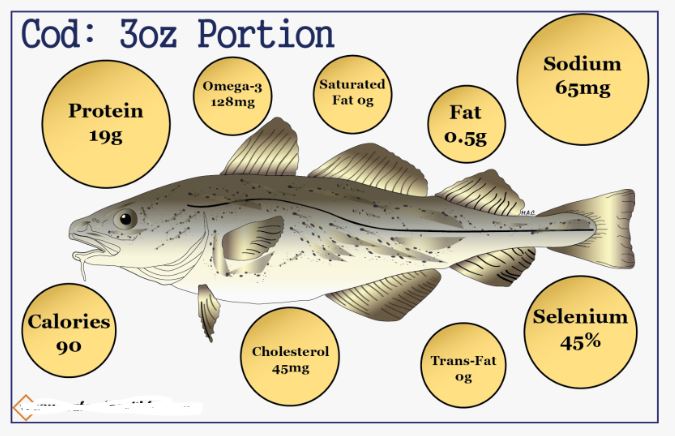
Macronutrients: Protein, Fats and Carbohydrates By and large, cod is a food item that is packed with proteins and low in fats. So the protein consumption for a person who eats 3 ounces (85g) of cod is mostly between 17 and 20 grams, while the fat content does not exceed 1 gram. Moreover, the caloric value of such a piece remains very low ranging from 70 to 90. That implies that cod is a fish with almost no extra calories, fats or carbohydrates, making it quite a clean fish.
Pacific and Atlantic cod have roughly the same nutrient levels in a 3-ounce (85 g) serving as per data from Global Seafoods and AK Salmon Co. The 3-ounce nutrient levels in Pacific cod reported by these two sources are:
Energy: 70
Protein: 15g
Total fat: 0.5g
Carbohydrates: 0g
The nutrient composition of Atlantic cod is more or less similar to that of a Pacific cod as per comparative data from Healthline, with a protein level of around 19g and a fat content of approximately 1g per 3-ounce serving. FoodStruct also supports this equivalence by displaying a protein content of 23 g and a total fat of less than 1 g for a 100 g (about 3.5 ounces) serving of cod. Due to the low carbohydrate content of the fish, it is in line with low-carb and diabetic-friendly foods.

What does it mean for you? Eating a fish meal with Cod and similar types would be the clean and leanest way to get more protein into your diet without adding a lot of fat and calories along the way. So if you are an athlete, a busy professional, or someone with weight-related issues, then cod will be one of your top lean protein options.
Comparing Atlantic vs. Pacific Cod Nutrient Levels
Before proceeding to compare the nutrient values of Atlantic and Pacific cod, it would be a good idea to first look into how they differ. The two fish species’ characteristics suggest that the Atlantic cod (Gadus morhua) is not only fattier but also more delicate, while the Pacific cod (Gadus macrocephalus) is leaner and has a firmer texture. The calorie count and the total fat in a 3-ounce (85g) serving of Pacific cod from Global Seafoods are 70 kcal and 0.5g respectively, whereas the numbers from Verywell Fit and Healthline for the same portion of Atlantic cod are about 90 kcal and 1g of total fat. The protein content of both is very close, 15g (Pacific) and 19–20g (Atlantic) respectively.
The differences between these m..Vitamins B12, B6, Niacin, and More One of the major sources of the B vitam… Cod is a great source of vitamin B and thos… Cod is a major source of the essential stimulants: Selenium, Phosphorus, Potassium, and Iodine One of the most notable minerals in cod… You may also notice that cod supplies moderate magnesium, zinc, and small amounts of calcium and iron, round out its broad micronutrient cover.
To sum up, cod is not simply a low-calorie protein. Cod gives you a wide range of the essential vitamins and minerals required for daily health. After that, we are going to take a closer look at the health benefits of these nutrients and explain why cod is really the best of all the protein sources.
Detailed Breakdown of Cod’s Essential Nutrients
With a declarative full nutrient profile as a baseline, let us zoom in on the precise nutrients that differentiate cod from all other foods. Besides being a clean protein, cod becomes a remarkable source of complete essential amino acids (source i.e. a scientific reference), vitamins, and minerals with every single serving. A picture and (some) numbers give you the why of making cod your top priority for science-based nutrition.
Amino Acid and Protein Quality
Cod, as is the concept behind the first part of the series, is a very good source of protein of a high-quality standard. About 23 grams of protein can be obtained from a 100-gram serving of cod (FoodStruct). Amino acid makeup is more important, however. Cod is in the limit or over it for every essential amino acid set by the standards for adults. Take lysine for example, 100 grams of cooked cod:
1. Lysine: 6,291 mg (300% DV)
2. Threonine: 3,003 mg (286% DV)
3. Leucine: 5,568 mg (204% DV)
4. Methionine: 2,028 mg (193% DV)
(FoodStruct amino acid breakdown chart) Highlights these are the cases when proteins are not just coming from dietary meat, but are so easily digested as muscle tissues grow, immune system gets a boost, and new healthy cells become part of your body. Also, almost incontrovertibly cod’s protein is more easily digested and lower in saturated fat than most red meats is the major reason it is also very suitable for athletes or fitness professionals who are looking for the best body composition.
Vitamin B Complex and Vitamin D Levels
Besides magnesium, the vitamin profile of cod is very nice with one serving being able to provide a majority of your vitamin B12 needs for the day. As a matter of fact, 100 grams of cod provides up to 131% of the recommended daily value for vitamin B12 (FoodStruct) – a source of energy for the nervous system and red blood cells formation, in general. In addition to vitamin B12, there are other B vitamins in cod such as:
1. Vitamin B6: 0.85 mg (65% DV per 100 g)
2. Niacin (B3): 7.5 mg (47% DV per 100 g)
3. Riboflavin (B2): 0.24 mg (18% DV per 100 g)
These vitamins are necessary for the body metabolism and energy production from food by the body. The provisions of cod also include small amounts of vitamin D—about 3.6 mcg (18% DV per 100 g) according to FoodStruct. Vitamin D is very important for the absorption of calcium and immune support, especially for people with limited sun exposure.
Importance of Selenium and Phosphorus
Cod is loaded with minerals. As previously mentioned, significant is the part played by the selenium content of cod. Approximately 113 mcg of selenium is available in one 100-gram cooked served more than 200% of the recommended daily value (both FoodStruct and URMC). Selenium is one antioxidant that supports the thyroid that is why it is very crucial in that area.
Phosphorus is also one of the major elements in cod, a 100-gram single-serving provides 414 mg—59% of your daily goal. Phosphorus is necessary in bone health, DNA synthesis, and cellular repair. Phosphorus along with other nutrients that are supportive like potassium (244 mg, or 22% DV per 100 g), magnesium, and zinc further strengthen the mineral supply of cod.
Omega-3 Fatty Acids: DHA and EPA Quantity and Types
Despite cod being less fatty than the salmon or mackerel, it still supplies a simple dose of omega-3 fatty acids that are essential. For instance, a 3-ounce (85 g) portion provides roughly 0.05 grams of DHA and 0.018 grams of EPA (AK Salmon Co). This becomes a total of approximately 0.14 grams of omega-3s per 4-ounce serving (Verywell Fit), which is 9–13% of the recommended daily intake of total omega-3s, depending on sex, is contributed (Thanukos).
These are the most known types—DHA (docosahexaenoic acid) and EPA (eicosapentaenoic acid)— and are the main reasons why omega-3s have been promoted as the “holy trio” of health, being at the top of the list of benefits of heart, brain, retina, and nerve tissue. Moreover, cod is a very good source of vitamins D and B12 and selenium, which are the most important micronutrients related to cardiovascular health in the last decades.
In essence, the truth about the nutrient profile of cod is as fascinating as the headline figures. Every serving is a clean, highly bioavailable protein source, provides almost the entire range of vitamins, and the mineral content is extraordinary— confirmed by data and graphs from numerous references and the scientific literature. This makes cod a real all-rounder suitable for a professional, health-conscious diet.
Next, we will explore how these nutrients synergistically work to drive the authentic health benefits observed with regular cod intake.
Health Benefits Linked to Cod Consumption
Initially, cod nutrient profile and essential nutrients are not only important for health but are the facts needed to be converted to a health benefit scenario. Studies from different angles and various health organizations unequivocally point to cod as a major player in cardiac, metabolic, and cognitive welfare.
Heart Health and Blood Pressure Control
Going beyond the positive aspects of the fat profile of cod, its role in heart health is quite significant. While cod is a moderate contributor to the omega-3 fatty acid pool, specifically EPA and DHA, the amounts are not negligible. WebMD and the American Heart Association state, among other things, that these fats help lower triglycerides in the body. Low triglycerides are related to reduced risks of heart diseases. A review from Harvard T.H. Chan School of Public Health supports the statement that omega-3s facilitate healthy blood vessels and can halt the progression of plaque deposits in arteries.
Also, eating cod is likely a good measure to help keep hypertension under control. The conclusions of WebMD and Healthline are the same when both sources mention that the regular consumption of cod and other lean fish is able to bring down blood pressure to a notable extent.
The evidence in this paper actually suggests that the consumption of omega-3 fatty acids may be a better way to lower blood pressure than the popular method of salt intake restriction. The results of this kind of studies show that the frequency of fish intake of at least once per week can decrease the risk and the severity of both heart attack and stroke. The event can be the reduction of death by coronary heart disease (CHD) up to 30%.
Weight Management and Lean Protein Benefits
As was already mentioned, in a remarkable way, cod is very high in protein and low in calories and fat. From the perspective of weight control, it is a major differentiator from most of the other protein sources. These studies have been mentioned by AK Salmon Co and the Mayo Clinic and have been used to underline this feature. For example, one of the studies involved participants consuming 150 grams of cod five times a week as part of an energy-restricted diet and the result was they managed to lose an additional 1.7 kg (about 3.7 pounds) over eight weeks compared to a group that did not eat seafood.
Lean protein will not only keep your muscle during the time you are losing weight, it will also make you feel full and it will prevent you from eating the wrong way. Protein in the amount of 17-20 grams per 3-ounce serving coupled with almost zero carbohydrates make cod one of the high-protein, low-fat products with all the good sides. Since it is also low in mercury, cod can be the main ingredient of your daily meals which will further help you to stick to your weight loss and balancing routines more easily.
Cognitive Function and Brain Health
Moreover, cod’s nutrients are not only good for the body but for your brain as well. Even though the omega-3 in cod is less compared to that in oily fish, it is still a considerable contributor to cognitive health. The National Institutes of Health and a number of studies referenced by WebMD collectively affirm that brain aging can be postponed through regular fish consumption. As an example, an occurrence of baking or broiling fish like cod once a week at the very least results in the preservation of the gray matter volume, which is very important for memory and processing speed.
Based on tentative findings, the advantages might also be associated with the reduced probability of Alzheimer’s disease as well as other cognitive disorders. The presence of choline, an indispensible nutrient of the marine products including cod- not only secures brain growth but also supports nerve signaling and neurotransmitter production, which are the two main features of concentration and memory.
Support for Thyroid and Metabolic Health
Eventually, the benefits brought about by cod to metabolic health are there to see. As was mentioned before, cod is a perfect source of iodine and selenium, which are the two most important things for a healthy thyroid. The thyroid is the organ that has the main responsibility of the metabolism regulation, body temperature, and energy generation. Lack of iodine can cause hypothyroidism, goiters, and developmental problems. Cod, being the source of these minerals all the time, helps the synthesis of hormones and the stabilization of metabolisms as proved by WebMD.
Evidence from clinical research (AK Salmon Co) also indicates that proteins in cod uniquely enhance insulin sensitivity. Improved insulin action can lower the risk of factors leading to diabetes and metabolic syndrome. Together, these influences strengthen not only the daily wellness but also the prevention of diseases in the long run.
In conclusion, the advantages of consuming cod are backed by a variety of studies, not only for our cardiovascular system but also for metabolism and brain function. So now, we’re going to look at the possible dangers and considerations that you should take into account when incorporating cod into your regular meals.
Potential Risks and Considerations When Eating Cod
Firstly, the possible health risks of cod consumption are still an issue in the discussion of the fantastic health benefits that come with cod noted in the previous paragraph. On one hand, cod is a great protein source of high quality with vitamins and minerals all the while containing little fat. On the other hand, not every part of the fish is fully satisfactory. The key to living judiciously is to know both sides of the question—advantages for nutrition and the risks that go along with them. We have here reviewed the major safety concerns using the most qualified and recent sources as a basis.
Mercury and Environmental Contaminants in Cod
As we can remember from the previous section, cod is among the fish with the lowest levels of mercury, and as such, it is generally referred to as a low- to moderate-mercury fish. The U.S. FDA states that both Atlantic and Pacific cod usually have much lower levels of mercury than the likes of tuna, swordfish, or king mackerel (Verywell Fit, Healthline), which are the closest alternatives. Consequently, cod is less likely to pose a risk to health if eaten on a regular basis. However, pregnant
people and young children are advised to consume two to three fish meals per week at most, as recommended by the guidelines. The content of mercury should not be the sole focus, however. Besides mercury, polychlorinated biphenyls (PCBs) and dioxins can be the main industrial pollutants that might contaminate marine animals. As per AK Salmon Co and WebMD, very low levels of these substances have been detected in cod, but the concentrations are less than those in most other fish.
The lingering research on the major consequences of regular exposure to high levels is still underway, while most public health agencies are in consensus that consuming cod from trustworthy, carefully supervised sources is of the least danger. The most potent ways to reduce contamination exposure are to use moderation, diversify seafood consumption, and be careful with the source.
Allergy Risks and Symptoms
Additionally, one more issue that is fish allergy, is a fish allergy which is usually underestimated. Cod is among the top eight food allergens, as reported by Verywell Fit, and the American College of Allergy, Asthma, and Immunology. Not so strange, fish allergy may appear in later years; 40% of adults with fish allergy only start their condition as adults. Affected condition can be very different in severity; the symptoms may be mild—hives, itching, and stomach ache, or very severe—breathing shortness and even anaphylaxis. People who get symptoms after eating cod must visit the allergy doctor at once and strictly follow the avoidance rule if a diagnosis is given.
Interactions with Medications
Cod’s omega-3 fatty acids may cause drug interactions in people who are on certain medications. The specific omega-3s in cod, EPA and DHA, can lead to the thinning of the blood. This side effect can, as explained by AK Salmon Co, strengthen the effect of drugs such as warfarin which are given to patients to prevent blood clots, thus the risk of bleeding is exposed. So, if you are on blood-thinning medication, it is highly advised that you consult your doctor before you decide to make cod or any other fish high in omega-3 a part of your regular diet.
Sustainability and Overfishing Concerns
Fish consumption in a most environmentally-friendly way, should include ocean impact as well. Though Pacific cod is still a clean and sustainable product, the use of Atlantic cod has been seriously limited due to overfishing in the last 20 years (Healthline, WebMD). Nearly all the areas where the fish used to live are now qualified as endangered or at least recovering. Specialists say it’s recommended to buy cod of the fish coming from the farms that are controlled and certified as sustainable, like that by the Marine Stewardship Council or that defined in the Monterey Bay Aquarium’s Seafood Watch (Kühne, Webber).
Choosing pot from responsible sources will not only support the conservation of the stocks that are at risk but will also decrease the total ecological footprint of your food consumption.
When putting these points together, cod is still a healthy and tasty option if it is chosen and consumed properly. Remembering mercury, allergens, medications, and sustainability in the background can give you a tune-up of benefits and also keep the losses minimum. We will now look at the next part, in which we will talk about the ways in which cod can form part of your diet, and at the same time, you will be able to enjoy its nutritional value and reduce the risk exposure.
Practical Tips for Including Cod in a Healthy Diet
It is recommended to find safe, healthy, and agreeable ways to include the fish in your diet after you have checked the immense value of cod nutrition and you are aware of the benefits and risks. Following the correct methods of preparation, serving, and storage will give you maximum health advantages from cod and you will not fall into the most common traps. This advice has its roots in the points about nutrients and food safety in the food mentioned earlier.
Recommended Serving Sizes and Frequency
Two 4-ounce servings of fish a week are the minimum recommendation for adults, according to the latest dietary guidelines and research (Verywell Fit, Healthline). The best type of fish to consume should be cod. Its low level of mercury allows it to be eaten regularly, i.e., between 8 and 12 ounces per week is seen as safe and the most suitable for the majority of people, including pregnant women. A typical 4-ounce serving (approximately the size of a deck of cards) is composed of around 20 grams of protein with less than one gram of fat, thus it is a good choice for high-protein, low-fat meal plans (WebMD, AK Salmon Co).
If you keep your consumption within this level of the seafood, you will get nutrients like vitamin B12, selenium, and lean protein that are your body’s need and at the same time you will not exceed the safe mercury limits for fish. In case you are prone to allergies or you are taking blood-thinner medication, as it was mentioned before, you should check with your doctor first before cod fish becomes a regular item of your diet.
Healthy Cooking Methods for Retaining Nutrients
It is advised by medical professionals to use a low-fat cooking method if one would like to retain the nutrients of cod fish while keeping the calories at a low level. The suggested methods are baking, grilling, poaching, and steaming (Healthline, AK Salmon Co, Global Seafoods). The minerals in cod fish are kept intact when it is baked at 400°F (200°C) for 10–12 minutes or steamed gently. The low fat in cod is at a risk of going off and thus you should apply lemon juice, white wine, or a small amount of olive oil to it. The steam and flavor will be there without the addition of any fat when you wrap it in foil.
WebMD and AK Salmon Co recommend the use of baking or steaming together with herbs, garlic, or a little chili instead of frying or using a heavily breaded technique if the purpose is to maintain omega-3s and not to add saturated fats to the fish. The method of grilling cod is also great. However, one needs to be careful and not let the fish burn and harden, hence the judging of the time to be out of the heat is the most critical aspect of the process.
Storing Fresh and Frozen Cod Safely
Proper storage is a must for both the safety and the quality of the food. Fresh cod has to be kept in the fridge and eaten within two days (Verywell Fit). In case the storage period has to be longer, the fillets should be wrapped securely in heavy aluminum foil and then be frozen in airtight packaging; frozen cod is safe and keeps its taste for three to eight months. A fish with a “sour” smell or a slippery texture should first be identified as a fish that has gone bad and then thrown away without a second thought.
Frozen cod is sometimes treated with salt solutions to preserve freshness. If you monitor sodium intake, review packaging labels and rinse fillets before cooking as needed.
Pairing and Enhancing Cod Dishes for Maximum Nutrition
To get the most from your cod, it should be paired with fiber-rich vegetables and whole grains. As recommended by AK Salmon Co and Mayo Clinic, the combination of cod with steamed vegetables, quinoa, brown rice, or barley not only makes the meal more filling, but also more diverse in fiber and micronutrients. For instance, bake the cod and mix it with a few cherry tomatoes, zucchini, or spinach; then, sprinkle a little of the already known herbs and zest of the citrus fruit for flavor without the addition of sodium.
Gain and cod flavor and healthy-nutritional value by incorporating fresh herbs—such as parsley, cilantro, or dill—and spices like paprika and cumin. along with these, you will be adding antioxidants and flavor, thus promoting a heart-healthy dietary pattern. Never use creamy sauces or overdo it with salt; in case you want to add moisture, do it with the help of olive oil or plain yogurt.
You make cod remain a healthy and delightful part of your diet by picking the right servings, healthy cooking styles, and good side dishes for it. This realistic method completes your knowledge of cod and lets you make health-conscious and confident choices for yourself and your family.
Wrapping up your cod fish nutrition voyage with a quick reality check—cod is not just another lean fish; it’s a true powerhouse for your plate. You were shown throughout the guide how it met your protein needs with the highest quality protein and would supply you with all the essential amino acids while calories, fat, and carbs were kept at very impressive low levels. We can say that cod is almost a vegan fish with its excellent amounts of vitamin B12, selenium, and iodine,not to mention those tiny but significant omega-3s that are our heart and brain helpers.
Moreover, you’ve unlocked the “secret” health benefits: heart, metabolism, and brain support with the plus of being a low-mercury, safe choice for regular meals. Nevertheless, as with every food, there are still some “ifs” in the case of cod—think sustainability, allergy risks, and smart foods preparation that will assure your nutrition and flavor have remained untouched.
It is now your time to go. Make it cod with you by bringing fresh, healthy recipes to life using these insights and making it a go-to choice in your weekly menu. Choose the product safely, cook it simple, and enjoy the health benefits to the fullest. Why not tonight? Your body—and your taste buds—will surely thank you.

Frequently Asked Questions
Cod Fish Nutrients
Can you eat cod fish if you have dietary restrictions, like gluten intolerance or diabetes?
Definitely, cod is free from gluten and low in carbohydrates, so it is a compatible food with gluten-free and diabetic diets. The high protein content and low fat make it supportive of meal plans that are health-focused and are low in carbs, paleo, and Mediterranean diets as well.
Is Cod Sufficient For Your Omega-3 Needs When You Do Not Eat Fatty Fish?
Comparing to salmon or mackerel, the amount of omega-3 in cod is very low and the content is much lesser. If you limit fatty fish consumption, then taking fish such as cod together with plant sources to meet your overall omega-3 target would be a wise move.
Is It Safe to Eat Cod Weekly and Are There Any Age Groups That Should Be Careful?
Actually, even a pregnant woman, and kids are allowed to eat low-mercury fish such as cod two to three times a week without any danger. People who are allergic to fish or on blood thinners should seek advice from their doctor about whether they could add cod to their diet regularly and especially how much.
Can You Store Leftover Cod and Reheat It Without Losing Nutrients?
Yes, you can cool the cooked cod till the next two days in the fridge or a couple of months in the freezer and still be safe to consume it. If you want to reheat the fish and keep the nutrition intact, do it slowly with steam, in the oven, or in a covered pan, whereas do not use the microwave for a long time as it may dry out the fish.
Is It Possible to Enhance the Nutritional Value of Cod with Certain Sides or Seasonings?
Cord combined with fiber-rich vegetables like lentils and whole grains such as brown rice and quinoa can create a healthy, nutritious blend. Additionally, you can spice up your meal concert with herbs, lemon, or mild spices which are also antioxidants and simultaneously keep along with the fat and sodium intake low by not using heavy sauces.
Is It True That All Cod in the Market is the Same, and How Do You Pick the Sustainable Ones?
The cod depicted on the labels are not of the same species – Atlantic and Pacific cod differ a bit in taste, texture, and the impact on the environment. If you want to eat in a way that is good for the environment, pick fish that have been caught in a sustainable way or have eco-labels, thus not only taking care of the sea but also helping to maintain it.