Essential Beagle Puppy Care Tips: A Comprehensive Guide from History to Health
Beagle Puppy Care Tips, Do you intend to have a beagle puppy at your place? Well, you are going to have a lot of fun along with some unexpected moments. Beagle puppies are lovable, lively, and full of character. However, their upbringing is not always as easy as their adorable faces indicate. Perhaps you are familiar with their nature but not entirely sure how much they require of you. Or, maybe you are concerned about their limitless vigor, doggedness, or those cunning little breaking-out attempts.
Just think of your little beagle as it were a lovely, happy, and mature one – but still, the question of how? Beagles are not only lovely pets; they also have quite distinct needs as far as exercise, training, and nutrition are concerned. Even more, given their wondering spirit and strong smell, puppy-proofing your dwelling space will be a must.
It’s okay you’re definitely not the only one. However, it can be as easy and fun as caring for your beagle if you get the right advice. In this guide, you will find straightforward, good-to-understand tips covering historical facts about the breed to day-to-day care, grooming, training, and health-related issues. Give your beagle the best possible life starting now!
Beagle Breed Overview and History
Beagle Puppy Care Tips
Expanding our revelation about the negativ and positiv aspects of a beagle’slife, we now learn about the breed’s past and the importance of it.The beagle’s story is a journey through the ages that explains many of their present-day characteristics and requirements. It is interesting to see how hunting techniques of many centuries ago have become the personalities of the friendly, lively traits that we find in beagles.

Origins of the Beagle: From Ancient Times to Modern Breeds
Beagle are members of the hound group, and their family tree is pretty much a historical journey that has ancient times as one of its stops. Around 400 B.C., small scent hounds similar to today beagle were described in Ancient Greek texts.
Those first hunting dogs most probably came along with the Romans when they invaded Britain, so it was there that they mingled with the native dog breeds. In the course of these long years, they were used mostly as a means of hunting and chasing out small animals, for example, rabbits and hares.
In the Middle Ages, small hounds known as Glove Beagles or Pocket Beagles were the wonders in the English royal courts. There are stories that say they could fit into a glove of the hand. Over the years, they became popular because of their trailing skills and also their musical bay characteristics that are still used to describe present-day beagles (DogTime).
The population of England Beagle was severely reduced because of the popularity and success of fox hunts and the preference for foxhounds. But a line of beagle was still present in the countryside, as farmers had them work on hunting hares. The breed’s survival during this time period allowed the breed to continue and eventually led to the modern revival.
Reverend Phillip Honeywood’nin 19th century pack in Essex was where the beagle of the present day had its beginnings. His dogs were basically bred for hunting skill instead of their looks. After that, American breeders transported these beagles to the US, where they acclimatized them to the local game and tastes. The American Kennel Club officially sanctioned the breed in 1884, and they placed it in their Hound Group. The National Beagle Club played an important part in the breed history by establishing first field trial grounds for beagle competitions in 1916.
Notable Moments and Figures in Beagle History
Beagles have been the subject of the fascination of both the general public and pop culture. Honeywood Church’s original pack produced what was then called “the character still recognized” and it was “a pack more valued for performance than for style”. In the United States, the beagle after the war became the people’s favorite and soon breed standards as well as specialist clubs (Dogster) were written about them.
The breed features in the history of the presidency too. Former President Lyndon Johnson was always known to have three beagles Him, Her, and Edgar at his side in the White House.
In this way, by adding more to their familiarity as house pets, beagles were soon becoming a household name through getting that kind of press exposure. One of the best known beagle figures in the world, undoubtedly, is Snoopy, the dog character from Charles Schulz’s Peanuts comic strip introducing in 1950.
For Snoopy, the image of joyful, creative, and empathetic beagle was fixed to the audience, and this was done just as much as the pet owner himself (Britannica, The Spruce Pets). Moreover, in the 1960s, Snoopy became NASA’s mascot as well, signifying the ongoing attractiveness of the breed (Britannica, The Spruce Pets).
Breed Standards: Size, Appearance and Key Physical Traits
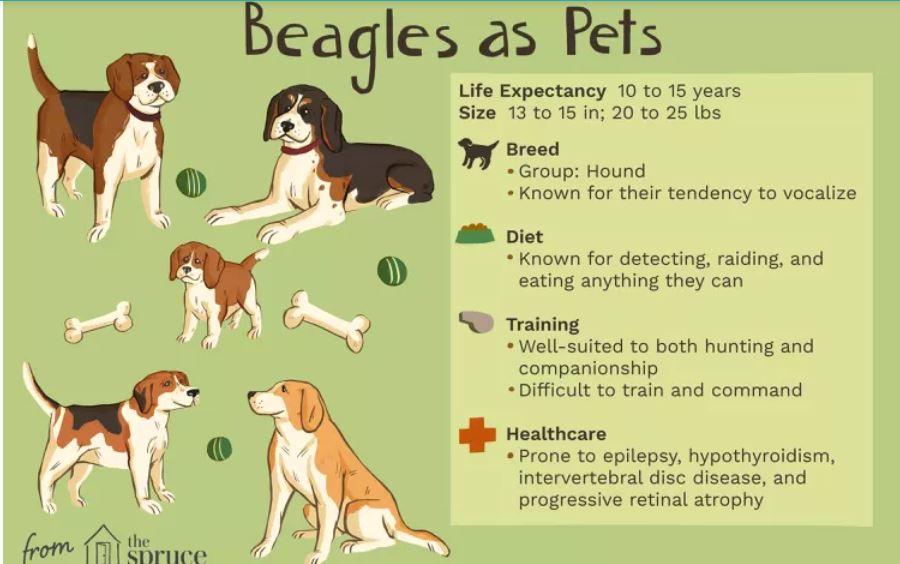
The breed standards for beagle are unequivocal and harmonized throughout the world and are aimed at keeping the dog both a successful hunter and a charming pets. According to the American Kennel Club, there are two beagle varieties: one is for the dogs under 13 inches at the withers with Hamilton and the other is for the dogs between 13 and 15 inches. Most beagles weigh somewhere between 20 and 30 pounds thus having a compact solid build lighter for their height than other hound breeds are (Britannica, The Spruce Pets).
The most noticeable aspects of the beagle are its gentle, begging eyes, wide nose and gorgeous tri-colored fur – usually black, white, and tan, but it is also possible to find beagles in red, lemon and blue tick. Their short, close, weather-resistant coats were created for hunting in different conditions and only need a little maintenance.
Their floppy, low-hanging ears allow scent particles to be drawn closer to their nose, which is the reason for their remarkable skill as scent hounds (Dogster). They usually have their tails raised with a white tip, which can be seen even from far away in tall grass.
The beagle is loved for a gentle, affectionate, lively character – this is the reason why they make great family pets. Nevertheless, the beagle’s working history is still very powerful. At present, beagles are not only pets and hunting partners but are also employed for scent-detection in airports (“Beagle Brigade,” USDA), and are characters in books as well as movies (source: “Beagle”IMDb).
The beagle peculiarities and adaptability are not a lucky case, they are actually the expected result of various beagle real case history and beagle social history effect by their works traits).
Therefore, let us gain knowledge about those historical features of the beagle that still influence the personality and behaviour of the beagle puppies today. In the first days of beagle puppies, knowing what makes beagle puppies tick is going to be very important when it comes to providing care and guidance.
Key Traits and Temperament of Beagle Puppies
Firstly, if we take a close look at how the beagle’s history of hunting and family life deeply influenced this breed, we will be able to understand why their temperament traits are so special. To understand the key traits of beagle puppies will be like foreseeing how the beagle has been in the past, and this will quite help you to accept the reality of the breed once it’s in your home.
One each of us can find a beagle puppy to be a unique mixture of individual personality traits, social inclination, excellent scenting ability, together with a handful of major challenges, which are all linked to the breed’s long heritage.
Personality: Friendliness, Playfulness, and Curiosity
Beagle puppies, without fail, are loving beings, and their sweet nature makes them perfect to fit in any family or with people who are sporty. Typically speaking, they are lively and talkative. In the light of what The Spruce Pets says, beagles are indeed cheerful and quite unconcerned, for instance, they are at a new place and still wagging their tails.
Their high-spirited nature to the extent that your puppy is very probable not to let them enter the room without first obtaining a warm smile from the grown-ups, kids, or visitors is what one might call a typical beagle.
Although their playfulness embodies all the charms of a typical puppy, their antics can escalate to a full-grown mischievous state if no boundaries are set and no rules are established. As Dogster puts it, beagle puppies are “hyperactive,” at any moment they are ready to uncover, pull, or run after something.
It would not be a lapdog that is the person who loves to relax and rather you ought to give him the attention and take him to play. Their endless wonderment would often bring them to places inside your house that they might have not been this time with cupboards, bins, or places where you want to be safe.
Socialization: Getting Along with Kids, Pets, and Strangers
Since beagle puppies are so lively, having a friend is really what they are made for and bring out the best in them. Beagles are not just a single-man dog or a dog that only loves its owner instead they have a “pack” mentality because they were bred to hunt in groups. It is because of this that they are not just great with other dogs but also with people. The facts are supported by sources like DogTime which states that beagles are “rarely aggressive with other dogs or pets” and that they are just as friendly to strangers as they are to known ones.
Beagle puppies are generally known to be good companions for kids as they usually develop close bonds with children. They are tough enough not to complain when they are “heavy-handedly petted and hugged” which is their biggest merit (DogTime) but their loudness can be a problem when it comes to baning them with young kids. Do not forget, beagles can become very excited and forget that they still are not too big especially when involved in the play.
The Pet World helps that beagles “ like people as well as animals and thus are a good fit for a household with several pets and that is also full of people with a hectic lifestyle.”
A beagle should start his life with socialization, as these pups can become too exuberant or develop shyness if they are not introduced to different people and places. In the early months, positive experiences will help your beagle grow up to be an adult with good manners and social skills, thus having no problem with a visit from a stranger, another animal, and even a crowded public park.
Vocalization and Prey Drive: Barking, Howling, and ‘Nose with Feet’ Reputation
As we mentioned earlier, beagles are absolutely one of the best scent-hound breeds−a fact that directly affects their behavior and care needs. The power of beagle smell, however, can lead them to the wrong path during a walk or an outdoor play very quickly, so the owner should always keep a close watch on the dog.
DogTime calls the breed “a nose with feet,” which is a description of a beagle that the use of scent totally dominates their behavior. So when your puppy follows a scent trail, they can quite easily be as good as they don’t hear you, which in turn, can be a very funny and yet very challenging situation for the owners.
Quite a bit of barking is going to be a part of the vocalization. In line with The Spruce Pets, one of the “most talkative breeds” is a beagle which “is prone to barking and howling,” is the description given to it. Their signature bay is a source of charm or trouble, depending on the situation of the place where you live. In other words, if left alone and not stimulated for too long, the puppies may eventually be “problem barkers” (DogTime). Through regular training and practice, the problem can be controlled but their vocal tendencies are just part of the package.
Challenges: Stubbornness, Mischief, and Training Needs
Along with intelligence and independence go stubbornness to some extent. Practically, all the authorities’ reviews and comments, including The Spruce Pets and Dogster, agree about the statement that beagles can be training-resistant if they are not engaged in a positive way. They are so smart that they grasp the concept of the command very quickly especially when it involves food but at the same time, they can also be so uncooperative that they just ignore you if they are bored or if they see something more interesting.
Beagle puppies are also quite mischievous expect some trouble. These siblings are little escape artists by nature. They are always testing fences, digging under the boundaries, and searching for snacks. If they are not given enough physical and mental exercise, they will turn to destructive behaviors to ease the pent-up energy, such as chewing and digging. The Pet World ranks them as “independent thinkers” who through their leisure activities, puzzles, and walks of varying frequency must be occupied.
The essential aspect of beagle puppy care is the willingness to let them show their curiosity, and they are full of energy and are sociable, be, however, quite stubborn and prone to mischief. Discipline, using the right techniques and early socialization remain the mainstay.
Once you are familiar with the characteristic and care requirements of beagle puppies, the next step is to implement that knowledge in the day-to-day care. Let us look at the schedules and habits that lead to the growth of beagle puppies exercise, feeding, and home setting are discussed in the next section.
Daily Care Essentials for Beagle Puppies
The unique energy and temperament of beagle puppies were already discussed, so now let us acquaint ourselves with the daily routines that are paramount to their well-being. Practical care goes beyond the fulfillment of basic needs it is about fashioning the perfect surroundings, schedule, and discipline, all of which are specific to this adventurous breed.
Exercise Requirements: Physical Activity, Mental Stimulation, and Playtime
Beagle puppies are bubbling with energy. Their lineage as pack hunting dogs suggests that they will ask for both physical and mental challenges everyday. The Spruce Pets and Dogster recommend that you give your beagle puppy at least one hour of vigorous activity daily. Make it into shorter sessions for the little ones – two or three brisk walks, and one hour of dedicated play with fetch or tug toys.
Frequent playtime is very beneficial as it serves two main purposes: it will use up all of your puppy’s physical energy and it will also keep your puppy’s active mind occupied. Puzzle toys, hide-and-seek games that use treats, and simple scent trails are great ways to encourage your pet’s natural sniffing behavior and, at the same time, keep your beagle out of trouble. Early exposure to different environments, such as new parks or safe dog-friendly spaces, not only builds the pet’s confidence but also helps fight boredom.
Supervision is a must-have. Beagle puppies, as pointed out in DogTime, “have a mind for troublemaking.”” Regular, hands-on play will not only keep their curiosity in check but will also at the same time redirect it in a positive way and thus help in the prevention of destructive habits.
Feeding Guidelines: Portion Sizes, Food Choices, and Avoiding Obesity
Feeding the dog correctly is very important.
Beagles have a tendency that is very strong of overeating and getting obese and hence they are usually called “food thieves” by the experts at The Spruce Pets. For puppies, the size of the portion is of major importance. A majority of sources recommend dividing the daily food allowance into two or three meals of equal portions. This helps not only in the proper development of the puppy but also in the prevention of bloat.
Do not feed your puppy any other food but premium quality food for puppies that complies with AAFCO standards. The formula for the most part should be high in protein and the main source of protein should be chicken or fish. Pet World proposes adding some healthy vegetables or grains for fiber to the diet, however, it is necessary to avoid high-calorie table scraps. Make sure to always consult your feeding plan with the veterinarian; they will be able to give the right instructions based on the age, activity level, and growth rate of your puppy.
The “hands-on” test gently feeling over their ribs” is a great way to monitor the weight of your puppy. You should be able to feel them without a lot of fat in between. If your puppy is always hungry, then you should consider using slow-feeder bowls as they can make the eating process slower and thus help in reducing the temptation to overeat.
Home Setup: Puppy-Proofing, Fencing and Safety Precautions
Based on what was discussed just a moment ago about beagle’s inquisitiveness, a safe and secure home is absolutely necessary. First, puppy-proof the house: store household chemicals, cables, trash cans, and small items out of the puppy’s reach. Prevent the puppy from accessing stairs and dangerous areas by using baby gates. Fencing, on the other hand, plays a very important role. All the major sources are in agree that a physical (not an electronic) fence is the most suitable one for a beagle.
Among other things, The Spruce Pets specifically warns that a bored beagle “may start digging under fences or find gaps to get through” if no one is around. Therefore you should consider the fence to be at least 4 feet in height with wire or some other material that would prevent him from digging underneath. The maximum size of any hole should be 3 inches.
Give your dog a crate or a safe little pen in your house where your puppy can hide and relax without being disturbed. Use durable toys to make the area chew-proof and stop the dog from using your shoes or furniture. At the same time, make sure you clean the food left by the puppy and remove anything that can cause choking.
Handling Escape Artist Traits and Vagabond Instincts
How about the “nose with feet” title we talked about earlier? This is the main reason behind the escape artist behavior of the breed. No matter what just don’t leave your little beagle puppy outside alone not even in a fenced yard. Beagle puppies as per the notes from Dogster and DogTime can escape very quickly by either jumping over the fence or digging underneath if at that time they have found a spot that has a nice scent for them and so they got excited.
Leash walks are absolutely necessary. One should teach his puppy to behave well and walk on the leash whenever it has to be used. Dogs, which are not on the leash, are not allowed to run freely because there is always a risk of them taking off. A better manner of operating will be to combine the harness and the collar which will give you more control over the dog,
it is always better to have the identification tags and the microchip so that in case of loss, your beagle can be found easily. Always keep a watchful eye on doorways and gates, and be certain that everyone in the house is aware of the importance of not leaving them open.
Regular training sessions, recall practice both indoor and in enclosed areas will provide your dog a solid safety ground. Use puzzle treats or training rewards to complement the work that has been done. Eventually, through time and habit, you will be able to steer your beagle’s natural wandering desire towards safe, fun and stimulating activities.
If you support your puppy’s curiosity you will get a lot of mileage if you plan the walks and activities around their strengths and the natural tendencies of the breed. Well-managed routines, secure spaces, and vigilance are the trinity that will provide the needed essentials for everyday care. Next, we will have a look at the way in which structured training and socialization help a beagle puppy that wants to be good and balanced in behavior become a lifelong one.
Training and Socialization Strategies
The foundational work with the beagle puppy’s daily care routines has now been accomplished and what remains is the development of the training and socialization programs as an essential part of the daily routine guided by intention. Good education greatly impacts a puppy’s growth for the next couple of years. Considering the talents of the breed such as intelligence, energetic nature, and stubbornness, as a responsible owner, the best practice is to adopt the methods which are in harmony with their natural tendencies, rather than against them.
Positive Reinforcement and Food Motivation
The most effective way to start is with positive reinforcement. In the Spruce Pets and Dogster publications are mentioned as one of the most food-motivated breeds of dogs. This characteristic of them ”food stealing” is the most usual behavior of them can be transformed into a valuable asset in your training work. Employ healthy, bite-sized treats as rewards when the pups follow the cues and do the right thing. It doesn’t take long for the little ones to get the connection between the desired behavior i.e. sitting, waiting or coming when called and the pleasant experience of a tasty treat.
Never resort to negative or harsh corrections. Beagles are not the type of creatures that are influenced by severe punishment or forceful discipline. What you get through these means is a puppy that is either unresponsive or more stubborn. The good way to go about the process is to make the sessions be fun and the rewards continue to flow. As an illustration, in case a beagle through command sits, directly give a treat of food and say, “Good sit,” along with the verbal praise. This allows the puppy to relate the command, the behavior, and the reward.
Since the beagle is vulnerable to obesity, it is important that treats are carefully managed. Use food rewards sparingly and combine them with praise such as petting and playing. Your puppy’s training will become so strong that you will be able to move to the stage of intermittent rewards. Do you remember the “optimistic” mood of a beagle we discussed above? This quality makes beagles ready to learn and energetic.
Early Training: Obedience, Recall and Leash Manners
Early training has to be based on the use of a positive reinforcement and the skills taught should be practical. The very first thing to do is to teach obedience through the commands “sit,” “stay,” “down,” and “leave it.” Beagles have been described as intelligent but also as stubborn (Pet World). They are good at setting up clear expectations, and due to the fact that they are only active and cooperative for about 10-15 minutes, they should be given short training sessions ten to fifteen minutes each, multiple times daily.
Recall (the “come” command) is the most important thing to be trained in beagle puppies since they are known as “nose with feet.” Train at home or in an enclosed area with the help of very tasty treats. Do not ever scold a beagle for coming back slowly; rather make a big issue of all the little steps towards the goal by offering rewards. In this way, you make it come to you a pleasant experience, even when it is difficult because of the scents.
Beagle leash manners are extremely necessary as beagles are so that they tend to be dragging or going off on their own. First of all, the non-pull harnesses should be used, and the dog should be taught to walk with him/her at your side, at which time the loose leash walking should be rewarded. Practicing frequently in different venues is a great way of establishing reliability in their typical inquisitiveness as well as in their behavior.
Early socialization as a side effect of these must-haves, exposure providing the features of self-confidence and reduction of fear. Beagle’s early introduced experience, which is his/her history, is a principle for setting the base of a stable and balanced companion.
Socialization with People and Other Pets
Beagles are, as was mentioned earlier, pack dogs who are naturally social. Socialization is one of the ways of preventing problems like shyness, aggressiveness, or overexcitement later on. It is better to start at the critical stage (between eight and sixteen weeks of age). Let your puppy meet different people; of various ages, sizes, and looks. Besides humans, let it meet some calm, vaccinated dogs and other animals as well.
Arrange for supervised puppy playdates and bring your beagle to dog-friendly parks only after making sure that all the encounters are positive and safe. Reward the good behaviors and calm the rough ones with the help of the usual cues and treats. Use introductions that are under control to introduce the pets in your home especially the small animals as beagles still have a residual hunting instinct.
Let your dog go through different environments, and give it new experiences and sounds: crowed sidewalks, noisy parks, car rides, and visits to pet stores. Every encounter opens up your puppy’s perception of the world. The more positive experiences the beagle has now, the less likely it is that he/she will react negatively as adults.
Socialization also greatly helps future training your puppy learns to concentrate on you even when there are a lot of tempting things around. According to The Spruce Pets, a socialized beagle is a pet that gets along well not only with people but also with other animals, thus, the suitability of beagles as a family companion is maximized.
Addressing Vocalization and Destructive Behaviors When Alone
In conclusion, get ready to cope with the issues of vocalization and separation that might arise in the future. Beagles usually vocalize through barking, howling, and baying, and the activities that they choose to do are mainly the ones that support the idea of being derived from the breed profile of being very vocal when lonely or bored. To be more specific, if these little guys are not given enough exercises and are not kept busy, they might become what we can call “problem barkers” or they might do some destruction of the house by chewing or digging.
One should really lessen this problem only through the help of a daily routine and activities that will provide your dog with enrichment. Do not leave your puppy for long periods of time, and especially during the first few months. Before you go anywhere, let your beagle have a full blown exercise and then engage it mentally. Use interactive toys that will keep your dog busy while you are away and let him also have some safe chewing toys.
If the mire of barking is to be pushed to the point of irresponsibility, then the first thing one needs to do is find out what causes it be it an outside noise or simple anxiety and then offer an alternative activity like saying “quiet” and giving a treat when silence is kept. It is always a good idea to put in a crate, which will be your puppy’s safe place and thus, he will do less trouble when you are not around.
Proactive training and socialization are two things that you can’t get rid of if you are the one responsible for raising a beagle. By blending good, reward-based methods with early exposure and proper expectations, one can come up with a well-behaved and happy companion.
Once training and socialization have been established, the next natural step would be to focus on the physical health and cleanliness of your beagle. Behavioral trainings constitute the basis of behavioral stability, while regular grooming and prophylactic health care guarantee that this lively breed will enjoy a long life.
Grooming, Health and Wellness for Beagle Puppies
After creating a clear foundation for the daily routine and training, it is safe to say that the next turn is for the long-term well-being of your beagle puppy. Keeping the dog clean and healthy through health checks and taking care of common medical issues is just as important as taking care of a pet that has a lot of energy and it actually paves the way for a healthy adult life.
Grooming: Coat Brushing, Shedding, Ear Care, and Dental Care
Beagle puppies need to be cleaned regularly to be comfortable and to maintain the preventive health of the dog. As reported by The Spruce Pets and Dogster, beagles have a short, dense double coat that sheds moderately during the whole year and very significantly during spring. Brushing once every week with a medium-bristle brush or slicker brush can reduce the amount of shedding, can remove the dead hair and more so it can give out their natural shine. If the shedding period is long, you might want to brush two to three times a week.
Extra care has to be given to their ears. Although long and drooping ears are a beagle’s trademark, they cause an ear infection risk because they trap moisture and dirt. Clean your puppy’s ears once a week with a vet-approved ear cleaner and check for signs such as redness, waxy buildup, or an unusual smell. Your puppy will suffer if you wait too long for the vet to intervene.
Teeth are very important too. Brushing your beagle’s teeth two to three times per week with canine toothpaste assists the prevention of tartar, gum disease, and bad breath. Start this practice early enough for the dog to get used to it and it will be oral health for the rest of its life that you will have to worry about.
Regular nail trimming using proper dog nail clippers prevents painful overgrowth and gait problems, which are thus avoided enabling their active lifestyle. Firstly, in such a way as to reap the primary benefits of grooming one can stay aware of skin issues, lumps, and parasitic infestations on the pet’s skin. What The Pet World’s advice makes clear is that creating these routines at an early stage leads to positive associations and eliminates resistance at the time of grooming or when the vet is checking.
After having defined the daily practicality of grooming that supports the comfort and health of your beagle, we now look at common diseases related to the breed and the role preventive measures play in the reduction of health problems in the long term.
Common Health Concerns: Obesity, Ear Infections, Hip Dysplasia, Hypothyroidism, Epilepsy, Cherry Eye and IVDD
Beagle puppies are normally quite healthy, although health problems that can be caused by heredity or may occur due to lifestyle habits are expected. Obesity is the most significant risk, that is mostly attributed to their insatiable appetite and the habit of stealing food. As mentioned before, it is very important that the food is rationed and the number of treats is limited an overweight beagle is more likely to suffer from joint problems, heart diseases, and metabolic disorders.
Another problem are the ear infections that, though closely tied to their ear shape, seem to be one of the most frequent causes. Symptoms may include the dog’s wanting to shake his head, scratch or a bad smell may be noticed. As was mentioned before, weekly cleanings greatly lower the chances of infection.
Beagles are susceptible to orthopedic problems such as hip displasia. This is a genetic malady that results in the improper development of the hip joint leading to the inability, arthritis, or discomfort of the adult dog (DogTime, The Spruce Pets). The screened results are what ethical breeders take into consideration before they breed the healthy ones. Likewise, intervertebral disc disease (IVDD) might be the cause where the spinal discs deteriorate resulting in the dog getting a lot of pain or paralysis.
Do not let the puppies fall from heights or run up and down the stairs too often these are simple yet efficient preventive methods. Two endocrine disorders need to be mentioned: hypothyroidism and epilepsy. Hypothyroidism is a condition, when thyroid does not function at its full capacity, thus the patient undergoes weight gain, lethargy, and skin problems.
If you observe these symptoms, a veterinarian can take blood samples to check hormone levels and if it is necessary then give the instructions for taking medication lifelong. Epilepsy is known for its unpredictable seizures and thus it is more commonly seen in beagles at higher frequency. Veterinary management, however, makes it possible for most of the affected dogs to have normal lives if they are under close monitoring.
Cherry eye is the fall of the third eyelid gland, therefore, a swollen red mass which is located in the inner corner of the eye is the result. It is necessary to do the surgery in order to prevent little problems from developing into the ones with complications or continuous pain. The responsibility you take for the health through regular checks and taking immediate action can be a big step in stopping minor issues from becoming severe.
By being vigilant of these diseases and encouraging good habits such as those presented in the previous sections you will have your beagle on the way to a long and active life. Next, let’s understand what thorough veterinary care constitutes and how it can help in further prevention or early diagnosis of problems.
Routine Veterinary Visits and Preventative Care Recommendations
Another aspect voicing the importance of early diagnosis, regular veterinary care is the mainstay of owning a responsible beagle puppy. At the very least, a veterinary checkup should be scheduled annually, although during a puppy’s first months, visits are recommended by The Spruce Pets and The Pet World to be twice as frequent. The early establishment of a care plan is the most effective way to ensure that vaccinations are done on time, parasites are prevented, and the growth assessment is accurate.
Annual essential vaccines will prevent the core diseases from which the dog might get parvovirus, distemper, and rabies. Not only that, but according to specialists, it comes as a necessity for the animal to have preventive treatment against heartworm, fleas, and ticks they are very important factors for a breed that likes to be outside and be in contact with various parasites.
At every visit, monitoring the weight of the dog is very important, because of the fact that the breed is at the risk of obesity. Discuss with your veterinarian a diet and exercise program that will suit the needs of your dog, as it was mentioned in the feeding section. Through regular weigh-ins people can keep an eye on the weight increment before it turns to an issue.
Yearly ask your vet about screenings for the particular breed especially for hip dysplasia, thyroid function, and eye diseases. The breeders who are following the Canine Health Information Center (CHIC) guidelines will provide the results of the parents; keeping these standards for the dog’s life will maximize early intervention and minimize suffering.
In case your puppy’s oral health is compromised, dental checkups and professional cleanings may be recommended once a year. Dealing with dental problems both at home and by the professional is the key to avoiding dental diseases, which is a little effort with a great impact in the long run.
By means of well-organized, regular and preventive health visits just like well-organized training and socialisation, you give your beagle puppy the most powerful armour against almost all the breed-specific and general dog diseases.

Tips for Early Detection and Management of Health Issues
First of all, the importance of routine veterinary care has been pointed out and the implementation of the proactive measures at home would be an extension of that which would allow you to spot potential issues quickly. Beagles are stoic and often mask discomfort, so owners must remain vigilant.
Keep a close watch on the feeding pattern of your puppy, its water intake, and the episodes of its urination and defecation. If there is a sudden change that is not normal like, increased thirst, loss of appetite, vomiting, or diarrhea, then that might be signs of the emergence of certain diseases. In the same way, weekly inspections of the eyes, and ears can also detect redness, discharge, or a change in odor.
As was emphasized earlier, regular grooming not only gives you the opportunity to take care of your pet but also makes it simple to spot the changes of skin such as lesions, lumps, and also the change in the coat quality at an early stage.
Lameness, refuse to jump, or signs of pain when moving can be the first sources of hip dysplasia, IVDD, or injury. Even if the problem is only stiffening or limping, you should consult your veterinarian.
Emotional disturbances, for example, lethargy, confusion, increased barking, or restlessness, can pain, neurological problems (for instance, epilepsy), or systemic disease. Taking the advice of the doctor early on guarantees less invasive treatments and rapid healing times.
Try to keep a written record of any signs of disease that worry you – mentioning date, severity, and duration – so that your doctor will have a clear report for every visit. The feeling of being saved in time, as emphasized in The Pet World and Dogster, is directly proportional to the outcomes of the different ill-characteristics of the Species.
Finally, some words about prevention: always have a safety measure like the fencing, following good safety practices, and regular exercise which will not only help in the reduction of the number of accidental injuries but also let the natural spring of your beagle give out in a safe way. Routines that are regular and mainly based on early detection and monitoring are what support a beagle to live healthy for a lifetime.
Through the awareness instilled in the care process and health vigilance along the way, the beagle puppy will be able to live the joyful and energetic life that is typical of this breed. Taking good care of the pet which is done through consciousness, availing the veterinary services when necessary, and preventive action are the keys to turning the risk of the pet’s health into the easy parts of life together with the pet for a very long time.
That beagle puppy journey is over, so to speak. What you needed to know about the world of beagle pups has been made quite clear to you- their quirky and lovable characters along with their very old and distinguished family history of scent hounds. Basically, knowing a beagle is about anticipating their boundless energy and intelligence plus their unwavering stubbornness by engaging the dog with daily walks, puzzle games, and the clever use of positive reinforcement-based training methods.
Also since beagles are known to be great escape artists and lovers of exploration, serious puppy-proofing of your home and yard will be necessary along with activities that will allow your pup to escape less frequently.
Now you have all the information you need to take care of a dog in a healthy and balanced way including grooming essentials, plus special care for the floppy ears, and keeping an eye on the health of the dog in case of obesity and hip dysplasia. Moreover, a great foundation for a nice demeanor is the early socialization of the pet along with regular vet visits.
These two things aside from all the other necessary steps are nothing less than non-negotiable. What will be out of this dog eventually? Are you ready to bring it on? If you ask me the answer is beginning with patience, structure, and lots of fun.
Make their stubbornness work for you and your beagle will gain a partner, not an adversary. Don’t forget to turn their inquisitiveness into great learning moments and keep your head always-elevated because you are not only a dog owner but a dog lover and… a friend for life. So, Are you ready to give your beagle the happy future they deserve?
Frequently Asked Questions
Can you leave a beagle puppy home alone for long periods?
Beagle pups can get sad or bored easily if they are left alone for a long time. As a consequence, they might start barking, chewing on your furniture, or try to escape. Do not leave them alone, especially when they are very little, and always put some toys or chews within their reach when you have to go for a very short time. Gradually, as they get older, they will be able to manage being alone for a couple of hours only and even then, beagles are the most content when they are with someone.
Can you let your beagle puppy off-leash in the yard or at the park?
Beagle puppies should not be let off-leash in open areas as it is dangerous. Their scent instincts might lead them to wander off or not even hear your call when they come across an intriguing scent. Fencing that is secure and physical should always be used in your yard and for walks as well as at the park, where your dog should remain on a leash until his recall is very reliable (and only in safe places).
Can you use treats for training without causing obesity?
Yes, definitely, but portion control plays a crucial role. Use low-calorie and small-sized treats and balance your dog’s meals if you will provide extra treats during training. The best way is to take some of your dog’s daily kibble and use it as rewards so that your dog will not be fed too much. Be aware that beagles are very food-motivated, so treats are very helpful to them when they learn new things, however, keep a close eye on their weight.
Can you recognize early signs of health problems in beagle puppies?
Yes, it is essential looking the changes in energy, appetite, and behavior. Early symptoms such as redness and odors of the ears, limping, swollen eyes, or sudden weight gain may indicate problems like ear infections, hip issues, or other health concerns. If anything strange is going on with your dog, the vet should be called immediately.
Can you bathe your beagle puppy often?
Beagles are not the kind of dogs that need to be given baths frequently, especially if they do not get thoroughly dirty or they have a nice smell. Their short and sturdy coat is usually clean if you brush it once a week. In such a case where a bath is too much they will dry out their skin, so a bath should be given occasionally, and the focus of the grooming routine should be on brushing, ear cleaning, and nail trimming.
Is it possible to stop a beagle puppy from excessive barking?
Beagles are vocal by nature, but you can help lower the barking to a significant level if you provide them with a sufficient amount of physical and mental exercises and make sure that they are not left alone for a long time. The early training of a dog to obey the command “quiet” and changing the dog’s mood will make a big difference in the dog’s barking habit. It is normal that they bark at times, but with persistence, you can train them to use their voice at the proper times. Happy tips Beagle Puppy Care Tips