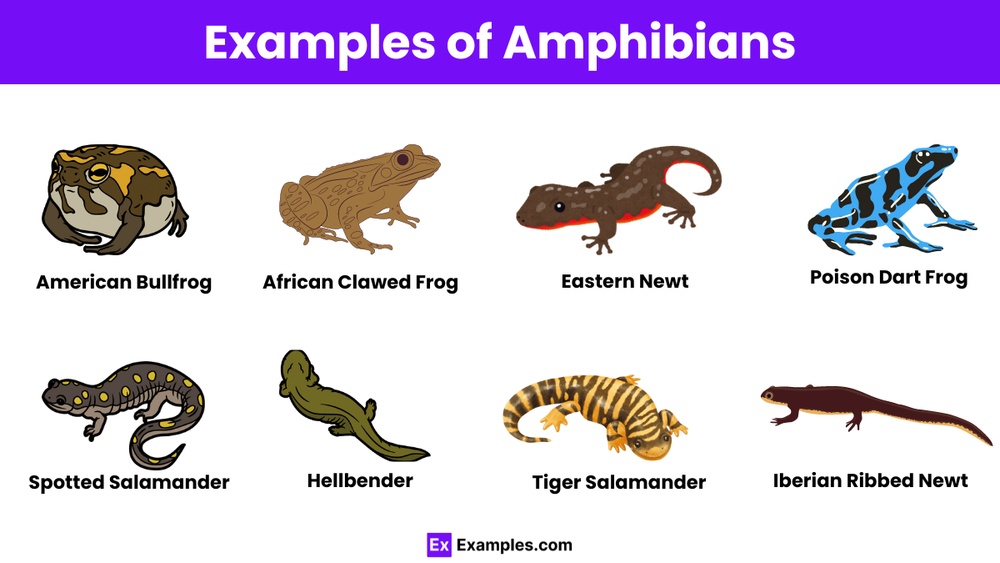
Are you curious about animals that can live both in water and on land? 10 Examples of Amphibians Animals,Amphibians are some of the most fascinating creatures you’ll ever discover.
From colorful frogs to mysterious salamanders, these animals have unique features that set them apart. You’ll find 10 amazing examples of amphibians that might surprise you. Keep reading to learn more about their special abilities and why they play an important role in nature.
You won’t want to miss these incredible animals!
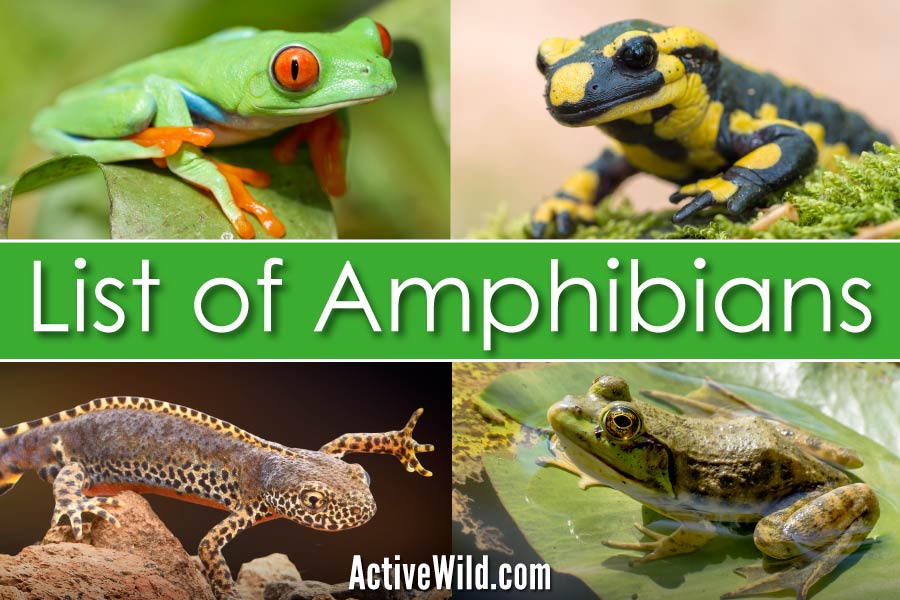
Credit: www.activewild.com
Frogs
Frogs are one of the most well-known amphibians. They appear in many environments across the world. Frogs belong to the broader group of amphibians, animals that live both on land and in water. These creatures have unique features like moist skin and strong legs for jumping. Frogs play an important role in many ecosystems by controlling insect populations. Their life cycle includes stages from egg to tadpole to adult frog. This makes them fascinating subjects in the study of amphibian characteristics. Below, we explore two key frog species from the amphibian species list.
Common Frog
The Common Frog is a familiar amphibian found in many gardens, ponds, and forests. It is part of the amphibian classification known for its adaptability. Here are some key Common Frog facts:
- Appearance: Smooth skin, usually brown or green with dark spots.
- Size: Typically 6 to 9 cm long.
- Habitat: Prefers damp environments like ponds, marshes, and woodlands.
- Diet: Eats insects, spiders, and other small invertebrates.
- Life Cycle: Eggs hatch into tadpoles, then transform into adult frogs.
The Common Frog’s amphibian life cycle is a great example of how amphibians develop. These frogs spend part of their lives in water and part on land. Their skin helps with breathing and staying moist. The Common Frog is an important species in the amphibian examples list because it shows typical amphibian traits.
| Feature | Description |
|---|---|
| Scientific Name | Rana temporaria |
| Average Lifespan | 5-10 years |
| Amphibian Habitat | Freshwater ponds, lakes, and surrounding land |
| Behavior | Active during spring and summer, hibernates in winter |
Poison Dart Frog
Poison Dart Frogs are famous for their bright colors and powerful toxins. These amphibians come from tropical rainforests. Their vivid colors serve as a warning to predators. Poison Dart Frog traits make them unique among amphibian species. They belong to the amphibian classification that includes many colorful frogs.
Important facts about Poison Dart Frogs:
- Colors: Bright blue, yellow, red, or green patterns.
- Toxins: Skin contains poison used by indigenous people for hunting.
- Size: Small, usually between 1.5 to 6 cm long.
- Habitat: Moist tropical forests near water sources.
- Diet: Small insects and ants, which help produce their toxins.
These amphibians have a special place in the amphibian animal names list due to their unique defense system. Their toxins protect them from many predators. Poison Dart Frogs also show interesting amphibian characteristics such as parental care, where some species carry tadpoles on their backs. Their amphibian life cycle is similar to other frogs but includes unique behaviors.
| Trait | Details |
|---|---|
| Scientific Name | Dendrobatidae family |
| Toxicity Level | Varies by species; some are highly toxic |
| Amphibian Habitat | Tropical rainforests of Central and South America |
| Defense Mechanism | Bright colors and skin toxins |

Credit: www.geeksforgeeks.org
Toads
Toads are a fascinating group of amphibians known for their dry, bumpy skin and stout bodies. They live in various environments, from forests to gardens, adapting well to different climates. Unlike frogs, toads usually spend more time on land and have shorter legs. Their unique appearance and behaviors make them important in many ecosystems. Toads help control insect populations and serve as food for many animals.
American Toad
The American Toad (Anaxyrus americanus) is common across much of the eastern United States and Canada. It has rough, bumpy skin colored in shades of brown, gray, or reddish. These toads grow up to 5 inches long.
- Habitat: Woodlands, gardens, fields, and suburban areas.
- Diet: Insects, spiders, and small invertebrates.
- Behavior: Mostly nocturnal; hides under logs or leaves during the day.
American Toads are known for their distinctive, high-pitched trill call during mating season. They lay eggs in long strings in shallow water. Their skin contains mild toxins that protect them from predators.
| Feature | Description |
|---|---|
| Size | 2 to 5 inches (5 to 13 cm) |
| Color | Brown, gray, reddish |
| Skin | Dry, bumpy |
| Call | High-pitched trill |
Cane Toad
The Cane Toad (Rhinella marina) is a large toad native to Central and South America. It is famous for its size and ability to survive in many environments. This toad can grow up to 9 inches long, making it one of the biggest toads in the world.
Cane Toads have rough, warty skin that is usually brown or gray. They are strong and can live in dry or wet places. People introduced them to places like Australia to control pests. Unfortunately, they became invasive and caused problems for native animals.
- Diet: Eats insects, small mammals, and other amphibians.
- Defense: Produces a powerful toxin harmful to many predators.
- Reproduction: Lays thousands of eggs in water.
| Feature | Description |
|---|---|
| Size | Up to 9 inches (23 cm) |
| Color | Brown or gray |
| Skin | Rough, warty |
| Toxin | Strong and dangerous to many animals |
Salamanders
Salamanders are fascinating amphibians that live both on land and in water. They have soft, moist skin and long tails. These creatures can grow in many shapes and sizes. Salamanders are important for nature because they help keep insect populations low. Many types of salamanders are found worldwide, especially in forests and near freshwater bodies. Their ability to regenerate lost limbs makes them unique among animals. Below are two interesting examples of salamanders that show their diversity and special features.
Tiger Salamander
The Tiger Salamander is one of the largest salamanders in North America. It has striking black and yellow stripes or spots, which resemble a tiger’s pattern. This salamander can grow up to 14 inches long. It lives in forests, grasslands, and near ponds or lakes. Tiger salamanders spend most of their time underground but come out at night to hunt.
- Diet: Insects, worms, small frogs, and sometimes small fish.
- Habitat: Moist, cool environments with plenty of hiding spots.
- Behavior: Mostly nocturnal and burrowing creatures.
- Lifespan: Around 10 to 15 years in the wild.
They are great swimmers but also move well on land. Their skin helps them absorb oxygen through moisture. Tiger salamanders lay eggs in water, where their young develop into larvae before becoming adults.
| Feature | Description |
|---|---|
| Size | Up to 14 inches (35 cm) |
| Color | Yellow and black stripes or spots |
| Habitat | Forests, grasslands, near water bodies |
| Diet | Insects, worms, small amphibians |
Axolotl
The Axolotl is a unique salamander famous for staying in its larval form throughout life. It lives only in lakes near Mexico City. Unlike other salamanders, axolotls keep their gills and live underwater permanently. They have a wide head, lidless eyes, and feathery external gills on their necks.
Axolotls are popular in science because they can regrow lost body parts like limbs, spinal cord, and even parts of their heart. Their skin can be white, pink, or black, often with shiny spots. They eat worms, small fish, and insects. Axolotls prefer cool, clean water with plenty of plants for hiding.
- Special trait: Neoteny – staying in juvenile form while growing adults.
- Size: Usually 9 to 12 inches long.
- Conservation status: Critically endangered due to pollution and habitat loss.
| Feature | Description |
|---|---|
| Size | 9 to 12 inches (23 to 30 cm) |
| Habitat | Freshwater lakes near Mexico City |
| Diet | Worms, small fish, insects |
| Unique Trait | Neoteny – retains juvenile features |

Credit: sciencenotes.org
Newts
Newts belong to the amphibian family and are small, slender animals with moist skin. They live both in water and on land during different life stages. Newts have a unique life cycle that includes eggs, larvae, and adults. These creatures are known for their bright colors and smooth movements. They play a vital role in wetland ecosystems by controlling insect populations and serving as food for larger animals.
Newts are often found in ponds, lakes, and forests with wet conditions. Their skin produces toxins to protect them from predators. Many species of newts can regenerate lost limbs, making them fascinating subjects for scientific study. Below are two well-known examples of newts that show the diversity within this group.
Eastern Newt
The Eastern Newt (Notophthalmus viridescens) is common in eastern North America. It lives in slow-moving water bodies like ponds and lakes. This newt has three main stages: aquatic larva, terrestrial red eft, and adult aquatic newt.
- Larva: Lives in water, has external gills, and feeds on small aquatic animals.
- Red Eft: Bright orange-red color with red spots; lives on land for 2-3 years.
- Adult: Returns to water, olive green with small red spots, smooth skin.
Eastern Newts eat insects, worms, and small fish. Their skin contains toxins that make them less attractive to predators. They are active mostly at night and hide under leaves or logs during the day.
| Feature | Description |
|---|---|
| Size | 4 to 5 inches long |
| Color | Bright orange (eft), olive green (adult) |
| Habitat | Ponds, lakes, moist forests |
| Diet | Insects, small aquatic animals |
Alpine Newt
The Alpine Newt (Ichthyosaura alpestris) is native to central and southern Europe. It prefers mountain lakes, ponds, and slow streams. Alpine Newts have a striking blue color during the breeding season.
These newts have a strong tail used for swimming and smooth skin that stays moist. Their diet includes small insects, snails, and worms. Alpine Newts are important indicators of clean water because they need healthy habitats.
- Breeding: Males develop bright blue skin and orange bellies in spring.
- Behavior: Mostly active at night, they hide under stones or plants during the day.
- Lifespan: Can live up to 15 years in the wild.
Alpine Newts show seasonal color changes. Outside the breeding season, their color is duller with grey or brown tones. They can live both in water and on land but spend most time near water.
| Feature | Description |
|---|---|
| Size | 3 to 5 inches long |
| Color | Blue and orange (breeding), grey-brown (non-breeding) |
| Habitat | Mountain lakes, ponds, slow streams |
| Diet | Insects, snails, worms |
Caecilians
Caecilians are a unique group of amphibians that look very different from frogs and salamanders. They have long, slender bodies and no legs, which makes them look like worms or snakes. These animals live mostly underground or in water. They have smooth skin and are adapted to burrowing through soil. Caecilians are found in tropical regions around the world. Their secretive lifestyle means many people have never seen one. They play an important role in the environment by helping to control insect populations and improve soil health.
Common Caecilian
The Common Caecilian is one of the most well-known species of caecilians. It has a dark, smooth body that can grow up to 30 centimeters long. This amphibian spends most of its life underground in moist soil or leaf litter. It uses its strong skull and sharp teeth to burrow and catch small animals like insects and worms.
- Habitat: Tropical forests, moist soils, near streams
- Size: Up to 30 cm (12 inches)
- Diet: Insects, earthworms, small invertebrates
- Behavior: Nocturnal and burrowing
Common Caecilians have a unique way of sensing their environment. They use a pair of tentacle-like organs near their eyes to detect chemical signals. This helps them find prey underground. Their skin also absorbs oxygen, which is important since they often live in places with low air flow.
| Feature | Description |
|---|---|
| Body Shape | Long, cylindrical, legless |
| Skin | Smooth, moist, dark-colored |
| Reproduction | Egg-laying or live birth, depending on species |
| Defense | Secretes mucus to avoid predators |
Ringed Caecilian
The Ringed Caecilian is easy to recognize by the rings, or grooves, around its body. These rings give it a segmented look, even though it has no true segments. The ringed pattern helps it blend into the forest floor and underground environment.
This species grows between 20 to 40 centimeters in length. It prefers wet, tropical forests and is often found near streams or rivers. The Ringed Caecilian feeds on small soil animals like termites, ants, and earthworms. It uses a strong bite and its sharp teeth to catch prey.
- Habitat: Tropical rainforests, near water sources
- Length: 20 – 40 cm (8 – 16 inches)
- Diet: Termites, ants, earthworms
- Defense: Produces a slimy coating to escape predators
Like other caecilians, the Ringed Caecilian has poor eyesight. It relies on touch and chemical signals to navigate. Its strong, pointed head helps it dig through soil and leaf litter easily. These animals are important for the ecosystem because they help keep insect populations balanced.
| Characteristic | Details |
|---|---|
| Appearance | Segmented rings, dark body with lighter bands |
| Movement | Slow, burrowing motion underground |
| Reproduction | Some species give birth to live young |
| Special Sense | Tentacles for sensing chemical cues |
Frequently Asked Questions
10 examples of amphibians animals
What Are Common Examples Of Amphibian Animals?
Common amphibians include frogs, toads, salamanders, newts, caecilians, and axolotls. These animals live both in water and on land during their life cycle.
How Do Amphibians Differ From Reptiles?
Amphibians have moist skin and usually undergo metamorphosis. Reptiles have dry, scaly skin and lay hard-shelled eggs. Amphibians need water for reproduction, unlike most reptiles.
Why Are Amphibians Important To The Ecosystem?
Amphibians control insect populations and serve as food for many predators. Their presence indicates a healthy environment due to their sensitivity to pollution.
What Habitats Do Amphibians Prefer?
Amphibians thrive in moist environments like ponds, wetlands, forests, and streams. They need water for breeding and humid areas to keep their skin moist.
Conclusion
Amphibians show amazing diversity and unique features. These 10 examples reveal their different shapes and habitats. Some live in water, others on land, or both. Amphibians play important roles in nature and help keep balance. Watching and learning about them can be fun and interesting.
They remind us how nature adapts and changes. Exploring more about amphibians helps us protect their homes. Keep curious and enjoy discovering these special animals. Happy Reading “10 Examples of Amphibians Animals”
Summarize the Characteristics of Each Order of Amphibians