
Have you ever wondered how long a horse can stay down before it faces serious danger? If you care for horses, knowing this can be the difference between life and death for your animal.
Horses aren’t built to lie down for long, and the longer they stay down, the faster serious problems can develop. You’ll learn exactly what happens when a horse is down too long, why time matters so much, and what you need to do if your horse can’t get up.
Keep reading—your horse’s health might depend on it.

Credit: foxsanantonio.com
Horse Physiology And Mobility
Horses are animals built for movement. Their bodies depend on constant activity to stay healthy. A horse’s physiology is designed around standing and walking most of the day. This mobility supports many vital body functions. Understanding how a horse’s body works helps explain why being down is dangerous.
Horses have strong legs and muscles made to carry their weight. Their blood flow, digestion, and breathing all work best when the horse moves regularly. Staying upright allows the horse to avoid pressure on certain body parts. This keeps tissues healthy and prevents damage.
Role Of Movement In Equine Health
Movement helps pump blood through a horse’s body. Muscle contractions push blood back to the heart. This keeps organs supplied with oxygen and nutrients. Walking also aids digestion by moving food through the intestines. Exercise strengthens bones and joints, reducing the risk of injury. Standing and moving prevent swelling and pressure sores on the skin. A horse that moves regularly stays stronger and more resilient.
Effects Of Immobility On Vital Functions
When a horse lies down too long, many problems start. Blood flow slows in parts of the body under pressure. This causes pain and tissue damage. Lying down reduces lung function, making breathing harder. The digestive system slows, leading to colic or other issues. Muscles weaken quickly without use. The longer a horse stays down, the higher the risk of serious health problems or death.

Credit: www.hofer-antikschmuck.de
Risks Of Prolonged Recumbency
Horses are built to stand and move. Staying down for too long causes serious health risks. Prolonged recumbency means lying down for hours or days. This can lead to many problems inside the horse’s body. Some risks harm muscles and nerves. Others affect blood flow and breathing. The digestive system can also suffer. Understanding these dangers helps in acting fast.
Muscle And Nerve Damage
Muscles can get crushed under the horse’s own weight. This pressure cuts off blood supply. Muscle cells die without oxygen. Nerve damage happens when pressure hurts nerve fibers. This causes pain and weakness. Sometimes, the horse cannot stand again. Quick treatment is needed to save muscles and nerves.
Circulatory And Respiratory Complications
Blood flow slows down in parts pressed by the ground. This can cause swelling and clotting. Poor circulation harms organs and tissues. Breathing becomes harder because lying flat limits lung movement. Fluid may build up in the lungs. This leads to breathing problems and infections. These issues can become life-threatening quickly.
Digestive System Concerns
Horses need to stand to digest food well. Lying down slows the digestive process. Gas can build up, causing colic. The risk of ulcers grows too. Sometimes, the horse stops eating and drinking. This weakens the horse and delays recovery. Digestive problems add to the dangers of being down.
Critical Timeframes For Recovery
Knowing the critical timeframes for a horse’s recovery is vital after it falls or is down. Every hour counts. Quick action can save a horse’s life. Understanding these timeframes helps owners and caretakers respond properly. This section breaks down the key periods following a horse’s fall.
Initial Hours And Immediate Threats
The first few hours are the most dangerous. Horses lying down too long risk serious injuries. Muscle damage and pressure sores develop fast. Breathing problems can start quickly. Immediate veterinary care is essential. The horse’s chances improve with fast treatment.
24 To 48 Hours Window
Between one and two days, problems can worsen. Muscle tissue may begin to die. Kidney failure is a real threat. Horses might develop colic or infections. Close monitoring is critical during this period. Supportive care and veterinary help increase survival odds.
Beyond 48 Hours: Survival Chances
After two days, survival chances drop sharply. Permanent damage to muscles and organs is likely. Recovery becomes much harder and slower. Many horses cannot stand without help. Intensive care is required to avoid death. Early intervention remains the best hope.
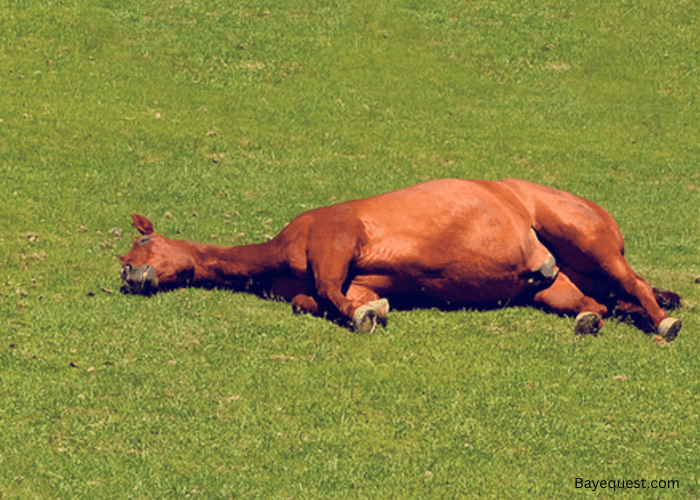
Credit: www.bayequest.com
Signs Of Distress In A Downed Horse
Horses lying down for too long face serious health risks. Recognizing distress signs early can save their lives. These signs show the horse needs help fast. Knowing what to watch for helps you act quickly and correctly.
Physical Indicators
A downed horse may have heavy breathing or no breathing at all. Look for pale or blue gums, which show poor blood flow. Swelling or cuts on the legs and body can appear. Muscle stiffness or inability to move legs is a bad sign. Check for sweating or cold skin, both signs of shock. Eyes may look dull or sunken if the horse is weak.
Behavioral Changes
Notice if the horse is restless or tries to get up repeatedly. A calm horse that stays still too long can be in trouble. Lack of response to sounds or touch means serious distress. The horse may grunt, groan, or whinny in pain. Refusing food or water is a sign of illness. Any sudden change in behavior needs attention.
When To Seek Emergency Help
Call a vet if the horse can’t stand after 30 minutes. Immediate help is needed if breathing is very hard or absent. Severe injuries or bleeding require fast treatment. If the horse is not responding or shows signs of shock, act quickly. Don’t wait for the horse to improve on its own. Early veterinary care improves chances of survival.
Emergency Care For Downed Horses
Emergency care for downed horses is critical to save their lives. Horses are heavy animals, and staying down for too long can cause serious health problems. Quick and proper action can improve their chances of recovery. Knowing the right steps helps protect the horse from further harm.
Safe Handling And Moving Techniques
Always approach the horse calmly to avoid causing stress. Use soft voices and gentle touch. Avoid sudden movements that may scare the horse. Move the horse slowly and carefully to prevent injuries. Use padded slings or blankets if lifting is necessary. Never drag the horse on hard surfaces, as it can cause wounds.
Supportive Treatments
Keep the horse warm with blankets to prevent shock. Provide clean water if the horse is alert and able to drink. Monitor breathing and pulse regularly. Call a veterinarian immediately for professional care. The vet may give fluids or medications to stabilize the horse. Pain relief and anti-inflammatory treatments reduce suffering.
Preventing Further Injury
Clear the area around the horse from sharp objects. Keep the horse from rolling or thrashing to avoid muscle damage. Use padding under the horse if it must stay down. Limit movement until help arrives. Check for signs of pressure sores and treat them quickly. Protect legs and joints from strain or twisting.
Preventing Horses From Becoming Downed
Preventing horses from becoming downed is crucial for their health and safety. A downed horse faces serious risks, including injuries and life-threatening complications. Horse owners must understand how to reduce these risks. Awareness and timely action can save a horse’s life. This section covers key ways to keep horses safe and standing strong.
Common Causes And Triggers
Horses become downed for many reasons. Injuries like fractures or muscle strains can cause them to collapse. Illnesses such as colic, infections, or neurological problems also play a role. Fatigue and exhaustion from hard work or heat stress may lead to weakness. Recognizing these causes helps prevent the horse from falling.
Monitoring And Early Intervention
Regular checks are vital to catch problems early. Watch for signs of discomfort, lameness, or changes in behavior. Immediate care can stop minor issues from becoming severe. Contact a vet at the first sign of trouble. Quick response can keep a horse on its feet and healthy.
Environmental And Management Strategies
Provide a safe and comfortable environment to reduce risks. Soft bedding helps prevent injuries if a horse lies down. Keep stalls clean and dry to avoid infections. Avoid overcrowding to reduce stress and accidents. Offer fresh water and balanced nutrition to maintain strength and stamina.
Frequently Asked Questions
How Long Can A Horse Safely Lie Down?
A healthy horse can lie down for 2 to 4 hours safely. Prolonged lying down risks muscle damage and breathing issues.
What Happens If A Horse Is Down Too Long?
If a horse stays down too long, it risks muscle damage, pressure sores, and organ failure. Immediate care is crucial.
Can A Horse Recover After Being Down For Hours?
Recovery depends on the cause and time down. Quick veterinary intervention improves chances, but long duration increases risks.
Why Do Horses Become Unable To Stand?
Injuries, illness, or sedation can cause a horse to be down. Identifying the cause early helps in treatment.
Conclusion
A horse cannot stay down for long without serious risk. Damage to muscles and organs starts within hours. Quick help can save a horse’s life. Always watch for signs of trouble early. Acting fast gives the best chance for recovery.
Horses need to stand and move daily to stay healthy. Knowing the risks helps you care better for your horse. Keep your horse safe and comfortable to avoid danger. Time matters a lot when a horse is down.